
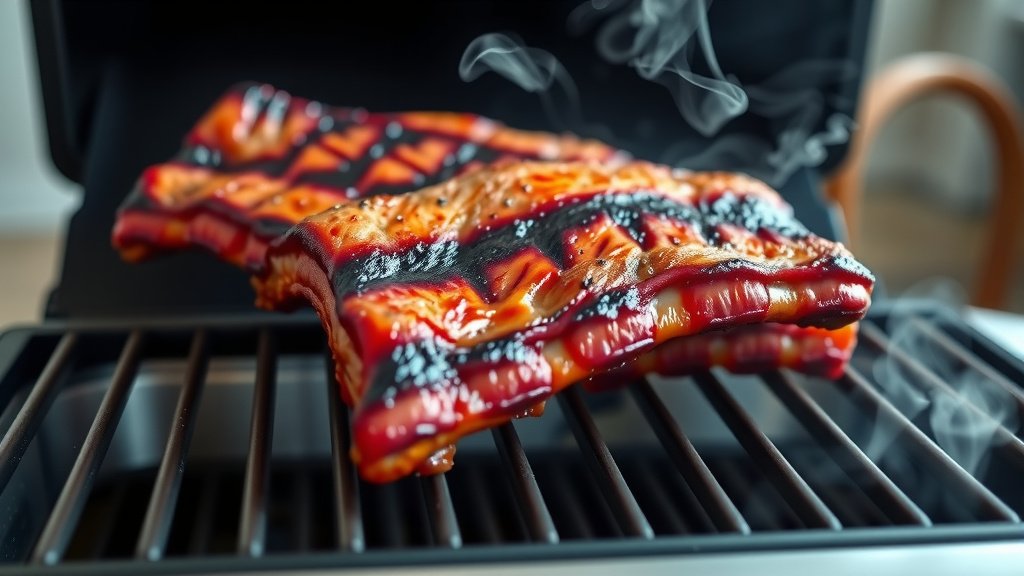
To smoke ribs on a gas grill, you set up a two-zone cooking area by turning on some burners and leaving others off, then add wood chips in a foil pouch or smoker box over a lit burner to generate smoke, maintaining a consistent low temperature around 225-250°F.
This process allows you to infuse your ribs with that authentic smoky flavor and achieve fall-off-the-bone tenderness, all using your regular gas grill and a few simple accessories.
- Prepare your gas grill for indirect heat, leaving at least one burner off.
- Soak wood chips for 30-60 minutes, then place them in a foil pouch with holes or a smoker box.
- Keep the grill temperature steady, aiming for 225-250°F (107-121°C).
- Season your ribs generously and place them on the cool, unlit side of the grill.
- Smoke the ribs for several hours, adding more wood chips as needed, until they are perfectly tender.
How Do You Smoke Ribs On A Gas Grill?
Smoking ribs on a gas grill is surprisingly straightforward, allowing you to create that delicious barbecue flavor right in your backyard. It involves setting up your grill correctly for indirect heat and introducing smoke from wood chips.
Gather Your Smoking Essentials
Before you start, gather everything you’ll need. This preparation saves time and makes the process smooth. Many experts say having your tools ready makes for a better cook.
What You’ll Need for Amazing Ribs
- A gas grill with a lid
- Your favorite rack of ribs (spare ribs or baby back ribs work well)
- Wood chips (hickory, apple, or cherry are popular choices)
- Aluminum foil or a dedicated smoker box
- A good meat rub or seasoning
- A reliable grill thermometer or probe thermometer
- Water or apple juice in a spray bottle (optional, for spritzing)
Preparing Your Ribs for the Smoke
Proper rib preparation is key to achieving that perfect smoky, tender result. It ensures the rub sticks and the ribs cook evenly. Don’t skip these steps!
Choosing and Trimming Your Ribs
You’ll typically pick between baby back ribs or spare ribs. Baby backs are leaner and cook faster, while spare ribs are meatier and richer. Trim any excess fat that might cause flare-ups or become rubbery during cooking.
Removing the Membrane
This step is non-negotiable for tender ribs. On the bone side of the ribs, there’s a thin, papery membrane. Removing it allows your rub to penetrate deeper and prevents the ribs from being chewy. We found that using a butter knife to lift an edge and then pulling it off with a paper towel works best (BBQ Pitmasters Association).
Applying Your Flavorful Rub
Once the membrane is gone, it’s time for the rub. Apply a generous, even coating of your favorite dry rub to both sides of the ribs. Don’t be shy; the rub is where a lot of your flavor comes from. Let the ribs sit with the rub for at least 30 minutes, or even overnight in the refrigerator, to allow the flavors to meld.
Setting Up Your Gas Grill for Success
Transforming your gas grill into a smoker is all about creating the right environment. It’s like setting the stage for a great show; everything needs to be in its place for the performance to shine.
Preparing Your Wood Chips for Smoke
Wood chips are your smoke source. Soak a generous handful of wood chips in water for about 30-60 minutes. This slows down their burning, allowing them to produce more smoke for longer. We found that damp wood chips yield a better, sustained smoke.
Creating a Smoker Box or Foil Pouch
Once soaked, you can place your chips in a metal smoker box designed for grills. If you don’t have one, no worries! Make a foil pouch. Take a double layer of heavy-duty aluminum foil, place the chips inside, and seal it up. Puncture several holes in the top to let the smoke escape. This simple hack works wonderfully.
Setting Up for Indirect Heat
This is where your gas grill shines for smoking. You want one or two burners on, typically on low, and the ribs placed over the burners that are off. Place your wood chip pouch or smoker box directly over one of the lit burners. This setup creates a hot, smoky side and a cooler, indirect cooking side.
Achieving the Ideal Smoking Temperature
Your target temperature for smoking ribs is usually 225-250°F (107-121°C). Use your grill’s lid thermometer, but a separate probe thermometer placed near the ribs offers a more accurate reading. Adjust your lit burners’ intensity to maintain this consistent, low temperature. Consistency is the secret sauce here.
The Smoking Process: Patience is a Virtue
Smoking ribs is not a race; it’s a marathon. The low and slow approach is what breaks down the tough connective tissues, giving you incredibly tender meat.
Placing the Ribs on the Grill
Once your grill is at temperature and smoking, place your prepared ribs on the unlit, indirect heat side of the grill. Close the lid quickly to prevent heat loss. Every time you open the lid, you lose valuable heat and smoke, extending your cooking time.
Maintaining Temperature and Smoke Levels
Monitor your grill temperature closely. You might need to make small adjustments to the lit burners. Replace your wood chip pouch every 60-90 minutes as the smoke production wanes. Just be mindful not to let the chips burn out completely before adding fresh ones.
The Spritzing Debate
Some grill masters like to spritz their ribs with water or apple juice every hour or so. This keeps the surface moist and helps create a beautiful bark. Others prefer a hands-off approach. It’s your call, but a little spritzing can add a touch of moisture and flavor.
The Popular 3-2-1 Method for Ribs
The 3-2-1 method is a widely used technique for spare ribs (it might be 2-2-1 for baby backs). It breaks down the cooking into three distinct stages, guaranteeing tender, juicy results every time. Many resources, including popular BBQ forums, highlight its effectiveness.
| Stage | Time (Approx.) | Action | Purpose |
|---|---|---|---|
| 1 (Smoke) | 3 hours | Smoke unwrapped ribs on the grill. | Infuse smoke flavor and develop a bark. |
| 2 (Wrap) | 2 hours | Wrap ribs tightly in foil with liquid. | Steam and tenderize the meat, making it fall-off-the-bone. |
| 3 (Finish) | 1 hour | Unwrap and return ribs to the grill. | Tighten bark, set sauce (if desired), and perfect tenderness. |
Checking for Rib Doneness
Knowing when your ribs are ready is more about feel than specific temperature. While a good internal temperature is around 195-203°F (90-95°C), the bend test is a classic indicator. Pick up one end of a rib rack with tongs. If it bends easily and starts to crack, they’re ready. The meat should also have pulled back from the bones, exposing about a quarter-inch.
Resting and Serving Your Masterpiece
Just like any other smoked meat, ribs benefit from a rest. Once they’re done, remove them from the grill, cover them loosely with foil, and let them rest for 15-20 minutes. This allows the juices to redistribute throughout the meat, resulting in a juicier rib. Then, slice and serve your incredibly smoky and tender ribs!
Troubleshooting Common Smoking Issues
Sometimes things don’t go perfectly, and that’s okay. Here are some common issues and quick fixes:
- Ribs are too dry: Try spritzing more often during the cook, especially in the wrapping stage.
- Not enough smoke flavor: Ensure your wood chips are producing a consistent thin blue smoke, not thick white smoke. Add more chips or adjust burner placement.
- Ribs are tough: They likely need more time at temperature. Low and slow cooking is crucial for tenderness.
- Temperature swings: Double-check your vent settings and ensure no direct wind is affecting the grill. Adjust burners slowly.
- Burned rub: Your temperature might be too high. Ensure indirect cooking and consistent heat.
Conclusion
Smoking ribs on a gas grill is a rewarding experience that produces incredibly flavorful and tender results. By understanding indirect heat, managing your smoke, and maintaining a consistent low temperature, you can transform your everyday grill into a powerful smoker. With a little patience and attention, you’ll be serving up barbecue masterpieces that will impress everyone. So, fire up your grill and enjoy the journey to perfect smoked ribs!
How long does it take to smoke ribs on a gas grill?
Smoking ribs on a gas grill typically takes between 4 to 6 hours for baby back ribs and 5 to 7 hours for spare ribs, when maintaining a consistent grill temperature of 225-250°F (107-121°C). The exact time depends on the thickness of the ribs and your desired tenderness.
What kind of wood chips are best for smoking ribs?
For smoking ribs, popular wood chip choices include hickory for a strong, classic BBQ flavor, apple or cherry for a milder, sweeter, fruity smoke, and pecan for a rich, nutty flavor. Mixing different types of wood chips can also create a unique flavor profile.
Do I need a water pan when smoking on a gas grill?
While not strictly mandatory on a gas grill, using a water pan can help stabilize grill temperature and add moisture to the cooking environment, which can result in juicier ribs. Place it on the unlit side of the grill, directly under the ribs.
How do I prevent my ribs from drying out on a gas grill?
To prevent ribs from drying out, ensure you are cooking with indirect heat at a low temperature (225-250°F). You can also spritz the ribs with apple juice or water every hour or so, and many people use the “3-2-1 method” which involves wrapping the ribs in foil with liquid for a portion of the cook to tenderize them.
Can I use liquid smoke on ribs on a gas grill?
While you can use liquid smoke as a flavoring agent, it’s not generally recommended when you are actively smoking ribs with wood chips on a gas grill. The purpose of using wood chips is to create natural smoke flavor. Using liquid smoke might overpower or create an artificial taste compared to the authentic smoke you’re already producing.
