
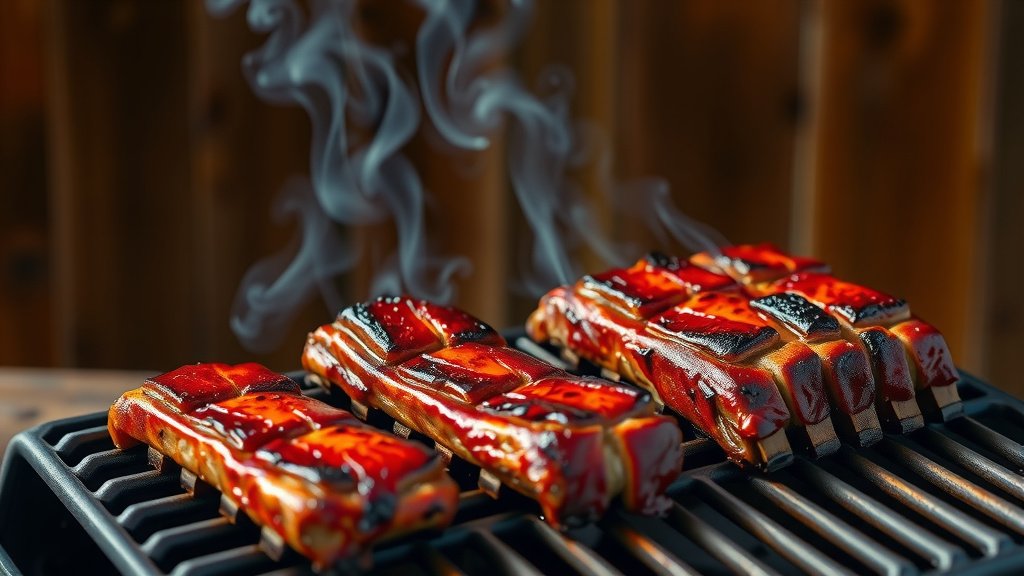
To smoke ribs on a charcoal grill, you first prepare your ribs with a rub, then set up your grill for indirect heat using a two-zone fire. You’ll maintain a low, steady temperature around 225-275°F for several hours, adding wood chunks or chips for smoke flavor until the ribs are tender and delicious.
You can truly master smoking ribs on a charcoal grill by controlling your heat, choosing the right wood, and understanding when your ribs are perfectly cooked. This method brings a rich, smoky flavor that’s hard to beat.
- Get your ribs ready by trimming excess fat and applying a good rub.
- Set up your charcoal grill for indirect heat, creating two distinct temperature zones.
- Maintain a consistent low temperature, ideally between 225-275°F, throughout the cook.
- Add wood chunks or chips to the coals to create that deep, smoky flavor.
- Cook the ribs until they pass the bend test, showing they are perfectly tender.
How Do You Smoke Ribs On A Charcoal Grill?
Smoking ribs on a charcoal grill involves setting up your grill for a low and slow cook using indirect heat and wood smoke. You’ll need to manage your temperature carefully to achieve tender, flavorful ribs.
Gather Your Grilling Arsenal
Before you even light a match, gather everything you’ll need. Think of yourself as a chef preparing for a grand meal. Having your tools ready makes the process smooth and less stressful.
Essential Equipment for Smoking Ribs
You’ll need a few key items. A good charcoal grill, obviously, but also a reliable thermometer is a must-have. You can’t guess temperatures when smoking.
- A quality charcoal grill with a lid.
- Charcoal briquettes or lump charcoal.
- Wood chunks or chips for smoke flavor.
- A reliable meat thermometer and grill thermometer.
- Tongs, grill gloves, and a spray bottle for moisture.
Choosing the Right Ribs
Not all ribs are created equal, right? When you’re smoking ribs on a charcoal grill, your choice makes a big difference. Many experts recommend spare ribs or St. Louis style ribs for smoking due to their meatiness and fat content (National Pork Board).
Baby back ribs are also popular, but they cook faster and have less fat. We found that spare ribs offer a richer flavor profile because of their fat marbling. Consider what texture and flavor you prefer.
Preparing Your Ribs for the Smoke
This step is where the magic begins. Preparing your ribs correctly sets the foundation for amazing flavor and tenderness. It’s like getting your canvas ready before painting a masterpiece.
Trimming and Seasoning Your Ribs
First, remove the membrane from the bone side of the ribs. This thin layer can make ribs chewy. Simply slide a knife under it, grab with a paper towel, and pull it off. You’ll thank yourself later.
Next, apply your favorite dry rub generously. Don’t be shy! A good rub creates a flavorful crust. Some people even let the rub sit on the ribs overnight in the fridge for deeper flavor penetration. We found this practice yields a much more flavorful result.
Setting Up Your Charcoal Grill for Smoking
This is arguably the most important technical step. You need to create an environment where the ribs cook slowly with consistent smoke. Think of your grill as a tiny, delicious oven.
Building a Two-Zone Fire
For smoking ribs on a charcoal grill, you need indirect heat. This means all the charcoal goes to one side of the grill. Leave the other side empty. Your ribs will sit over the empty side, away from direct flames.
Light your charcoal using a chimney starter. Once the coals are ash-covered, carefully spread them to one side of the grill. This creates a hot zone and a cool zone. Your ribs will happily cook in the cool zone.
Adding Your Wood for Smoke
Once your charcoal is set, add your chosen wood chunks or chips directly onto the hot coals. We found that wood chunks provide a longer, more consistent smoke than chips, which can burn out quickly. You might need to add more wood over time.
What kind of wood do you like? Hickory, apple, cherry, and pecan are popular choices for ribs. Each offers a unique flavor. Apple and cherry give a sweeter, milder smoke, while hickory and pecan are stronger. It’s a matter of taste.
Temperature Control is King
Maintaining a steady temperature is the biggest challenge and key to success when smoking ribs on a charcoal grill. This is where your grill thermometer truly earns its keep.
Aiming for the Sweet Spot
You want your grill’s temperature to stay between 225-275°F. Too hot, and your ribs dry out; too cold, and they’ll take forever. Adjust your grill vents to control the airflow, which in turn controls the temperature. More air equals hotter coals.
Monitoring and Adjusting Temperature
Keep your lid closed as much as possible to maintain heat and smoke. Every time you lift the lid, heat escapes, and your cooking time extends. Check your grill thermometer frequently. Small adjustments to your vents are better than large, sudden changes.
The Smoking Process: Low and Slow
Now, it’s time to put those ribs on! Place them bone-side down over the indirect heat zone. Close the lid and let the magic happen. Patience is a virtue when you smoke ribs on a charcoal grill.
| Rib Type | Approximate Smoke Time (225-275°F) | Characteristics |
|---|---|---|
| Baby Back Ribs | 3-5 hours | Leaner, quicker cooking, curved bones. |
| St. Louis Style Ribs | 5-7 hours | Meaty, flat, easy to slice, good fat content. |
| Spare Ribs | 5-7 hours | Full rack, most economical, rich flavor due to fat. |
The “3-2-1” Method (Optional)
Many pitmasters use the 3-2-1 method for spare ribs. This means 3 hours smoking, 2 hours wrapped in foil, and 1 hour unwrapped. For baby back ribs, it’s often 2-2-1. This wrapping step helps tenderize and keep moisture in.
When you wrap the ribs, you can add a liquid like apple juice or broth to create steam. Some people add butter or brown sugar. This creates a really moist, fall-off-the-bone texture (AmazingRibs.com). After wrapping, return them to the grill.
When Are Your Ribs Done?
Knowing when to pull your ribs is crucial. You don’t want them undercooked, but you also don’t want them to turn to mush. We found that the bend test is a reliable indicator.
The Bend Test
Pick up the ribs with tongs in the middle. If they bend easily and the surface meat starts to crack, they are likely done. The bones should also show some pull-back from the meat. This indicates beautiful tenderness.
Internal Temperature Guide
While tenderness is key, an internal temperature of 195-203°F is often cited as ideal for fully rendered rib meat (USDA). Use your meat thermometer to check in the thickest part, away from bone.
Quick Checklist for Rib Perfection
- Ribs trimmed and rubbed?
- Charcoal grill set up for indirect heat?
- Temperature stable at 225-275°F?
- Good wood smoke flowing?
- Ribs passing the bend test?
Conclusion
Smoking ribs on a charcoal grill might seem daunting, but it’s a deeply rewarding experience. By focusing on simple steps like proper preparation, careful temperature management, and understanding when your ribs are done, you can create a truly memorable meal. Patience and a little attention to detail are your best friends in this journey. Now, go fire up that grill and enjoy some amazing ribs!
How long does it take to smoke a rack of ribs on a charcoal grill?
Typically, a rack of St. Louis style or spare ribs takes about 5-7 hours on a charcoal grill when maintaining a temperature between 225-275°F. Baby back ribs usually cook faster, often within 3-5 hours.
What is the best type of wood for smoking ribs?
Many experts say that popular wood choices for smoking ribs include hickory for a strong, classic smoke flavor, or apple and cherry for a milder, sweeter, fruity taste. Pecan also offers a rich, nutty smoke that pairs well with pork.
Do you need to wrap ribs when smoking them on a charcoal grill?
Wrapping ribs in foil during the smoking process, often called the “Texas Crutch,” is optional but highly recommended by many for extra tenderness and moisture. It helps them power through the “stall” phase and keeps them juicy.
How do I keep my charcoal grill at a consistent low temperature for smoking?
To maintain a consistent low temperature, you primarily adjust your grill’s vents. Close them partially to restrict oxygen flow and lower the temperature, or open them more to increase airflow and raise the temperature. Starting with fewer coals also helps control the initial heat.
Can I use lighter fluid to start my charcoal for smoking ribs?
It’s generally advised not to use lighter fluid when starting charcoal for smoking. The chemical taste can transfer to your food. A chimney starter is the best method, allowing the coals to light cleanly and evenly without off-flavors.
