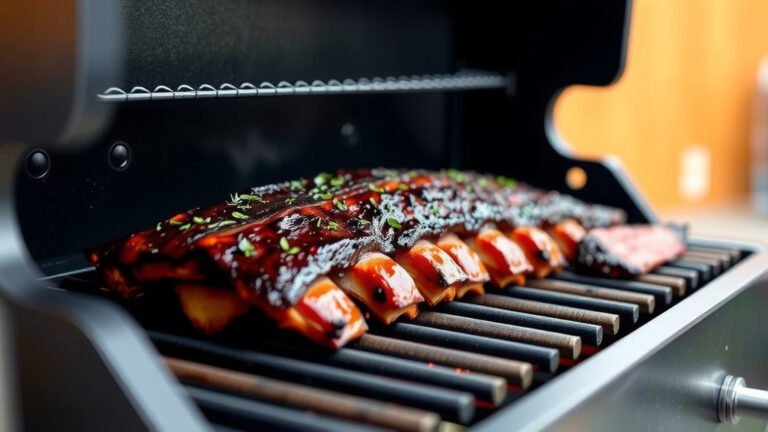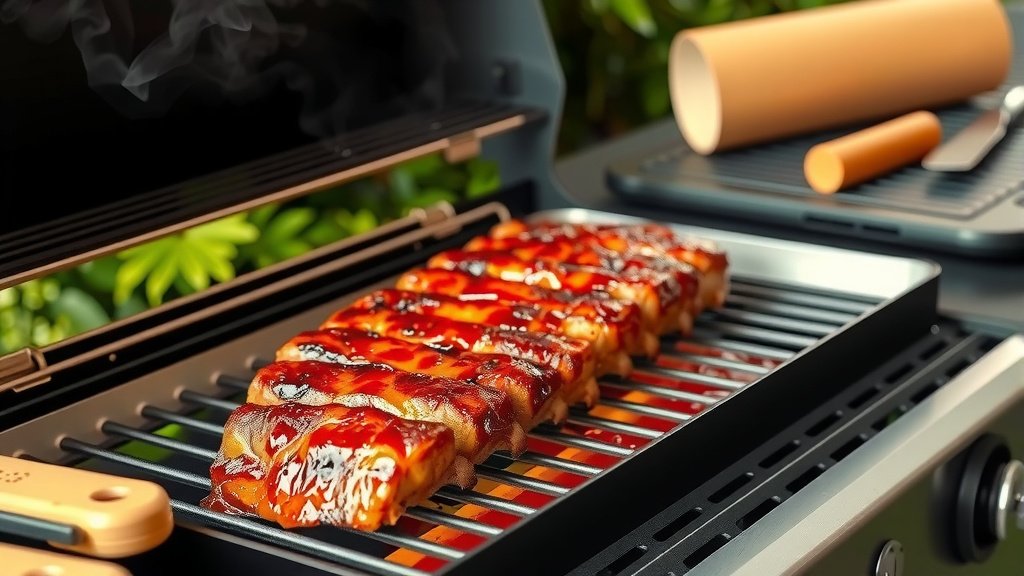
To cook pork ribs on a gas grill, you will use an indirect heat method, setting your grill to a low temperature around 250-275°F (120-135°C).
You’ll typically grill the ribs for about 3-4 hours, often wrapping them in foil midway through, until they are tender and pull cleanly from the bone.
- Get ready for amazing ribs cooked right on your gas grill.
- The trick is to use low, indirect heat, just like in a smoker.
- Prepare your ribs by removing the membrane and adding a great rub.
- You’ll grill them for a few hours, wrapping them up for extra tenderness.
- Finish with your favorite barbecue sauce for a sticky, delicious glaze.
How Do You Cook Pork Ribs On A Gas Grill?
Cooking pork ribs on a gas grill involves setting up for indirect heat, letting them cook slowly at a low temperature until they are incredibly tender.
This method ensures juicy ribs without charring, giving you that classic barbecue flavor many experts suggest (USDA).
Why Gas Grilling Ribs?
You might think smoking is the only way, but your gas grill can absolutely deliver fantastic ribs.
It offers great temperature control, which is key for those low-and-slow cooks.
Plus, it’s often more convenient for a weeknight meal or a casual get-together.
Choosing Your Ribs for Grilling
When you head to the butcher, you’ll see a couple of main types of pork ribs.
We often find that baby back ribs are leaner and quicker to cook, while spare ribs are meatier and richer in flavor.
Many backyard grillers enjoy both for different reasons.
Picking the Best Rack
Look for ribs that have a good amount of meat on the bone, but not too much fat.
A good rack will have even thickness, helping them cook at the same rate.
Avoid racks with dry spots or discolored areas, as that can be a sign of older meat.
Preparing Your Ribs for the Grill
A little prep work goes a long way to making your ribs extraordinary.
Think of it as setting the stage for a wonderful meal; it really makes a difference.
This part is all about building flavor and ensuring a good bite.
Removing the Membrane
This step is non-negotiable for tender ribs, believe us.
On the bone side of your ribs, you’ll find a thin, tough membrane.
Slide a butter knife under it, then use a paper towel to grip and pull it right off (Texas A&M AgriLife Extension).
It stops your rub from penetrating and makes ribs chewy.
Your Secret Rub
After the membrane is gone, it’s time for flavor.
Pat the ribs dry with paper towels; this helps your rub stick.
Apply your favorite dry rub generously on all sides of the ribs.
Some people like to let the rub sit for an hour or two, or even overnight, in the fridge.
Setting Up Your Gas Grill for Rib Success
The key to perfect gas-grilled ribs is mastering indirect heat.
You want your ribs to cook slowly and gently, not directly over flames.
This prevents burning and promotes that fall-off-the-bone tenderness we all crave.
Two-Zone Setup
Turn one or two burners on one side of your grill to low, leaving the other burners off.
Aim for a grill temperature between 250°F and 275°F (120-135°C).
You’ll place your ribs on the unlit side for indirect cooking.
This method works like a convection oven, circulating heat around your food.
The Grilling Process: Low and Slow Wins the Race
Now, let’s get those ribs cooking! This isn’t a race; patience is your friend here.
We often find that maintaining a consistent low temperature is the biggest factor for success.
Close the lid and resist the urge to peek too often, as each opening loses heat.
| Rib Type | Grill Temperature | Approximate Cook Time | Doneness Test |
|---|---|---|---|
| Baby Back Ribs | 250-275°F (120-135°C) | 3-4 hours | Bend test; internal temp 195-203°F |
| Spare Ribs | 250-275°F (120-135°C) | 4-5 hours | Bend test; internal temp 195-203°F |
The Foil Wrap Method
After about 2 hours (for baby back) or 2.5-3 hours (for spare ribs), it’s time to wrap.
This step, often called the “Texas Crutch,” helps tenderize the ribs and keep them moist.
Wrap each rack tightly in heavy-duty aluminum foil, perhaps with a splash of apple juice or cider vinegar for extra moisture.
Return the wrapped ribs to the indirect heat section of your grill for another 1-1.5 hours.
Basting with Sauce
Once your ribs are wrapped and have had their time, unwrap them carefully.
If you like saucy ribs, this is the moment. Brush your favorite barbecue sauce over them.
Put them back on the grill, unwrapped, for another 30-45 minutes to let the sauce caramelize.
The sugar in the sauce can burn quickly, so keep an eye on them during this final stage.
When Are Your Ribs Done?
Knowing when ribs are perfectly cooked comes with a bit of practice, but there are clear signs.
You’re looking for tender meat that pulls easily from the bone, but isn’t falling apart completely.
Too early, and they’ll be tough; too late, and they’ll be mushy.
The Bend Test
Pick up a rack of ribs with tongs, holding it in the middle.
If the ribs are done, they should bend significantly and nearly crack in the middle.
Many experts also recommend an internal temperature of 195-203°F (90-95°C) for perfect tenderness (USDA).
- Grill Setup: Set up two-zone cooking (indirect heat).
- Temperature: Maintain 250-275°F (120-135°C).
- Prep: Remove membrane, apply rub generously.
- Initial Cook: Place ribs bone-side down on the indirect side for 2-3 hours.
- The Wrap: Wrap in foil with liquid, cook for another 1-1.5 hours.
- Sauce & Finish: Unwrap, sauce, cook for 30-45 minutes until caramelized.
- Check Doneness: Use the bend test for tenderness.
- Rest: Let them rest for 10-15 minutes before slicing.
Rest Before You Feast
Once your ribs are done, don’t slice into them immediately.
Let them rest, loosely tented with foil, for about 10-15 minutes.
This allows the juices to redistribute throughout the meat, making them even more flavorful and tender.
It’s a small step that makes a big difference to your eating experience.
Conclusion
Cooking pork ribs on a gas grill is definitely within your reach, offering a fantastic way to enjoy delicious, tender ribs.
By focusing on indirect heat, low temperatures, and a bit of patience, you can achieve results that rival any smoker.
Remember, the goal is to guide the ribs gently to perfect tenderness, creating memorable meals for your family and friends.
So, fire up that grill, follow these steps, and get ready to enjoy some truly amazing pork ribs!
How long should pork ribs cook on a gas grill at 250 degrees?
At a consistent 250°F (120°C) on a gas grill using indirect heat, baby back ribs typically cook for 3-4 hours, while spare ribs might need 4-5 hours. The actual time can vary based on rib thickness and grill consistency.
Do you boil ribs before grilling on a gas grill?
No, boiling ribs before grilling is generally not recommended by many grilling experts. Boiling can strip flavor and create a less desirable texture. The low and slow indirect grilling method achieves tenderness without this step.
Should I wrap ribs in foil on a gas grill?
Yes, wrapping ribs in foil (often called the “Texas Crutch”) is a popular technique for gas grilling. It helps tenderize the ribs and keeps them moist during the middle stage of cooking. You typically wrap them after the first few hours on the grill.
What is the ideal internal temperature for pork ribs?
For optimal tenderness, research suggests an internal temperature between 195-203°F (90-95°C) is ideal for pork ribs. While pork is safely cooked at 145°F, ribs require higher temperatures to break down connective tissues and become tender (USDA).
Can I add smoke flavor to ribs on a gas grill?
Absolutely! You can add smoke flavor to ribs on a gas grill by using a smoker box filled with wood chips (like hickory or apple) placed over a lit burner. This creates smoke that infuses the ribs as they cook indirectly, enhancing their taste.