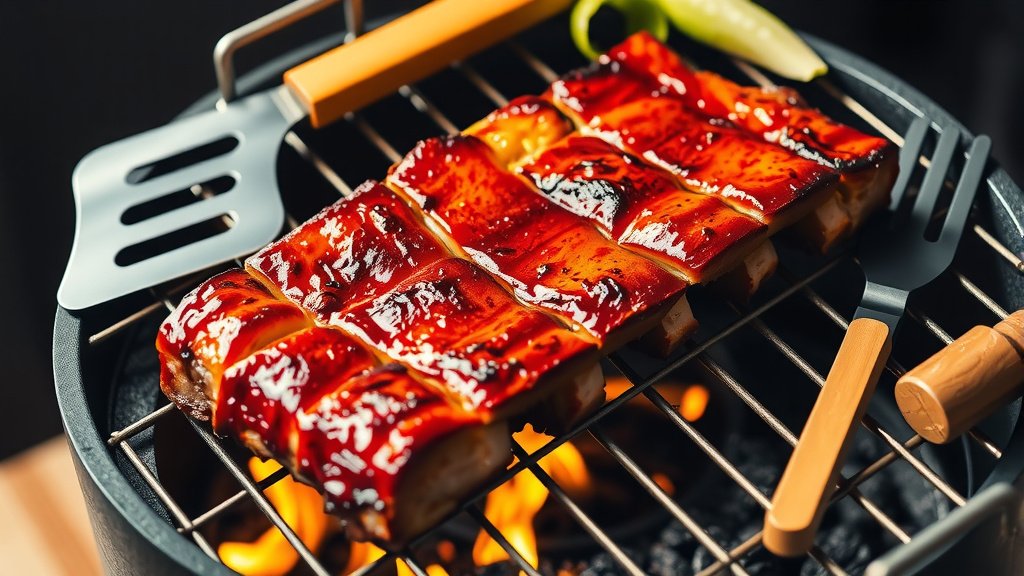
To BBQ ribs on a charcoal grill, you need to create a two-zone cooking setup. This involves banking hot charcoal on one side and placing the ribs on the indirect heat side, maintaining a consistent temperature between 225-275°F for several hours until they are tender.
You’ll also want to use wood chips for smoke flavor and monitor the internal temperature closely for the best results.
- Get fall-off-the-bone ribs by setting up a two-zone charcoal grill.
- Maintain a low, steady heat between 225-275°F for slow cooking.
- Add wood chips to your charcoal for that delicious smoky flavor.
- Spritzing your ribs keeps them moist and tender throughout the cook.
- Knowing when to sauce and when your ribs are truly done is key to success.
How Do You BBQ Ribs On A Charcoal Grill?
Barbecuing ribs on a charcoal grill is a classic method that gives you incredible smoky flavor. It requires a bit of patience and attention to temperature management, but the juicy, tender results are absolutely worth it.
Preparing Your Ribs for the Grill
Start with good quality ribs. Many experts recommend St. Louis style or baby back ribs for home grilling. You want ribs with a good meat-to-fat ratio.
Removing the Membrane
Flip your rack of ribs bone-side up. On the back, you’ll find a thin, silvery membrane. This membrane can become tough when cooked, so you really want to remove it.
Simply slide a butter knife under a corner of the membrane, then grab it with a paper towel and pull it off. It might feel a bit tricky at first, but it gets easier with practice.
Seasoning Your Ribs Right
Once the membrane is gone, it’s time for seasoning. A good dry rub is essential for flavor penetration. Apply your favorite rub generously, ensuring every part of the rib is covered.
Let the ribs sit with the rub for at least 30 minutes, or even overnight in the refrigerator. This gives the spices time to work their magic.
Setting Up Your Charcoal Grill
The right grill setup is crucial for perfectly barbecued ribs. We found that a two-zone fire is the most effective method for charcoal grilling ribs.
Creating a Two-Zone Fire
Ignite your charcoal in a chimney starter. Once the coals are ash-gray, carefully pour them onto one side of your grill’s charcoal grate. This creates a hot zone for searing, though for ribs, we use it for heat generation.
The other side remains empty, becoming your indirect cooking zone. This setup allows for slow, even cooking without burning the ribs.
Controlling Grill Temperature
For ribs, you’re aiming for a low and slow temperature, ideally between 225°F and 275°F. Adjust your grill’s bottom and top vents to control airflow, which in turn controls the heat.
Many experts say to start with the bottom vents mostly open and the top vent partially open over the ribs. Monitor the grill temperature with a reliable thermometer, not just the dome thermometer.
Smoking Your Ribs
The smoke is what gives charcoal-grilled ribs their signature flavor. You need to add wood chips to your charcoal for this step.
Adding Wood Chips for Flavor
Soak your wood chips in water for about 30 minutes before grilling. This makes them smoke rather than burn quickly. Cherry, apple, hickory, or pecan woods are popular choices and provide different flavor profiles.
- Place a handful of soaked wood chips directly onto the hot charcoal.
- Close the grill lid to trap the smoke around the ribs.
- Add more chips every 45-60 minutes for sustained smoke.
- Watch for thin, blue smoke; thick, white smoke can taste bitter.
Maintaining Consistent Heat
Once your ribs are on the indirect side, your job is to maintain that steady temperature. Adding a few new briquettes to the hot side every hour or so can help sustain the heat.
Avoid lifting the lid too often. Every time you peek, heat escapes, and your cooking time increases. “If you’re looking, you’re not cooking,” as the saying goes.
Keeping Ribs Moist
Long cooking times can dry out ribs. Keeping them moist is a key part of the process.
The Spritz Method
Consider spritzing your ribs every hour or so after the first couple of hours. A simple mix of apple cider vinegar, apple juice, and water works well.
This adds moisture and helps the bark (the flavorful crust) develop. Some people also like to use a foil wrap method for part of the cook to keep moisture in, which we found also helps tenderize.
When to Sauce Your Ribs
Don’t sauce your ribs too early. Sugar in most BBQ sauces can burn quickly over direct heat, creating a bitter taste.
Apply your sauce in the last 30-45 minutes of cooking. This allows the sauce to caramelize and adhere to the ribs without scorching. You can apply it in a few layers if you like a thicker coating.
Checking for Doneness
Knowing when ribs are done is more about feel than a strict internal temperature. They should be tender but not falling apart immediately.
Research often connects visual and tactile cues with perfect doneness (Meathead Goldwyn, AmazingRibs.com). Here’s a quick guide:
| Method | Description | What it tells you |
|---|---|---|
| The Bend Test | Pick up a rack of ribs with tongs in the middle. | If the rack bends significantly and the surface cracks, it’s likely done. |
| The Twist Test | Grab a bone at one end and gently twist. | If the bone easily twists and pulls away, your ribs are ready. |
| Probe Test | Insert a toothpick or thermometer probe between the bones. | It should slide in with very little resistance, like soft butter. |
Resting and Serving
Just like a good steak, ribs need to rest after coming off the grill. This step is often overlooked but truly makes a difference.
The Importance of Resting
Rest your ribs for 10-15 minutes, loosely tented with foil. This allows the juices to redistribute throughout the meat, ensuring every bite is moist and flavorful.
Slicing them immediately can cause those delicious juices to run out, leaving you with drier ribs.
Troubleshooting Common Issues
Grilling ribs can have a learning curve. Don’t worry if things aren’t perfect on your first try.
Too Dry?
If your ribs are dry, you might have cooked them at too high a temperature or for too long without enough moisture. Remember to use the two-zone setup and consider spritzing or foiling.
Burnt Outside?
This usually means your heat was too direct or too high. Ensure the ribs are always on the indirect side of the grill. Always watch your grill temperature closely.
Your Ribs Success Checklist
Keep these points in mind for your next barbecue:
- Membrane removed and ribs well-seasoned.
- Charcoal grill set up for two-zone cooking.
- Temperature consistently maintained at 225-275°F.
- Wood chips added for continuous smoke.
- Ribs spritzed or foiled to stay moist.
- Sauce applied only in the last 30-45 minutes.
- Doneness checked by bend or twist test.
- Ribs rested for 10-15 minutes before slicing.
Conclusion
Barbecuing ribs on a charcoal grill is an art form, but one that anyone can master with a little practice. By focusing on consistent low heat, good smoke, and proper moisture, you’ll create ribs that are juicy, tender, and packed with flavor. Don’t be afraid to experiment with different rubs and wood types to find your perfect recipe. You’ve got this!
What is the best type of charcoal for grilling ribs?
Lump charcoal is often preferred by grill masters because it burns hotter and cleaner, offering a pure smoky flavor. However, briquettes are also a reliable choice, providing a consistent burn for longer cooks.
How do I prevent my ribs from drying out on the grill?
To prevent dry ribs, maintain a low and slow temperature and avoid direct heat. You can also spritz your ribs with a liquid like apple cider vinegar or apple juice every hour, or wrap them in foil for part of the cooking time.
Can I use an electric smoker’s temperature for a charcoal grill?
Yes, the target temperature range of 225-275°F for ribs is similar for both electric smokers and charcoal grills. The key is maintaining that consistent heat on your charcoal grill using proper vent control.
What’s the ideal internal temperature for cooked ribs?
While an internal temperature of 195-203°F often indicates tenderness, the best way to check for doneness is by feel. The meat should pull away easily from the bone, and the rack should bend significantly.
How long does it typically take to cook ribs on a charcoal grill?
Cooking time varies based on the rib type and grill temperature, but baby back ribs usually take 3-5 hours, while St. Louis style or spare ribs can take 5-7 hours. Always cook until they are tender, not just for a set time.