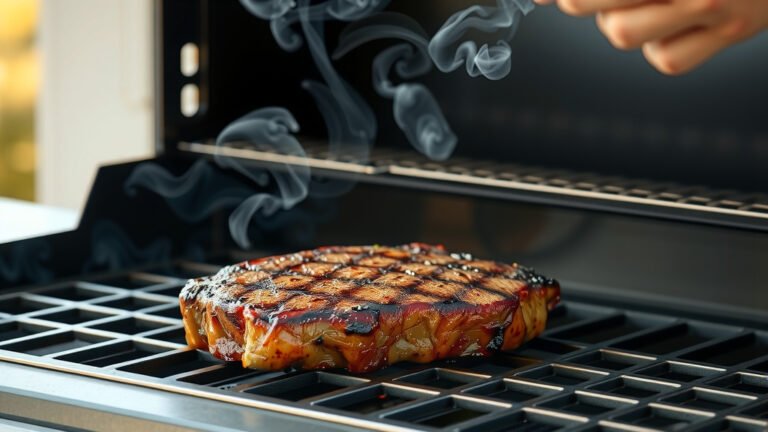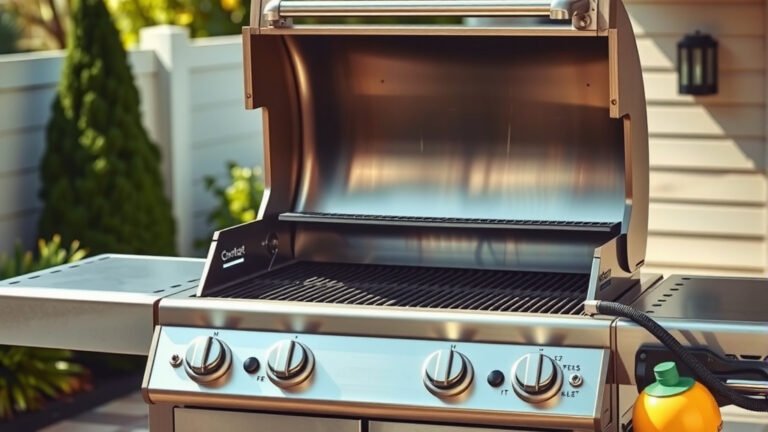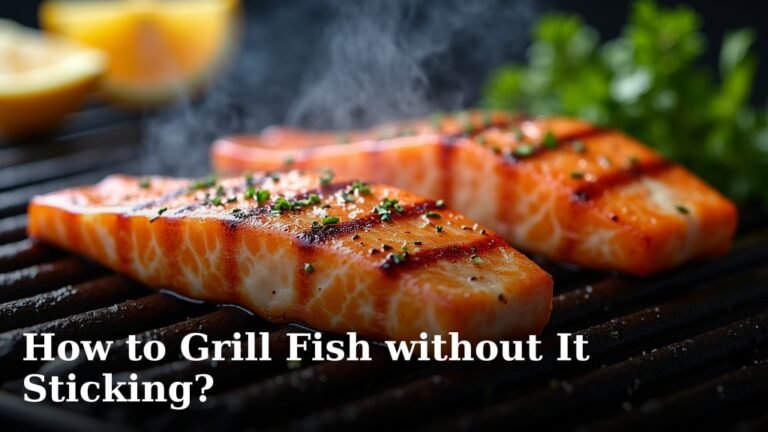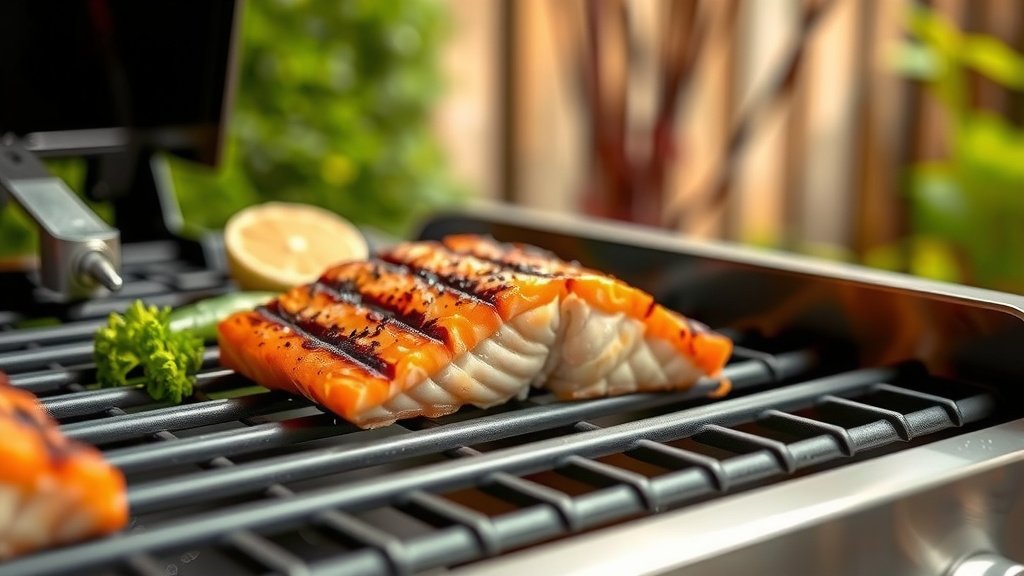
To grill salmon on a gas grill, aim for a medium-high temperature range of 400-450°F (200-230°C) for best results. This heat ensures a beautiful sear while cooking the salmon thoroughly and preventing sticking.
Maintaining a consistent grill temperature when grilling salmon on your gas grill is key for a flaky, moist fillet every time.
- Set your gas grill to achieve a medium-high heat, targeting 400-450°F.
- Always preheat your grill thoroughly and ensure the grates are clean and oiled to prevent sticking.
- Grill salmon skin-side down first for 6-8 minutes, then flip carefully for an additional 4-7 minutes.
- The goal is an internal temperature of 145°F (63°C) for food safety, as recommended by the USDA.
- A reliable meat thermometer is your best friend for perfectly cooked salmon.
What Temperature To Grill Salmon On Gas Grill?
For perfectly grilled salmon on a gas grill, you should set your burners to achieve a consistent temperature between 400-450°F (200-230°C). This medium-high heat ensures a nice sear and even cooking without drying out the fish.
It balances getting a crispy exterior with maintaining a moist, tender interior. Too low, and your salmon might stick or dry out. Too high, and you risk charring the outside before the inside cooks through.
Why Temperature Matters for Grilled Salmon
You might wonder, why such a specific temperature? Salmon is delicate, packed with healthy fats, and cooks relatively quickly. Getting the temperature right means you achieve several things.
You create a beautiful crust, keep the flesh from sticking, and cook it evenly. Think of it like baking a cake; precision helps you get the best outcome.
The Perfect Temperature Range for Grilled Salmon (400-450°F)
Many grilling guides recommend this temperature for a reason. At 400-450°F, the grill grates are hot enough to sear the fish quickly. This rapid sear helps to lock in moisture.
Research often shows that moderate-high heat offers the best balance for delicate proteins like fish (Cook’s Illustrated).
Setting Up Your Gas Grill for Success
Before you even place your beautiful salmon on the grill, a bit of prep makes all the difference. This preparation ensures your fish cooks perfectly and doesn’t become one with your grates.
It’s like preparing your canvas before you paint; the foundation matters.
Preheat is Key for Grilling Salmon
Always preheat your gas grill for at least 10-15 minutes. This allows the grates to get uniformly hot.
When you hear that sizzle as the salmon hits the grill, you know you’ve got the right heat. It creates that sought-after non-stick surface.
Clean Grates Prevent Sticking
You can’t grill salmon successfully on dirty grates. Leftover food bits will act like glue, tearing apart your fish when you try to flip it.
Brush your grates clean after preheating. Then, lightly oil them with a high smoke point oil, like canola or grapeseed, using a paper towel held with tongs. This step is essential for preventing stickage.
Direct vs. Indirect Heat for Salmon
For most salmon fillets, you’ll use direct heat. This means cooking directly over the flame.
But what if you have a very thick piece, or a whole side of salmon? Then, a two-zone setup with direct and indirect heat can be helpful. You might start it over direct heat for a sear, then move it to indirect heat to finish cooking gently.
How to Grill Salmon: Step-by-Step Checklist
Getting your salmon from prep to plate is easy with a few simple steps. Here’s a quick guide to make sure you get it right every time.
Follow these points, and you’ll be enjoying delicious grilled salmon in no time.
- Preheat your gas grill to 400-450°F.
- Clean and oil the grill grates thoroughly.
- Season your salmon fillets well with salt, pepper, and your favorite spices.
- Place salmon skin-side down on the hot grates.
- Grill for 6-8 minutes without moving it.
- Carefully flip the salmon and grill for another 4-7 minutes.
- Check for doneness with a meat thermometer.
Monitoring Doneness: Beyond the Clock
While timing gives you a good estimate, it’s not foolproof. The thickness of your salmon fillet, the exact temperature of your grill, and even the ambient air can all affect cooking times.
To avoid dry, overcooked fish, you need more reliable methods.
The Flake Test for Salmon
This is a classic test. Gently poke the thickest part of the salmon with a fork. If it flakes easily, meaning the flesh separates into layers, it’s ready.
The center should still look slightly translucent or barely opaque, depending on your preference. But it’s not the most precise method.
Using a Meat Thermometer for Accuracy
The most accurate way to know when your salmon is done is by using a reliable meat thermometer. Insert the thermometer into the thickest part of the fillet.
The USDA recommends cooking fish to an internal temperature of 145°F (63°C). We found that pulling the salmon off the grill around 135-140°F often works well, as it will continue to cook a few degrees as it rests (carryover cooking).
Common Grilling Mistakes to Avoid with Salmon
Even experienced grillers can make mistakes. Knowing what to watch out for can save your salmon from a less-than-perfect fate.
Learning from common errors helps you get it right, much like knowing the potholes on your daily commute.
- Not preheating the grill enough.
- Forgetting to clean or oil the grates, leading to sticking.
- Flipping the salmon too often, which can break it apart.
- Overcooking, resulting in dry, tough fish.
- Not using a meat thermometer to check internal temperature.
- Choosing fillets of uneven thickness, leading to uneven cooking.
Skin-On vs. Skin-Off Salmon: Does it Change Things?
You might wonder if the skin makes a difference. Many experts suggest grilling salmon with the skin on.
The skin acts as a protective layer, helping the fish retain moisture and making it easier to handle on the grill. It also crisps up beautifully.
Grilling Times Based on Thickness
The thickness of your salmon fillet is a big factor in how long it needs to cook. Here’s a quick guide:
| Salmon Thickness | Approximate Grill Time (400-450°F) | Internal Temperature |
|---|---|---|
| 1 inch (2.5 cm) | 10-14 minutes (total) | 145°F (63°C) |
| 1.5 inches (3.8 cm) | 14-18 minutes (total) | 145°F (63°C) |
| Thicker Steaks/Fillets | Adjust accordingly, use thermometer | 145°F (63°C) |
Always use a thermometer for precision, as these are just estimates.
Flavor Boosts for Your Grilled Salmon
Salmon is wonderful on its own, but a little extra flavor can take it to the next level. Think beyond just salt and pepper.
A simple marinade or a finishing sauce can make your grilled salmon truly memorable.
Simple Marinades and Rubs
A quick marinade of olive oil, lemon juice, dill, garlic, and a touch of honey or maple syrup works wonders. Even just a sprinkle of a good quality fish rub before grilling can add depth.
Don’t marinate for too long; 15-30 minutes is usually plenty for fish.
Fresh Herbs and Lemon
After grilling, a squeeze of fresh lemon juice and a sprinkle of chopped fresh herbs like dill, parsley, or chives brighten the flavor. You can even place lemon slices directly on the salmon during the last few minutes of grilling.
These simple additions make the dish pop, much like a garnish on a chef’s plate.
Conclusion
Grilling salmon on a gas grill at the right temperature is simpler than you might think. By aiming for 400-450°F, preparing your grill properly, and using a meat thermometer, you’re set for success.
Remember that clean, oiled grates and an accurate internal temperature reading of 145°F are your best allies. With these practical tips, you can confidently grill moist, flaky, and flavorful salmon every time you fire up your grill. Enjoy your delicious meal!
What is the ideal thickness for grilling salmon fillets?
For best results and even cooking, aim for salmon fillets that are about 1 to 1.5 inches thick. Thinner fillets cook too quickly and can dry out, while much thicker ones might need a two-zone grilling approach.
Can I grill frozen salmon directly on a gas grill?
While technically possible, it’s not recommended for the best quality. Grilling salmon from frozen can lead to uneven cooking, with the outside overcooked before the inside thaws and cooks. It’s always best to thaw salmon in the refrigerator overnight before grilling.
How do I prevent salmon from sticking to the grill grates?
The key to preventing sticking is to ensure your grill grates are spotlessly clean and thoroughly preheated. After cleaning, lightly oil the hot grates just before placing the salmon on them. A well-seasoned cast iron grate also helps.
Is it better to grill salmon with the skin on or off?
Many grill masters prefer to grill salmon with the skin on. The skin acts as a natural barrier, protecting the delicate flesh from drying out and helping it stay together on the grill. It also crisps up beautifully, offering a nice texture contrast.
What kind of oil should I use for oiling the grill grates?
You should use a cooking oil with a high smoke point for oiling your grill grates. Good choices include canola oil, grapeseed oil, or vegetable oil. Avoid olive oil, as its lower smoke point means it can burn and create undesirable flavors at high grill temperatures.