
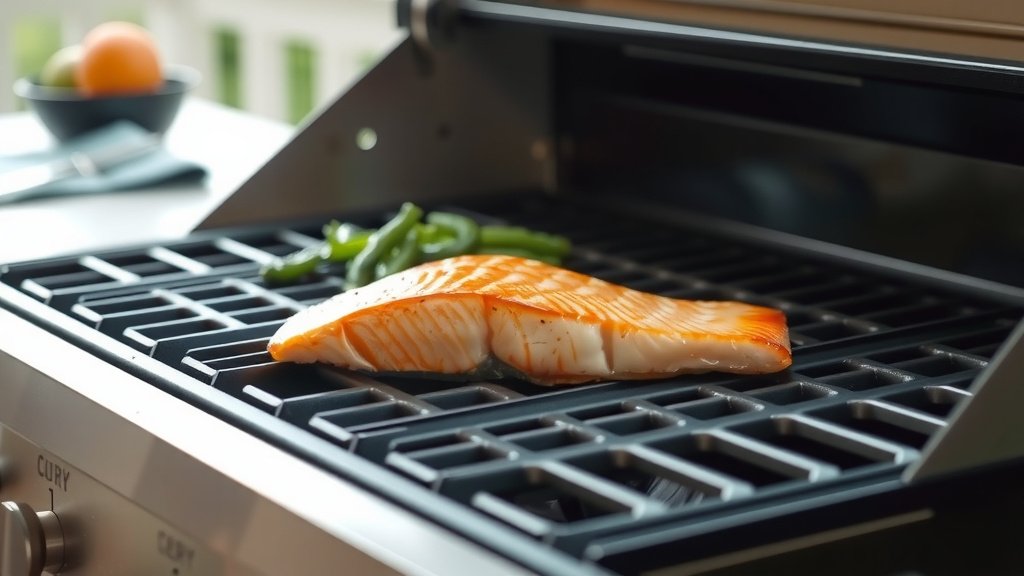
To grill salmon on a gas grill, aim for a consistent temperature between 400-450°F (200-230°C). This high heat ensures a beautiful sear and flaky, moist fish.
Keep the lid closed as much as possible to maintain a steady temperature, grilling for about 12-15 minutes total until the internal temperature of the salmon reaches 145°F (63°C).
- For perfectly grilled salmon, preheat your gas grill to 400-450°F (200-230°C).
- Always start with the salmon skin-side down to protect the delicate flesh.
- Use an instant-read thermometer to check for an internal temperature of 145°F (63°C).
- Clean, oiled grates are your best friend to prevent sticking.
- Grill roughly 12-15 minutes total, adjusting for thickness.
What Temp To Grill Salmon On Gas Grill?
You want a high heat for grilling salmon on a gas grill. We found that 400 to 450°F (200 to 230°C) is the ideal range. This temperature helps you achieve a delicious crispy skin and a perfectly cooked, flaky interior.
Why High Heat is Your Salmon’s Best Friend
Ever wonder why professional chefs always go for high heat with fish? It is not just a preference. High heat cooks the salmon quickly. This short cooking time keeps the fish moist and prevents it from drying out.
It also helps create a wonderful sear. That beautiful, slightly browned exterior adds so much flavor. Think of it like a flavor shield, locking in all the juices.
The Searing Secret
A good sear is magic for salmon. When you place salmon on hot grates, the surface proteins quickly caramelize. This creates a flavorful crust. Many culinary experts agree this crust adds texture and richness.
Without enough heat, your salmon might steam instead of sear. Steamed salmon on a grill can be bland and lack that amazing texture. You are looking for a sizzle when it hits the grate.
Skin-Side Down First? Always!
Starting skin-side down is a well-known trick. The skin acts as a natural barrier. It protects the delicate flesh from the grill’s direct heat. This prevents your beautiful fillet from overcooking too quickly.
It also helps crisp up the skin beautifully. Crispy salmon skin is a treat in itself. Research often points to this method as a way to maintain moisture (Cook’s Illustrated).
Prepping Your Salmon for Grill Greatness
Preparation is key for any grilling success. With salmon, a few simple steps make a big difference. Think of it as setting the stage for a perfect performance.
Do not just toss it on the grill. A little attention beforehand ensures a much better result. You will be glad you took these extra moments.
Choosing the Right Fillet
Start with a good quality salmon fillet. Look for bright, firm flesh. It should smell fresh, like the ocean. Avoid any fish that looks dull or has a strong “fishy” odor.
Thicker fillets often work best for grilling. They are more forgiving and less likely to dry out. Aim for fillets around 1 to 1.5 inches thick if possible.
Pat Dry, Season Right
Always pat your salmon dry with paper towels. Excess moisture is the enemy of a good sear. It will steam the fish instead of browning it.
Season simply. A good sprinkle of salt and pepper is often enough. You can add a little garlic powder or paprika too. Some people enjoy a brush of olive oil before seasoning; we found this helps the seasoning stick.
Grill Setup: Mastering Your Gas Grill
Your grill is your cooking tool. Knowing how to set it up correctly makes grilling easier. A properly prepared grill helps avoid common problems like sticking.
Taking a minute to prepare your grill ensures a smooth cooking process. It is like warming up before a workout; it just makes things better.
Clean Grates are Crucial
Dirty grates mean sticking fish. Before preheating, give your grates a good scrub with a wire brush. This removes old food bits and grime.
After heating, brush them again. Hot grates clean more easily. This double cleaning helps create a non-stick surface. Many experts say clean grates are a non-negotiable for fish.
Oil Your Fish, Not Your Grill Grates
This is a common grilling myth. You should actually oil the salmon, not the grates. Lightly brush the skin-side of your salmon with a high-heat oil. Avocado oil or grapeseed oil work well.
Oiling the grates can lead to flare-ups and uneven cooking. Oiling the fish directly gives you better control. We found this prevents sticking more effectively.
The Grilling Process: Step-by-Step Perfection
Now that your grill is hot and your salmon is prepped, it is showtime. Grilling salmon is straightforward. You just need to follow a few steps carefully.
Do not rush the process. Patience pays off with perfectly cooked fish. You will be enjoying that delicious salmon in no time.
Time and Temperature Chart
Here is a general guide for grilling salmon. Remember, these are starting points. Always use a thermometer for accuracy.
| Salmon Thickness | Grill Temperature | Skin-Side Down Time | Flesh-Side Down Time | Target Internal Temp |
|---|---|---|---|---|
| 1 inch | 400-450°F | 6-8 minutes | 3-5 minutes | 145°F (63°C) |
| 1.5 inches | 400-450°F | 8-10 minutes | 4-6 minutes | 145°F (63°C) |
| 2 inches | 400-450°F | 10-12 minutes | 5-7 minutes | 145°F (63°C) |
Flipping Facts: When and How?
Resist the urge to flip too early. Let the salmon cook undisturbed for the recommended time. When it is ready to flip, it will release from the grates easily.
Use a wide, thin spatula for flipping. Be gentle. One confident flip is better than multiple small attempts. Flip it once and then let it finish cooking.
Checking for Doneness: No Guesswork Allowed
The only reliable way to know if salmon is done is with a thermometer. Insert it into the thickest part of the fillet. The USDA advises a minimum internal temperature of 145°F (63°C).
Once it reaches that temperature, remove it from the grill. It will continue to cook slightly as it rests. This is called carryover cooking.
Troubleshooting Common Salmon Grill Issues
Even seasoned grillers face challenges. Do not worry if something does not go perfectly the first time. We can help you solve common grilling problems.
Learning from experience makes you a better cook. Think of these as learning opportunities for your next grilling adventure.
Sticking Salmon? Not Anymore!
Sticking salmon is frustrating. The main culprits are dirty grates or not enough oil on the fish. Make sure your grates are sparkling clean and hot.
Also, apply a thin layer of high-temp oil directly to the salmon skin. This creates a barrier. Many people forget to pat the fish dry, which can also cause sticking.
Dry Salmon? We Can Fix That!
Dry salmon usually means overcooked salmon. The best solution is precise temperature control and a good thermometer. Pull the fish off the grill as soon as it hits 145°F (63°C).
Using a thicker fillet can also help. Thicker fish has a larger margin for error. Consider wrapping thinner fillets in foil for the last few minutes of cooking to retain moisture.
Essential Grilling Tools Checklist
Having the right tools makes grilling salmon much easier and more enjoyable. These simple items can elevate your grilling game.
- Instant-Read Thermometer: Absolutely essential for perfect doneness.
- Grill Brush: For clean grates and preventing sticking.
- Wide, Thin Spatula: Makes flipping delicate fish easy.
- Tongs: Helpful for moving grates or other items.
- High-Temp Oil: Like avocado or grapeseed oil for brushing the fish.
- Paper Towels: For patting salmon dry before seasoning.
Conclusion
Grilling salmon on a gas grill is simpler than you might think. By preheating your grill to a consistent 400-450°F (200-230°C), you set yourself up for success. Remember to start with clean, oiled salmon skin-side down. Using an instant-read thermometer is your best friend for achieving that perfect 145°F (63°C) internal temperature. With these tips, you will be enjoying perfectly cooked, flavorful salmon every time. Happy grilling!
What kind of salmon is best for grilling?
For grilling, a thicker salmon fillet, like Atlantic or King salmon, often works best. Their higher fat content helps them stay moist and prevents drying out on the high heat of the grill. Look for fillets that are about 1 to 1.5 inches thick.
Should I marinate salmon before grilling?
You can marinate salmon, but it is not strictly necessary. A simple seasoning of salt, pepper, and perhaps a little olive oil is often enough to let the salmon’s natural flavor shine. If you do marinate, keep it short, around 15-30 minutes, as acidic marinades can start to “cook” delicate fish if left too long.
How do I prevent salmon from sticking to the grill grates?
To prevent sticking, make sure your grill grates are very clean and piping hot before you add the fish. Also, brush the salmon skin generously with a high-heat oil (like avocado or grapeseed oil) just before placing it on the grill. Avoid flipping the fish too early; let it cook undisturbed until it naturally releases from the grates.
Can I grill salmon without the skin?
Yes, you can grill salmon without the skin, but it requires a bit more care. Without the protective skin, the flesh is more exposed to direct heat and more prone to sticking and drying out. We found that cooking skinless salmon in a grill basket or on a piece of aluminum foil can help manage this and make it easier to flip.
How long should salmon rest after grilling?
After grilling, it is a good idea to let your salmon rest for 5-10 minutes. This allows the juices to redistribute throughout the fillet, resulting in more tender and moist fish. Simply transfer it to a plate and loosely tent it with foil before serving.
