
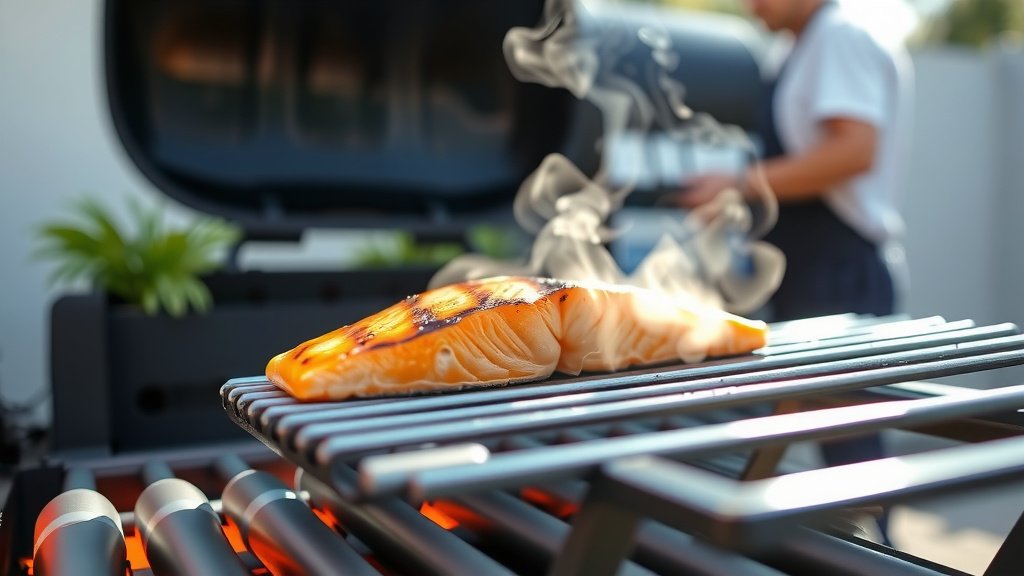
To cook salmon on the BBQ grill, preheat your grill to medium-high heat, about 400-450°F (200-230°C). Grill skin-side down for 6-8 minutes, then flip carefully and cook for another 3-5 minutes, until the internal temperature reaches 145°F (63°C).
Always start with a clean, oiled grill grate to prevent sticking, ensuring your salmon develops beautiful grill marks and cooks evenly.
- Get a perfectly flaky salmon on your BBQ grill.
- Learn quick prep steps and ideal grill temperatures.
- Discover tips to prevent sticking and achieve a juicy finish.
- Master cooking times for that perfect doneness every time.
How To Cook Salmon On The BBQ Grill?
Cooking salmon on the BBQ grill is a fantastic way to add flavor and texture to this healthy fish. You want to get that perfect smoky taste with a flaky inside.
Achieving this takes a few simple steps, focusing on preparation and grill control. Let’s get your salmon ready for the heat!
Why Grill Salmon, Anyway?
Grilling salmon locks in its natural moisture, giving you a tender, juicy result. Plus, the high heat creates a wonderful crispy skin, if you like it.
Many experts say the smoky char from the grill adds a layer of flavor you just can’t get indoors. It’s a rewarding outdoor cooking experience, isn’t it?
Picking the Perfect Salmon Fillet
Choosing the right salmon is your first step to success. Look for fillets that are bright in color and feel firm to the touch.
We found that fresh, wild-caught salmon often has a richer flavor profile. Aim for pieces that are roughly the same thickness for even cooking.
Skin On or Skin Off?
This is a common question. Keeping the skin on acts like a natural barrier, protecting the delicate flesh from the direct heat.
It also helps keep the fillet together, making it easier to flip. Many grill enthusiasts prefer skin-on for its flavor and structural support.
Essential Preparation Steps
Before your salmon hits the grill, a little prep goes a long way. This ensures delicious results and avoids frustrating sticking.
You’ll thank yourself later for taking these few moments to prepare correctly.
- Pat your salmon fillets completely dry with paper towels.
- Brush both sides lightly with olive oil or another high-smoke-point oil.
- Season generously with salt, pepper, and your favorite herbs.
- Preheat the grill and clean the grates.
- Oil the grates just before placing the fish.
Seasoning Your Salmon
Simple seasoning often works best for salmon. A good sprinkle of kosher salt and fresh black pepper is a great start.
You might also like a little garlic powder, dill, or a squeeze of lemon juice. Don’t be shy; salmon can handle robust flavors!
Setting Up Your Grill for Success
Grill temperature is key when cooking salmon. You want it hot enough to sear but not so hot that it burns the outside before the inside cooks.
Think of it as Goldilocks; not too hot, not too cold, but just right.
Direct vs. Indirect Heat
For most salmon fillets, we suggest starting with direct, medium-high heat. This gets those beautiful grill marks and crispy skin.
If your fillets are very thick, you might move them to indirect heat after a few minutes to finish cooking gently (Mayo Clinic).
Target Grill Temperature
Aim for your grill to be around 400-450°F (200-230°C). This range provides the heat needed for a good sear.
Allow your grill to preheat fully for at least 10-15 minutes before adding the fish. A hot grill is a non-stick grill.
Grilling Your Salmon: The Main Event
Now for the exciting part! Getting the salmon onto the grill and watching it transform is quite satisfying.
Remember, patience and a gentle touch are your best friends here.
| Fillet Thickness | Skin-Side Down (Direct Heat) | Flip & Finish (Direct Heat) | Internal Temperature |
|---|---|---|---|
| 1 inch (2.5 cm) | 6-8 minutes | 3-5 minutes | 145°F (63°C) |
| 1.5 inches (3.8 cm) | 8-10 minutes | 4-6 minutes | 145°F (63°C) |
| 2 inches (5 cm) | 10-12 minutes | 5-7 minutes | 145°F (63°C) |
The Initial Sear
Place the salmon fillets skin-side down on the hot, oiled grates. Close the lid if your grill allows.
Resist the urge to move them for the first several minutes. Let that beautiful sear develop.
When to Flip?
You’ll know it’s time to flip when the salmon releases easily from the grates. This usually happens after 6-8 minutes for a 1-inch thick fillet.
Use a wide, thin spatula for flipping to avoid breaking the fish. A good flip keeps your fillet intact.
Checking for Doneness
The best way to know if your salmon is done is with an instant-read thermometer. Insert it into the thickest part of the fillet.
Research often connects an internal temperature of 145°F (63°C) as the ideal for cooked fish (USDA).
Visual Cues for Cooked Salmon
Aside from temperature, salmon will turn opaque and flake easily with a fork when done. You’ll see the color change from translucent to a light pink.
Some people enjoy their salmon slightly less cooked, but 145°F is a good general guideline for safety and flavor.
Troubleshooting Common Grill Issues
Even seasoned grill masters hit snags sometimes. Don’t worry, we’ve got some solutions for you.
Learning how to fix problems makes you a better cook overall.
Why Does My Salmon Stick?
The most common culprit for sticking is insufficient grill preheating or dirty grates. Always start with super clean, hot, and oiled grates.
Also, don’t try to move the fish too early. It will release naturally when a crust forms.
Resting Your Salmon
Just like with steak, resting salmon is important. Transfer your cooked fillets to a plate or cutting board.
Cover them loosely with foil and let them rest for 5 minutes. This allows the juices to redistribute, keeping the fish moist.
Serving Suggestions
Grilled salmon is incredibly versatile. It pairs wonderfully with a simple squeeze of lemon, fresh dill, or a light sauce.
Consider serving it with roasted vegetables, a fresh salad, or some grilled asparagus for a complete meal.
Conclusion
Grilling salmon on the BBQ grill doesn’t have to be intimidating. With the right preparation, temperature control, and a bit of patience, you can achieve fantastic results every time.
From choosing your fillet to that final resting period, each step plays a part in creating a delicious, flaky, and perfectly cooked salmon dinner. So, fire up your grill and enjoy the amazing flavors!
What kind of salmon is best for grilling?
Many experts say thicker fillets of salmon, like King (Chinook) or Sockeye, are excellent for grilling because they hold up well to the heat and remain moist. Look for pieces that are at least one inch thick.
How do I prevent my salmon from drying out on the grill?
To prevent dryness, cook your salmon to the correct internal temperature of 145°F (63°C) and avoid overcooking. Starting skin-side down also helps protect the flesh, and a quick rest after grilling allows juices to redistribute.
Can I grill salmon without the skin?
Yes, you can grill salmon without the skin, but it requires extra care. Make sure your grill grates are impeccably clean and well-oiled to prevent sticking. A grill basket can also be very helpful for skinless fillets.
Should I use a marinade for grilled salmon?
A marinade can add great flavor and moisture, especially for skinless salmon. Aim for acidic marinades with citrus or vinegar, but keep marinating time to 30 minutes to an hour. Too long, and the acid can start to “cook” the fish.
What’s a quick way to clean the grill grates before cooking?
The quickest way is to preheat your grill to high heat, then use a stiff wire brush to scrape off any cooked-on bits. The heat helps to loosen everything, making cleaning much easier before you oil the grates.
