
Using a Gas Grill on Your Apartment Balcony: The Short Answer
Yes, you can often use a gas grill on an apartment balcony, but it’s not a universal yes. Your ability to fire up the propane tank depends on a specific set of rules, safety features, and local laws. Before you even think about unboxing that grill, you need to become an expert on your own building’s policies and your city’s fire codes. Ignoring this step could get you fined or even evicted.
Checking the Most Important Rule First: Your Lease Agreement
Your lease is the ultimate authority. This document is where you’ll find the direct answer to your grilling question. Many apartment complexes have strict policies against open flames on balconies. This isn’t just to be difficult—it’s a major safety and liability concern for property managers.
What to Look for in Your Lease
Search your lease for keywords like “balcony,” “grilling,” “cooking,” “open flame,” or “propane.” Some leases might allow electric grills but prohibit gas. Others might have a blanket ban on all outdoor cooking. We found that a surprising number of tenants simply don’t know what their lease says about this.
What If Your Lease Is Silent on Grilling?
Silence doesn’t automatically mean permission. If your lease doesn’t mention it, the next step is to ask your landlord or property manager directly. Get their answer in writing, like an email, to avoid “he said, she said” situations later. Don’t assume a yes.
The Non-Negotiable: Local Fire Codes and Regulations
Even if your landlord gives you a thumbs-up, city and county fire codes can overrule them. Fire marshals set strict rules about what types of fuel can be used, how far a grill must be from the building, and what kind of balconies are safe. These regulations exist because balconies are often enclosed spaces with overhead roofs and nearby siding—prime spots for fires to spread quickly.
Common Fire Code Restrictions
- Propane tank storage: Many codes prohibit storing a propane tank on a balcony. It must be on the ground level.
- Clearance distance: You must typically keep the grill at least 10 feet away from the building, any overhang, or combustible materials like deck railings or curtains.
- Balcony enclosure: Fully enclosed or screened-in balconies are often considered too risky for any type of outdoor cooking.
- Fuel type bans: Some jurisdictions outright ban all grills, including charcoal and gas, on multi-unit residential balconies.
How do you find these rules? A quick search for “[Your City] fire code grilling balcony” is a good start. You can also call your local fire department’s non-emergency line for guidance.
Safety First: Why Fire Departments Worry About Balcony Grills
Imagine this: You’re grilling on your balcony, and a small grease flare-up happens. On a backyard patio, you’d step back and let it pass. On a 4th-floor balcony, that flare-up can ignite the wooden deck beneath it or the vinyl siding next to you. Within minutes, fire can race up the side of the building.
The Top Hazards to Understand
- Grease fires: The most common cause of grill fires. Grease builds up in the catch pan and can ignite violently.
- Carbon monoxide (CO): This colorless, odorless gas is deadly. Grilling in a space with poor airflow—like a partially enclosed balcony—can lead to dangerous CO buildup. The CDC emphasizes that CO poisoning is a serious and preventent danger from improper grill use.
- Ignition of structures: Your balcony floor, railing, or building wall are likely made of flammable materials. Radiant heat from a grill can ignite them without even touching them.
Choosing a Grill That’s Safer for Balcony Spaces
If you get the green light, the type of grill matters immensely. Not all grills are created equal for small-space living.
Gas Grill vs. Alternative Options
| Feature | Gas Grill (Propane) | Electric Grill | Portable Charcoal Grill |
|---|---|---|---|
| Open Flame | Yes | Generally No (heating element) | Yes |
| Fuel Storage Risk | High (propane tank) | None | Low (bag of charcoal) |
| Fire Department Approval Likelihood | Often Restricted | Frequently Allowed | Rarely Allowed |
| Cooking Quality | Excellent | Good, can lack smoky flavor | Excellent, true smoky flavor |
| Best For | Those with explicit permission & large balconies | Apartment dwellers seeking most flexibility | Ground-level patios only, typically |
Our research shows that electric grills are the most frequently permitted option in multi-unit housing. They eliminate the open flame and the need for flammable fuel storage on your balcony.
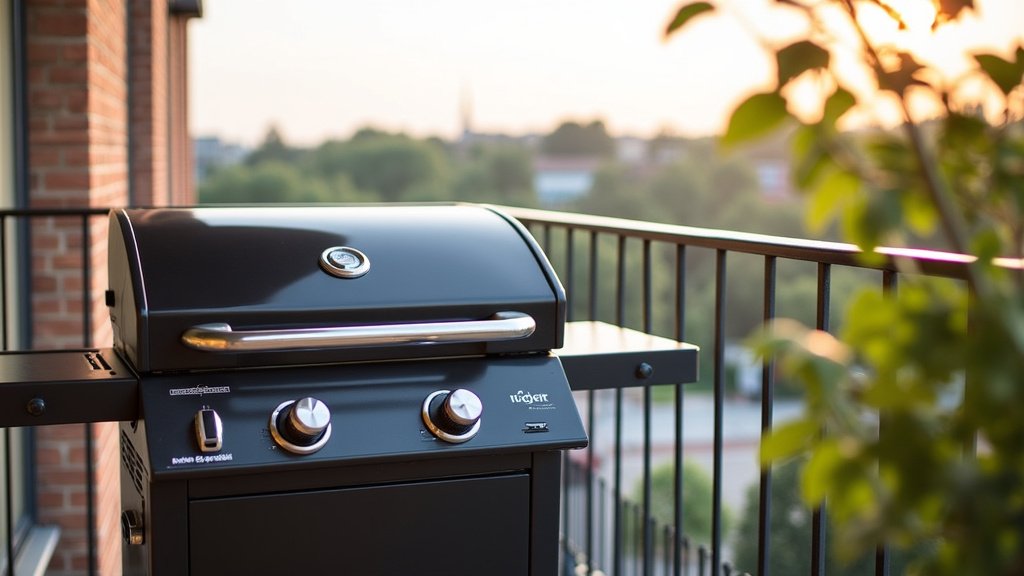
The Golden Rules for Safe Balcony Grilling
If you’re cleared to use a gas grill, being a careful griller is your best defense. Treat every cookout with heightened awareness.
Essential Grilling Safety Checklist
- Never leave it unattended. Not even for a minute to answer the door.
- Keep it clean. Scrub the grates and empty the grease trap before every single use.
- Check for clearance. Ensure nothing flammable is within the required 10-foot zone, including chairs, plants, or awnings.
- Have an extinguisher nearby. A Class B extinguisher for grease fires is ideal. Know how to use it.
- Monitor for CO. Always have excellent cross-ventilation. Never grill in a fully enclosed balcony.
- Shut off the gas completely. After cooking, turn the tank valve and the grill burners off. Do a sniff check for leaks before your next use.
What If You Can’t Use a Gas Grill? Great Alternatives
Getting a “no” doesn’t mean you give up on outdoor cooking. You just pivot. Many fantastic alternatives exist that won’t violate your lease or fire codes.
Indoor-Approved Outdoor Cooking
An indoor smokeless grill or a stovetop grill pan can deliver those beautiful grill marks right in your kitchen. They’re perfect for apartments with strict rules. For balcony use, a small electric contact grill (like a tabletop model) often flies under the radar while still providing that grilling experience.
Some communities even have shared grilling stations on the property grounds. It’s worth asking your management if this is an option. It combines the social joy of grilling with a safe, designated area.
The Bottom Line: Safety and Rules Win Every Time
We know it’s disappointing when you can’t do something you love on your own balcony. But the rules surrounding grills in apartments exist for one primary reason: to prevent a tragedy that could affect dozens of families in your building. Always lead with a phone call to your management and the fire department. Your responsibility extends to your neighbors living just a wall away.
When in doubt, go with the safest option—an electric grill or indoor cooking. Your bond with your landlord (and your neighbors) will be all the better for it.
Conclusion
So, using a gas grill on your apartment balcony hinges on more than just your desire for a good burger. You must **check your lease first**, then **verify local fire codes** for clearance and tank rules. Remember, safety is non-negotiable—grease fires and carbon monoxide are serious risks in tight spaces. Our research consistently shows that **electric grills are often the most permitted option** when strict rules apply. Your clear next step is to **review your lease agreement and call your management or fire department** for a definitive answer. This simple action protects you, your home, and your neighbors.
Frequently Asked Questions
What if my apartment allows grills but my city bans them?
Local fire codes always overrule apartment policies. Even with your landlord’s permission, you must comply with city regulations. Contact your local fire department’s non-emergency line to confirm the exact rules for your address before proceeding.
Can I use a tabletop gas grill if it’s very small?
Size doesn’t usually override fire code restrictions. Many jurisdictions ban all open-flame grills, regardless of size, on balconies. The same risks of fire and carbon monoxide apply, so always verify the specific fuel-type bans in your area.
Will using a grill on my balcony affect my renter’s insurance?
Yes, it could. Unauthorized grilling may void your coverage or create liability if a fire occurs. We recommend disclosing your cooking habits to your insurance provider and strictly following all building and fire rules to maintain protection.
What’s the biggest mistake people make when grilling on a balcony?
The most common mistake is **leaving the grill unattended**. A small flare-up can become a major fire in seconds on a balcony. Always stay present, keep the grill clean, and have a fire extinguisher within reach.
Are there any grills designed specifically for apartment balconies?
While no grill is “designed” for balconies, compact electric models are engineered for small spaces and safety. Look for UL-listed electric grills that don’t require propane storage and have excellent safety features for enclosed areas.
