
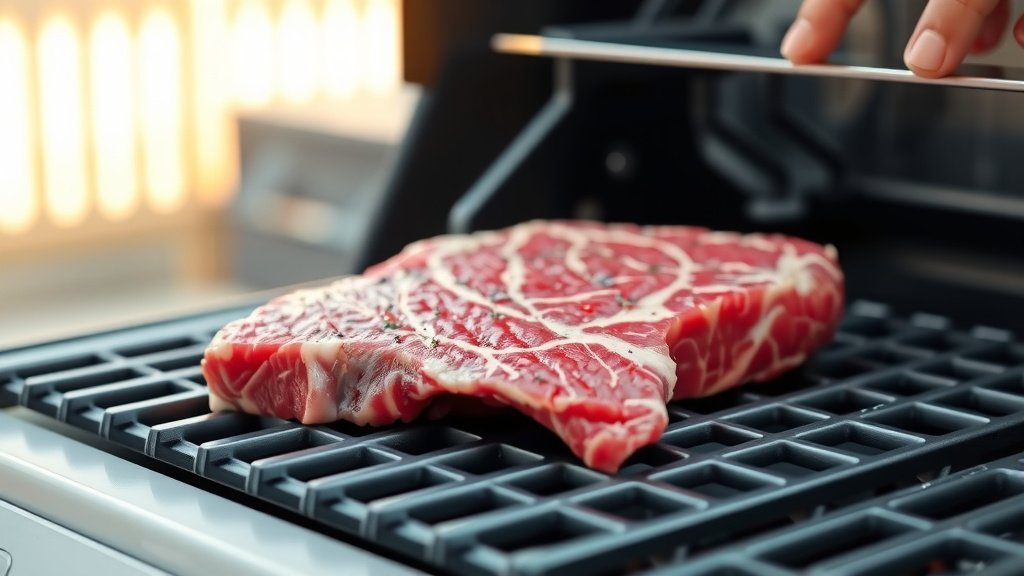
To cook Wagyu steak on a gas grill, preheat your grill to a very high heat (around 500-600°F), sear the steak for 1-2 minutes per side to develop a crust, then move it to a cooler zone for indirect cooking until it reaches your desired internal temperature, typically 125-135°F for medium-rare.
You’ll want to aim for a perfect crust and a buttery, tender interior by managing your grill’s temperature zones and using a reliable meat thermometer to avoid overcooking this luxurious cut of beef.
TL;DR: Here’s the quick guide to grilling Wagyu:
- Choose your Wagyu wisely, understanding its marbling.
- Bring the steak to room temperature before grilling.
- Season simply with salt and pepper to let the flavor shine.
- Preheat your gas grill to very high heat for a quick sear.
- Use a meat thermometer for precise doneness.
How To Cook Wagyu Steak On Gas Grill?
Cooking Wagyu steak on a gas grill is a rewarding experience when done right. You want to respect the marbling and delicate texture of this premium beef, ensuring every bite is unforgettable.
It’s not just about throwing it on the grates; it’s about precision and care to achieve that perfect crust and tender interior. Let’s walk through it together.
Understanding Your Wagyu
Before you even light the grill, truly understand what you’re cooking. Wagyu means “Japanese cow,” and its distinct feature is its intense marbling, those beautiful veins of fat woven throughout the muscle.
This marbling is what gives Wagyu its signature rich flavor and melt-in-your-mouth tenderness. Different grades exist, with higher grades meaning more marbling (Many culinary experts agree).
Choosing the Right Cut
For grilling, thicker cuts work best. Think of a ribeye or a New York strip. These cuts can handle the high heat and develop a fantastic sear without drying out too quickly.
A cut that is at least one inch thick is ideal, allowing you to create a crust while the interior cooks to perfection. Thinner cuts might cook too fast.
Preparation Is Key
Proper preparation sets the stage for success. Think of it as a warm-up act before the main event. It ensures an even cook and prevents temperature shock to the meat.
These simple steps make a big difference in the final taste and texture of your Wagyu. You wouldn’t run a marathon without stretching, would you?
Bring it to Room Temperature
Always take your Wagyu out of the refrigerator at least 30-45 minutes before grilling. This step allows the steak to come closer to room temperature.
An even temperature helps the steak cook more uniformly from edge to center (USDA cooking guidelines suggest this for all meats). Cold spots can lead to uneven doneness.
Seasoning Your Wagyu
Wagyu has such an incredible natural flavor, it needs very little seasoning. A generous sprinkle of coarse sea salt and freshly cracked black pepper is usually all you need.
Some people might add a touch of garlic powder or onion powder, but honestly, less is more here. Let the beef’s natural richness speak for itself.
Setting Up Your Gas Grill
Your gas grill is your culinary tool, and knowing how to use it effectively is paramount. We need both high heat for searing and a cooler zone for gentle finishing.
This two-zone setup is often recommended by grilling professionals to give you maximum control over cooking temperatures (BBQ research found).
Creating Two Heat Zones
Turn on two burners to high heat and leave one burner off, or on low. This creates a hot zone for searing and a cooler, indirect zone for finishing.
Preheat the grill for 10-15 minutes with the lid closed. You want that hot zone to be screaming hot, around 500-600°F, to get a beautiful crust quickly.
Clean and Oil Your Grates
Before putting that expensive steak on, ensure your grill grates are clean. Use a stiff wire brush to remove any residue.
Then, lightly oil the hot grates with a high smoke point oil like grapeseed or avocado oil. This prevents sticking and helps create those perfect grill marks.
Grilling the Wagyu Steak
Now for the main event! This is where technique really comes into play. You’re aiming for a quick, intense sear followed by a gentle, controlled finish.
Don’t be afraid to experiment a little, but stick to the core principles. You’ll be a Wagyu grilling pro in no time.
Here’s a checklist for grilling success:
- Preheat grill to 500-600°F (hot zone).
- Place steak over direct high heat.
- Sear 1-2 minutes per side.
- Move to indirect heat zone.
- Insert meat thermometer.
- Cook to desired internal temperature.
Searing for Flavor and Crust
Place your seasoned Wagyu steak directly over the hottest part of the grill. Close the lid for a minute if your grill loses heat quickly.
Sear for 1 to 2 minutes per side, just until you achieve a dark, caramelized crust. This Maillard reaction is where a lot of the flavor comes from.
Moving to Indirect Heat
Once seared, move the steak to the cooler, indirect heat zone of your grill. Close the lid and let it continue to cook gently.
This allows the inside to reach your desired doneness without burning the exterior. This two-step process is crucial for thick cuts and even cooking.
Monitoring Internal Temperature
The only way to ensure perfect doneness is with a reliable instant-read meat thermometer. Insert it into the thickest part of the steak, avoiding any bones.
Here’s a general guide for doneness (we found that these are commonly accepted temperatures):
| Doneness | Internal Temperature | Description |
|---|---|---|
| Rare | 120-125°F | Cool red center |
| Medium-Rare | 125-135°F | Warm red center |
| Medium | 135-145°F | Pink center |
| Medium-Well | 145-155°F | Slightly pink center |
| Well-Done | 155°F+ | No pink, cooked through |
Remember, the steak will continue to cook a few degrees after you remove it from the heat. So, pull it off about 5 degrees before your target temperature.
Resting Your Wagyu Steak
This step is non-negotiable! As tempting as it is to cut into that beautiful steak right away, don’t do it.
Resting allows the juices to redistribute throughout the meat, ensuring every bite is succulent and flavorful. Many experts agree on this point.
How Long to Rest
Transfer the cooked Wagyu to a cutting board and tent it loosely with foil. Let it rest for at least 5-10 minutes for thinner steaks, or up to 15 minutes for thicker ones.
During this time, the internal temperature will rise slightly, and the muscle fibers will relax, keeping all those delicious juices inside.
Slicing and Serving
After resting, it’s time for the grand finale. How you slice and serve your Wagyu can impact the eating experience.
Always slice against the grain for maximum tenderness. This shortens the muscle fibers, making each piece easier and more enjoyable to chew.
Final Touches
Slice the Wagyu into strips about a quarter to half-inch thick. You might want to sprinkle with a little flaky sea salt, like Maldon, for added crunch and seasoning.
Serve it simply with perhaps a light salad or roasted vegetables. The steak itself is the star of the show; let it shine brightly.
Conclusion
Cooking Wagyu steak on a gas grill is a culinary journey that rewards patience and attention to detail. From understanding its unique marbling to precise temperature control and the crucial resting period, each step plays a vital role.
You’re not just grilling a steak; you’re crafting an experience. By following these guidelines, you’ll consistently achieve a perfectly seared, tender, and incredibly flavorful Wagyu that will impress anyone at your table. Enjoy the journey, and savor every exquisite bite!
What is the best thickness for Wagyu steak on a gas grill?
The best thickness for Wagyu steak on a gas grill is typically 1 to 1.5 inches. This thickness allows you to achieve a beautiful, crispy sear on the exterior without overcooking the delicate, marbled interior, leading to a perfectly tender and juicy result.
Should I oil the Wagyu steak or the grill grates?
It’s generally better to oil the hot grill grates lightly with a high smoke point oil like grapeseed or avocado oil, rather than oiling the Wagyu steak itself. Wagyu has significant internal fat (marbling) that will render during cooking, and directly oiling the steak could cause excessive flare-ups.
How do I prevent flare-ups when grilling Wagyu?
To prevent flare-ups, trim any excess loose fat from the edges of the Wagyu steak, use a two-zone grilling method (moving the steak to indirect heat after searing), and avoid over-oiling the steak. Keep a spray bottle of water nearby for any small flare-ups that might occur.
Can I cook frozen Wagyu steak on a gas grill?
While technically possible, it’s strongly recommended to thaw Wagyu steak completely in the refrigerator before grilling. Cooking from frozen can lead to uneven cooking, where the outside is overcooked while the inside remains raw, compromising the steak’s premium quality and texture.
What internal temperature is considered “rare” for Wagyu steak?
For Wagyu steak, an internal temperature of 120-125°F is generally considered rare, resulting in a cool, red center. However, remember to remove the steak from the grill a few degrees before your target temperature to account for carryover cooking during resting.
