
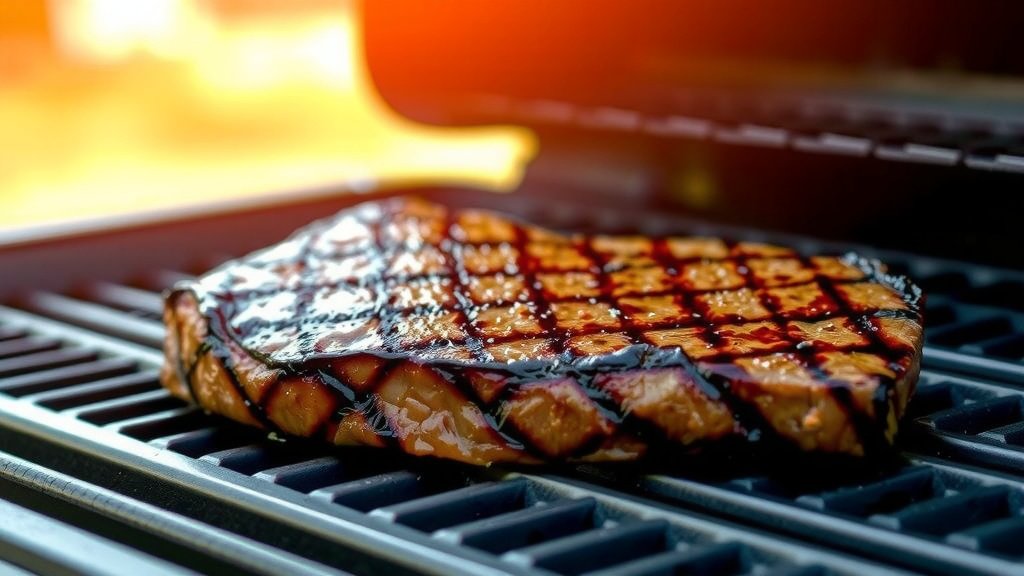
To cook steaks on a Pit Boss pellet grill, you typically use a reverse sear method: smoke at a lower temperature until almost done, then crank up the heat for a final, intense sear.
This approach gives your steaks a wonderful smoky flavor and a perfect crust, ensuring a juicy interior from your Pit Boss pellet grill.
TL;DR: Here’s the quick rundown for your perfect Pit Boss steak:
- Choose a thick steak (1.5 inches or more) for best results.
- Season generously and let it come to room temperature.
- Smoke at 225-250°F until about 15°F below your target doneness.
- Remove the steak, then preheat your Pit Boss to its highest setting for searing.
- Sear for 1-2 minutes per side to achieve that irresistible crust, then let it rest.
How To Cook Steaks On A Pit Boss Pellet Grill?
Cooking steaks on a Pit Boss pellet grill offers a fantastic blend of smoky flavor and a beautiful crust. It’s a process that combines the best of low-and-slow smoking with high-heat searing, giving you restaurant-quality results right in your backyard.
Choosing Your Steak: Thickness Matters
When you’re aiming for that ideal steak on your pellet grill, the cut and its thickness are quite important. We found that thicker cuts, around 1.5 to 2 inches, work best. Why? They allow more time to absorb that delicious smoky flavor without overcooking.
Popular Cuts for Pellet Grills
What kind of steak should you grab? Ribeye, New York strip, and sirloin are always excellent choices. These cuts have good marbling, which means more fat to render and add flavor as they cook. A well-marbled steak helps keep things juicy.
Prepping Your Steak for the Pit Boss
Before any heat touches your meat, some vital prep steps can really make a difference. Think of it as setting the stage for a culinary masterpiece. It takes just a few minutes, but pays off big time in flavor.
Bringing Steak to Room Temperature
Have you ever cooked a steak straight from the fridge? You might notice it cooks unevenly. Many experts say that letting your steak sit out for 30-60 minutes before grilling helps it cook more uniformly. This means a more consistent doneness from edge to edge.
The Art of Seasoning
Don’t be shy with your seasoning! For steaks, a simple mix of coarse salt and freshly cracked black pepper is often all you need. You can also experiment with garlic powder or your favorite steak rub. Apply it generously on all sides, pressing it in gently. This creates a flavorful crust.
Understanding the Reverse Sear Method
The reverse sear is your best friend when cooking steaks on a Pit Boss pellet grill. It’s a two-stage process that delivers incredible results. First, you smoke the steak at a low temperature, then you finish with a high-heat sear. This method ensures tenderness and a great crust.
Stage 1: The Smoke Phase
Start by setting your Pit Boss to a lower temperature, usually between 225°F and 250°F. Place your seasoned steaks directly on the grill grates. You’ll smoke them until their internal temperature is about 15°F below your target doneness (e.g., 115°F for a medium-rare target of 130°F).
This low-and-slow cooking allows the steak to absorb that lovely smoky aroma. It also helps cook the steak more evenly through the center before the final sear.
Stage 2: The High-Heat Sear
Once your steaks hit that initial target temperature, remove them from the grill. Now, crank up your Pit Boss to its highest setting, typically 450°F to 500°F, or use the “Open Flame” searing option if your model has one. Give it 10-15 minutes to fully preheat and get those grates screaming hot.
Return your steaks to the intensely hot grill. Sear for 1-2 minutes per side, just long enough to develop a beautiful, dark-brown crust. Keep a close eye on them; this stage goes quickly!
Achieving Perfect Doneness: Internal Temperatures
Knowing when your steak is perfectly cooked is all about internal temperature. A good meat thermometer is an absolute must-have. Insert it into the thickest part of the steak, avoiding any bone.
| Doneness | Target Internal Temperature (Before Rest) | After Resting |
|---|---|---|
| Rare | 120-125°F | 125-130°F |
| Medium-Rare | 125-130°F | 130-135°F |
| Medium | 130-135°F | 135-140°F |
| Medium-Well | 140-145°F | 145-150°F |
| Well-Done | 150-155°F | 155-160°F |
Remember, the steak will continue to cook slightly after it’s removed from the heat, a phenomenon known as “carryover cooking.” This is why you pull it off the grill a few degrees early.
The Crucial Resting Period
After all that cooking, it’s tempting to cut into your steak right away. But hold on! Resting your steak is incredibly important. When meat cooks, its juices rush to the center. If you slice it too soon, those juices will spill out, leaving you with a dry steak.
Place your cooked steaks on a cutting board, tented loosely with foil, for 5-10 minutes. This allows the juices to redistribute throughout the meat, making every bite succulent and flavorful. You’ll thank yourself for the patience.
Which Pellets for Your Steaks?
The type of wood pellets you use can subtly influence the flavor of your steak. For beef, we found that hearty woods like hickory, oak, or mesquite work wonderfully, imparting a strong, distinct smoky flavor. For a milder smoke, cherry or pecan can be great options. Some people prefer a competition blend for a balanced flavor profile.
Troubleshooting Common Steak Issues
Even seasoned grill masters run into small issues. What if your steak isn’t searing well? Or it’s drying out? We found that often, the grill wasn’t hot enough for the sear, or the steak wasn’t pulled off at the right internal temperature. Don’t worry; it’s all part of the learning process.
Quick Checklist for Pit Boss Steak Success:
- Thick steak chosen?
- Room temp reached?
- Generously seasoned?
- Grill preheated correctly for smoke phase?
- Meat thermometer ready?
- Grill fully preheated for sear phase?
- Steak rested properly?
Conclusion
Cooking a truly fantastic steak on your Pit Boss pellet grill is a rewarding experience. By following the reverse sear method, focusing on proper internal temperatures, and allowing your steak to rest, you’re setting yourself up for success. Experiment with different pellet flavors and seasoning blends to find your personal favorite. You’ll soon be impressing everyone with perfectly smoky, juicy, and beautifully seared steaks, proving your Pit Boss is truly a versatile cooking machine.
FAQs About Cooking Steaks on a Pit Boss Pellet Grill
Can I cook a thin steak using the reverse sear method?
While you can, the reverse sear works best for thicker steaks (1.5 inches or more). Thin steaks cook very quickly, so they might not absorb enough smoke flavor during the low-temperature phase and can easily overcook during the high-heat sear. For thin steaks, a direct high-heat sear is often more suitable.
How do I prevent my steak from drying out on the pellet grill?
Preventing dry steak comes down to two main things: don’t overcook it, and always let it rest. Use a meat thermometer to pull the steak off the grill a few degrees below your target doneness. The resting period, tented with foil, allows juices to redistribute, ensuring a tender and moist result.
What if my Pit Boss doesn’t get hot enough for a good sear?
Some older Pit Boss models or those without a dedicated “Open Flame” searing plate might struggle to reach intense searing temperatures. In such cases, you can remove the steaks after the smoke phase and use a cast iron pan on your grill grates, or even on a side burner or stovetop, to achieve that perfect crust. Ensure the pan is screaming hot.
Should I oil my steaks or the grill grates?
It’s generally a good idea to lightly oil your steaks before seasoning, as this helps the seasoning stick and can contribute to a better crust. Oiling the grill grates can also prevent sticking, especially during the high-heat searing phase. Always oil cold grates, then let them heat up.
Can I use a marinade for steaks on a pellet grill?
Absolutely! Marinades can add flavor and tenderize your steak. For pellet grilling, marinate your steaks for at least 30 minutes, or up to a few hours for more flavor. Pat the steak dry before putting it on the grill, especially before the high-heat sear, to ensure a good crust forms. Excess moisture can hinder searing.
