
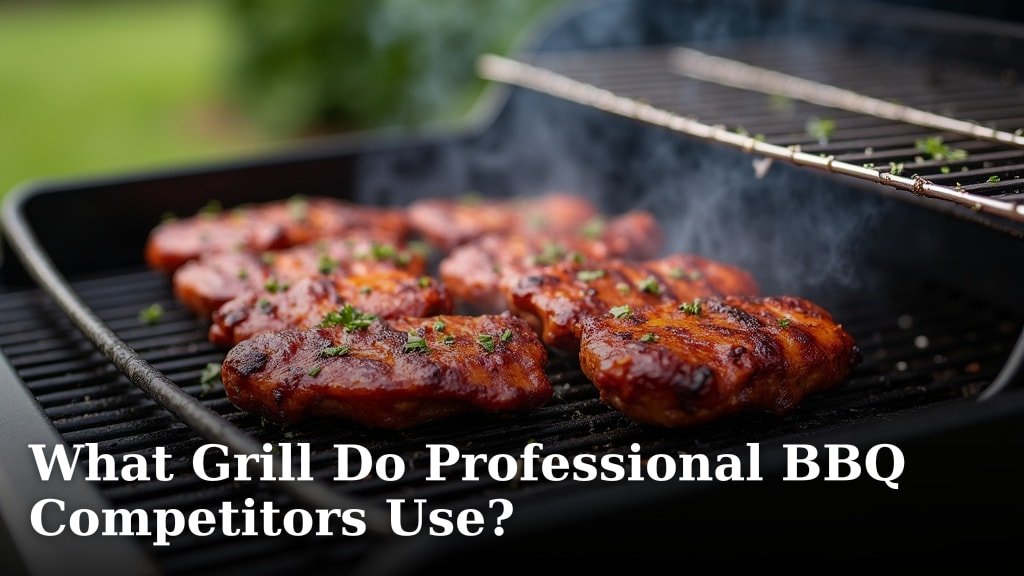
When you ask what grill professional BBQ competitors use, the answer isn’t simple. Top BBQ teams use many different grills, often several at once. They choose based on the meat type and cooking style, aiming for perfect results every time.
You might think there’s one secret grill, right? We found that pros often have a whole arsenal of cooking devices. This includes charcoal smokers, pellet grills, and even gas grills. Each has a specific purpose in competition BBQ.
- Professional BBQ teams use various grills.
- No single “best” grill exists for competitors.
- They pick grills for different meats and cooking needs. Our guide on how to pick a BBQ grill can help you understand the various options available for your specific needs.
- Charcoal smokers, pellet grills, and gas grills are all common.
- Variety helps achieve perfect results.
Ready to discover the secrets behind their award-winning flavors? Let’s dive into the types of grills and smokers that fill a pro’s BBQ trailer.
Grill Types Preferred by Professional BBQ Competitors
Professional BBQ competitors favor certain grill types. They use these tools to achieve specific flavors and textures. It’s all about precision cooking.
You’ll often see a combination of charcoal smokers, pellet grills, and sometimes gas grills. Each has a distinct role on the competition circuit. Teams mix and match for optimal results.
The Mighty Charcoal Smokers
Charcoal smokers are a staple for many pro teams. Why? Because they deliver that classic, deep, smoky flavor that judges love. You can control the heat and smoke levels with skill.
These smokers often produce a beautiful smoke ring on the meat. This is a visual cue of good, slow smoking. It signals flavor and tenderness to the judges.
Offset Smokers: The Workhorses
Many competitors rely on offset smokers. These have a firebox on the side, separate from the cooking chamber. This design allows for indirect heat and smoke distribution.
You can add wood and charcoal without disturbing the meat. This keeps the cooking environment stable. It’s a key factor for consistency over long cooks.
Ugly Drum Smokers (UDS): Simple & Effective
Ugly Drum Smokers are surprisingly popular. They are often homemade from a 55-gallon drum. Don’t let the name fool you; these can produce award-winning BBQ.
UDS smokers are known for their efficiency and even heat. They are also portable and relatively inexpensive. This makes them a great option for competitive teams.
The Precision of Pellet Grills
Pellet grills have gained significant traction in competitive BBQ. They use wood pellets as fuel, fed into a fire pot by an auger. This system offers incredible temperature control.
Think of it as an outdoor convection oven with smoke. You set a temperature, and the grill maintains it. This consistency is vital when every degree matters.
- Consistent Temperatures: Pellet grills hold temps within a few degrees.
- “Set It and Forget It”: Less monitoring is needed during long cooks.
- Clean Smoke: They produce a steady, thin blue smoke, which is desirable.
- Versatility: Can smoke, grill, roast, and even bake.
While some purists prefer charcoal, many pros appreciate the precision. It lets them focus on other aspects of the competition. Time management is crucial in BBQ contests.
Gas Grills: The Unsung Heroes
You might be surprised to hear about gas grills in competition. They aren’t for smoking, but they serve other important functions. They’re all about If you’re curious about adding smoky flavor, you can learn how to smoke with a gas grill for versatile cooking.finishing and convenience.
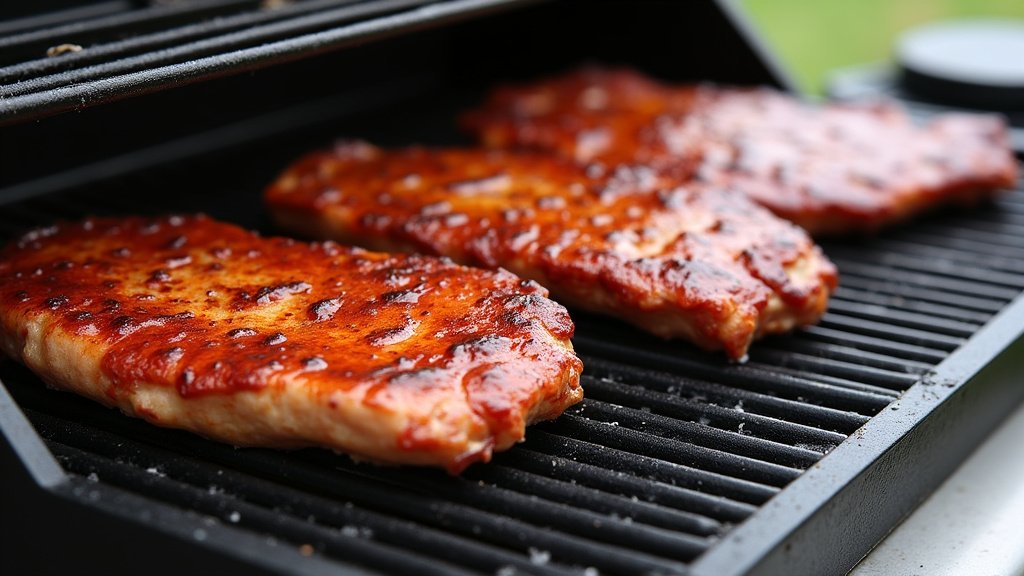
Teams might use gas grills for searing, quick reheating, or cooking sides. Sometimes, a quick sear can add a beautiful crust to a brisket or ribs. This adds to the presentation.
They provide instant, high heat. This is perfect for those last-minute adjustments. It’s another tool in the pro’s extensive toolkit.
Why Professionals Use Multiple Grills
Why not just one super grill? Because each meat and cut demands a specific approach. Different grills offer different strengths. Versatility is key to winning trophies.
Imagine being a painter with only one brush. You’d struggle to create a masterpiece, right? BBQ pros are culinary artists. They need a full palette of tools.
Matching Grill to Meat Type
Teams often select specific grills for specific meats. This allows them to optimize flavor and texture. It’s about getting the absolute best out of each cut.
For example, you might see brisket on an offset smoker for long, low, smoky flavor. Ribs might go on a pellet grill for consistent tenderness. Chicken could be finished on a gas grill for crispy skin.
Brisket & Pork Butt: Low and Slow
These cuts benefit from long, slow cooks with heavy smoke. Offset smokers or UDS often shine here. The extended exposure to smoke builds deep flavor layers (BBQ Pitmasters Association).
The goal is to break down tough connective tissues slowly. This results in incredibly tender, pull-apart meat. It’s a true test of a pitmaster’s patience and skill.
Ribs & Chicken: Precision and Finish
Ribs need consistent heat for tenderness without drying out. Pellet grills are excellent for this. Chicken often benefits from precise temperature control and a good finish.
For chicken, crispy skin is paramount. Sometimes, a quick blast of high heat on a gas grill achieves this. It’s all about those small details that impress the judges.
The Role of Temperature Control
Temperature control is paramount in competition BBQ. Even a few degrees off can impact the final product. Different grills offer varying levels of heat management.
A good pitmaster knows how to coax the exact temperature needed. This mastery over fire is what separates good BBQ from great BBQ.
Competition Logistics and Strategy
Think about the sheer volume of cooking. Teams prepare multiple categories of meat. This means several cooks happening simultaneously. Having different grills helps manage this workflow.
It’s like running a small, highly efficient kitchen on wheels. Each station has a purpose. This strategic setup ensures everything is ready at judging time.
Here’s a quick look at how different grills serve different needs:
| Grill Type | Primary Use in Competition | Key Benefit |
|---|---|---|
| Offset Smoker | Brisket, Pork Butt | Deep Smoke Flavor, Indirect Heat |
| Ugly Drum Smoker | Ribs, Chicken Thighs | Efficient, Even Heat, Portable |
| Pellet Grill | Ribs, Chicken, Holding Meats | Precise Temp Control, “Set & Forget” |
| Gas Grill | Searing, Finishing, Sides | Instant High Heat, Convenience |
Beyond the Grills: Other Essential Equipment
It’s not just about the grills themselves. Professional teams use other gear too. This helps them achieve their award-winning results. Think of it as a whole system.
Advanced Temperature Probes
You’ll see many teams with multi-probe thermometers. These allow them to monitor internal meat temperatures. Accuracy is everything when cooking for judges.
Wireless probes are especially useful. They let pitmasters track progress from a distance. This means less opening of the smoker, keeping temps stable.
Specialty Rubs and Sauces
Of course, the flavor comes from rubs and sauces. Pros spend years perfecting their unique blends. These are often closely guarded secrets.
The choice of rub and sauce complements the meat and smoke profile. It’s a delicate balance of sweet, savory, and spicy notes.
Preparation and Holding Equipment
Teams need space for trimming meat and prepping. They also use commercial-grade holding ovens. These keep meat at the perfect temperature until turn-in time.
Presentation is a huge part of judging. Meats must be hot and fresh-looking. Good holding equipment ensures this.
So, what should you look for if you want to cook like a pro?
- Invest in good temperature monitoring tools.
- Understand the strengths of different fuel types (charcoal vs. pellets).
- Practice controlling your fire and smoke.
- Experiment with different rubs and sauces.
- Learn proper meat preparation techniques.
- Consider adding a dedicated holding solution.
As you can see, there’s no single “magic grill.” It’s a combination of equipment, skill, and strategy. This comprehensive approach is what leads to championship BBQ.
Conclusion
As we’ve seen, professional BBQ competitors don’t rely on just one magical grill. They skillfully use a variety of tools: robust charcoal smokers, precise pellet grills, and even convenient gas grills. Each serves a specific purpose, helping them achieve award-winning results by perfectly matching the cooking method to the meat.
You now understand the strategy behind their diverse equipment choices. The takeaway for your own BBQ journey is clear: focus on mastering your fire and understanding how different grills contribute to flavor and texture. Don’t chase a single “best” grill; instead, consider what each type brings to your cooking. Start experimenting with different methods, and you’ll be well on your way to developing your own championship-level BBQ.
Frequently Asked Questions
Do professional BBQ teams really use gas grills?
Yes, many professional BBQ teams do use gas grills, though not for traditional smoking. They primarily use them for quick tasks like searing, finishing meats with a crust, or reheating. Gas grills offer instant, high heat and convenience, which is valuable in a fast-paced competition environment.
What’s the main difference between an offset smoker and an Ugly Drum Smoker (UDS)?
An offset smoker has a firebox separate from the cooking chamber, allowing for indirect heat and smoke flow across the meat. A UDS, on the other hand, is a vertical drum where the fire is directly below the cooking grates, leading to more direct heat but still excellent smoking capabilities. Both deliver great results, but their design impacts heat management and smoke characteristics.
Why do some pros prefer pellet grills over charcoal for certain meats?
Professional competitors often choose pellet grills for their incredible temperature control and consistency. This “set it and forget it” capability allows them to maintain precise temperatures for long cooks, especially for meats like ribs or chicken, freeing them up to focus on other competition tasks. While charcoal offers deep smoke, pellet grills offer unmatched precision.
Is a smoke ring important in competition BBQ?
Yes, a prominent smoke ring is generally considered a desirable visual indicator in competition BBQ, especially for cuts like brisket. It signals to judges that the meat has been slow-smoked properly, often implying deep flavor and tenderness. While not the only factor, it’s a strong positive cue.
What’s the best type of grill for a beginner who wants to try competition BBQ?
For a beginner looking to enter competition BBQ, a pellet grill is often recommended due to its ease of use and precise temperature control. It allows you to focus on meat prep and flavor profiles without constantly managing the fire. Once you master the basics, you can then explore the nuances of charcoal smokers.
