
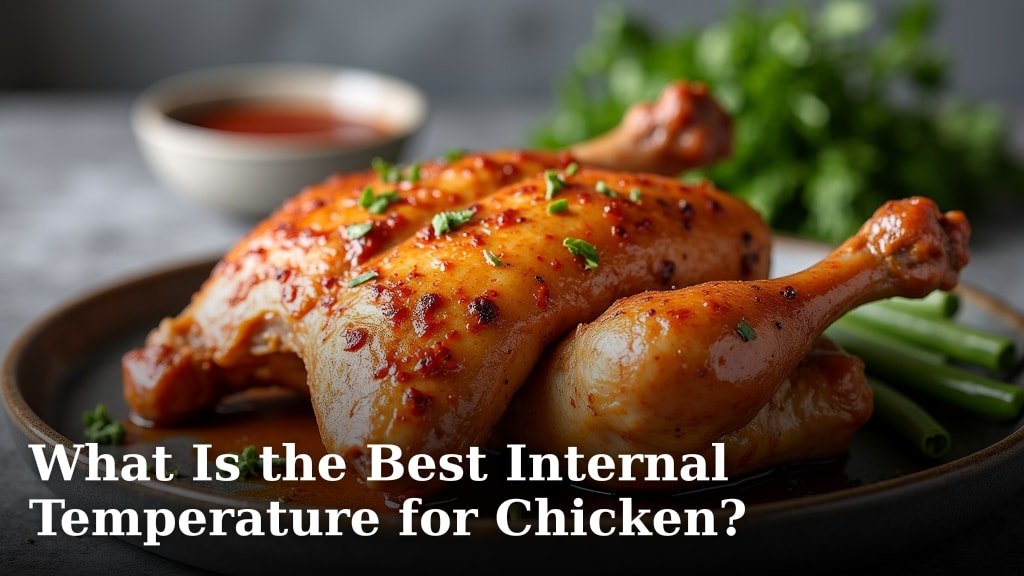
For juicy, safe chicken, the best internal temperature for chicken is 165°F (74°C). This temperature ensures harmful bacteria are destroyed, making your meal safe to eat. Always use a meat thermometer for accuracy.
Cooking chicken to 165°F applies to all cuts, whether you’re roasting a whole bird or grilling a single breast. We found that this temperature guarantees both safety and peak flavor and tenderness. No more dry, overcooked chicken!
- The safe internal temperature for all chicken is 165°F (74°C).
- Use a meat thermometer for an accurate reading.
- Check the thickest part of the meat, avoiding bones.
- Different cooking methods might need slightly different timing.
Let’s dive into all the details. We’ll show you exactly how to measure temperature and cook your chicken perfectly every time.
Optimal Temperature for Perfectly Cooked Chicken
The perfect temperature for all chicken is 165°F (74°C). This ensures your chicken is safe to eat and delicious. No more dry, rubbery chicken!
Why 165°F is the Magic Number
You might wonder, “Why exactly 165°F?” It’s a great question. We found that this temperature is a scientific sweet spot. At 165°F, harmful bacteria like Salmonella are instantly destroyed. This is a critical factor for food safety (USDA).
Cooking to 165°F also means you’re less likely to overcook your chicken. Overcooked chicken can be dry and tough. By aiming for this specific internal temperature, you ensure juicy, tender results every time.
Understanding Food Safety and Chicken
Food safety is not something to guess at. Raw chicken can carry bacteria that cause foodborne illnesses. These illnesses can make you very sick. That’s why cooking chicken to the right temperature is so important.
Think of it like building a sturdy bridge. You need to follow exact measurements for safety. Cooking chicken is similar. The 165°F mark is your safety measurement. It gives you peace of mind that your meal is both delicious and safe for everyone to enjoy.
Your Essential Tool: The Meat Thermometer
You wouldn’t bake a cake without checking if it’s done, right? The same goes for chicken. A meat thermometer is your best friend in the kitchen. It takes away all the guesswork.
Types of Meat Thermometers
There are a few types of meat thermometers you can choose from. Each has its own benefits. We’ll help you pick the right one for your cooking style.
Digital Instant-Read Thermometers
These are super popular for a reason. They give you a temperature reading in just a few seconds. You just insert the probe, and presto, you have your answer. They are fast and very accurate. This means less heat escaping from your oven or grill.
Leave-In Probe Thermometers
If you’re roasting a whole chicken or a large turkey, a leave-in probe thermometer can be handy. You insert the probe into the meat before cooking. Then, a wire connects to an external display. You can monitor the temperature without opening the oven door. This helps maintain a consistent cooking temperature. It’s great for longer cooking times.
Dial Oven-Safe Thermometers
These are often less expensive. You can leave them in the oven while your chicken cooks. However, they can be slower and sometimes less accurate than digital models. We found that they are a good basic option if you’re just starting out.
How to Properly Use Your Thermometer
Using your thermometer correctly is key. It’s not just about having one; it’s about knowing how to get a true reading. Imagine trying to measure your height with a ruler placed on your head at an angle. You wouldn’t get an accurate number!
- Insert the probe into the thickest part of the chicken.
- Make sure the probe does not touch any bones. Bones heat up faster than meat and can give you a false high reading.
- Wait for the reading to stabilize. For instant-read thermometers, this is usually just a few seconds.
- If you’re cooking a whole bird, check the thickest part of the thigh and the breast.
Temperature Variations for Different Chicken Cuts
While 165°F is the universal safe temperature, how you get there might differ. Different chicken cuts cook at different rates. Think of it like walking up a hill. Some paths are steeper, even though you’re heading to the same peak.
Chicken Breasts
Chicken breasts are lean and tend to dry out easily. They cook relatively quickly. You’ll want to pull them off the heat right when they hit 165°F. We found that cooking them just a minute or two longer can make a big difference in texture.
Chicken Thighs and Drumsticks
Dark meat, like thighs and drumsticks, has more fat and connective tissue. This means they are more forgiving if you cook them a little past 165°F. Many chefs prefer to cook dark meat to 170-175°F (77-79°C). This extra cooking time helps break down the connective tissue, making them even more tender and flavorful without drying out (Cleveland Clinic).
Whole Chicken
When roasting a whole chicken, you’ll need to check the temperature in several spots. The thickest part of the thigh (without touching bone) and the thickest part of the breast are crucial. Both should reach 165°F. If one area cooks faster, don’t worry. Just continue cooking until all parts are safe.
The Importance of Resting Your Chicken
You’ve cooked your chicken to perfection. Now, don’t just cut into it! Resting your chicken is a simple but vital step. It’s like letting dough rise before baking – it makes all the difference.
When chicken cooks, the muscle fibers contract, pushing juices to the center. If you cut it immediately, all those delicious juices will run out onto your cutting board. This leaves you with dry meat.
Resting allows the muscle fibers to relax. The juices then redistribute throughout the meat. This results in a much juicier, more flavorful chicken. We recommend resting your chicken for at least 5-10 minutes for smaller cuts and 10-20 minutes for a whole bird. Just cover it loosely with foil.
Checking for Doneness Without a Thermometer (Not Recommended, But Possible)
What if your thermometer suddenly breaks? Or you simply don’t have one? While we strongly recommend using a thermometer for safety, there are some visual cues. Think of these as emergency backup plans, not your first choice.
Here’s what you might look for:
- Clear Juices: If you pierce the thickest part of the chicken with a knife, the juices should run clear, not pink or reddish.
- Opaque Meat: The meat should be opaque all the way through, with no pink showing in the center.
- Firm Texture: Cooked chicken will feel firm to the touch.
Remember, these methods are less reliable. They don’t guarantee that harmful bacteria have been eliminated. Always prioritize using a meat thermometer for accuracy and safety.
Common Mistakes to Avoid When Cooking Chicken
We’ve all been there – a cooking mishap that leaves us frustrated. When it comes to chicken, avoiding common mistakes can make your cooking experience so much better.
Underestimating Carryover Cooking
Have you ever taken chicken off the heat, and a few minutes later, the temperature keeps rising? That’s called carryover cooking. It’s especially true for larger cuts. The residual heat in the chicken continues to cook it even after it’s removed from the oven or grill.
To account for this, you can pull your chicken off the heat when it’s 5°F below the target temperature. For example, remove it at 160°F if you’re aiming for 165°F. During the resting period, it will often reach that perfect 165°F.
Overcrowding Your Pan
When you’re cooking chicken pieces in a pan, it’s tempting to cram them all in. Don’t! Overcrowding lowers the pan’s temperature. It also creates steam instead of a good sear. This can lead to rubbery chicken that doesn’t brown properly. Cook in batches if you need to.
A Quick Checklist for Perfect Chicken
Let’s summarize the key steps to ensure your chicken is always perfectly cooked, safe, and delicious.
- Always use a reliable meat thermometer.
- Target 165°F (74°C) for all chicken cuts.
- Insert the thermometer into the thickest part, avoiding bones.
- Allow for carryover cooking, especially with larger pieces.
- Rest your chicken for 5-20 minutes before carving.
- Cook dark meat to 170-175°F for extra tenderness, if desired.
Conclusion
Achieving perfectly cooked chicken every time boils down to one simple tool: a reliable meat thermometer. By consistently cooking your chicken to 165°F (74°C), you guarantee both safety and a delicious, juicy result. Remember to check the thickest part, avoid bones, and always allow your chicken to rest. This small effort transforms your cooking experience and ensures your meals are always a hit. So, grab your thermometer and cook with confidence!
Frequently Asked Questions
Can chicken continue to cook after I remove it from the heat source?
Yes, this is called carryover cooking. The internal temperature of chicken can rise by several degrees after you remove it from the oven or grill. For this reason, we often suggest pulling chicken off the heat a few degrees below the target temperature.
Is it okay if my chicken breast is still a little pink in the middle?
If your chicken breast is still pink, it may not have reached a safe internal temperature of 165°F. While visual cues aren’t always reliable, pinkness can indicate undercooking. Always use a meat thermometer to confirm doneness and ensure safety.
How long should I let a whole roasted chicken rest?
For a whole roasted chicken, we recommend letting it rest for 10-20 minutes before carving. This resting period allows the juices to redistribute throughout the meat, making it much more tender and flavorful.
Can I use the same thermometer for raw and cooked chicken?
Yes, you can use the same thermometer, but it’s important to clean and sanitize it thoroughly between uses. This prevents cross-contamination of bacteria from raw chicken to cooked food or other surfaces.
Why do some recipes suggest cooking chicken to a higher temperature than 165°F?
While 165°F is the safe minimum internal temperature for all chicken, some recipes, especially for dark meat like thighs and drumsticks, suggest cooking to 170-175°F. This extra cooking time helps break down connective tissues in dark meat, making it even more tender and less chewy without drying it out.
