
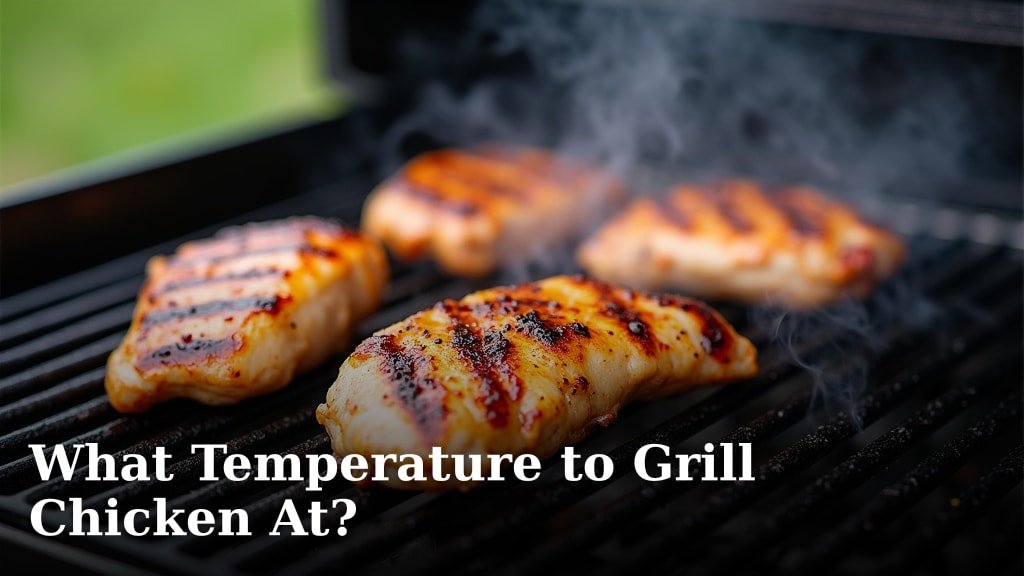
For juicy, perfectly cooked chicken, grill it at a medium-high temperature, around 375-450°F (190-230°C). This temperature range helps cook the chicken through without drying it out, creating a delicious crust.
Finding the right grilling temperature can be tricky, right? Too low, and your chicken might dry out before it cooks. Too high, and you risk burning the outside while the inside stays raw. We found that a good temperature keeps your chicken tender and safe to eat.
- Target temperature: 375-450°F (190-230°C).
- Why it works: Cooks thoroughly, prevents drying.
- Grill type matters: Different grills heat differently.
- Direct vs. indirect heat: Important for different cuts.
- Meat thermometer is key: Always check internal temp.
Ready to master your grill? Let’s walk through exactly how to grill chicken to perfection, ensuring every bite is flavorful and safe.
Optimal Grilling Temperature for Chicken
So, you want to grill chicken that’s juicy and full of flavor? The sweet spot for grilling chicken is usually between 375-450°F (190-230°C). This temperature range helps ensure your chicken cooks through evenly without drying out.
Think of it like this: you want enough heat to get a nice sear and cook the meat, but not so much that the outside burns before the inside reaches a safe temperature. It’s a balance, and this range helps you achieve it consistently.
Understanding Grill Temperature Zones
Your grill isn’t just one big hot surface. Most grills have hotter and cooler spots. Learning these zones is key to successful grilling.
We often talk about direct heat and indirect heat. Direct heat is right over the flame or coals. Indirect heat is away from the main heat source.
For chicken, you’ll often use a combination of both. Direct heat helps create that lovely crispy skin or sear marks. Indirect heat then finishes the cooking gently.
Direct Heat: The Searing Zone
Direct heat is intense. It’s fantastic for giving your chicken a beautiful crust and locking in flavors. You’ll use this for shorter cooking times.
However, leaving chicken on direct heat for too long can lead to burning the outside while the inside is still raw. It’s a quick blast of high heat.
Indirect Heat: The Finishing Zone
Indirect heat is your friend for cooking thicker pieces of chicken, or for making sure thinner pieces cook through without burning. It’s like an oven on your grill.
When you move chicken to indirect heat, it cooks more slowly and evenly. This helps prevent dryness and ensures the internal temperature rises safely.
Different Chicken Cuts, Different Approaches
Not all chicken is created equal on the grill. A thin chicken breast cooks differently than a thick drumstick. Your approach will vary based on the cut.
Knowing your chicken cut helps you decide how long to cook it and whether to start with direct or indirect heat.
Grilling Chicken Breasts
Chicken breasts are lean and can dry out quickly. We found that a medium-high temperature (around 400°F or 200°C) works well for them.
You can start them over direct heat for a few minutes per side to get some nice grill marks. Then, move them to indirect heat to finish cooking until they reach 165°F (74°C) internal temperature.
Grilling Chicken Thighs and Drumsticks
Dark meat, like thighs and drumsticks, is more forgiving. It has more fat, which helps keep it moist.
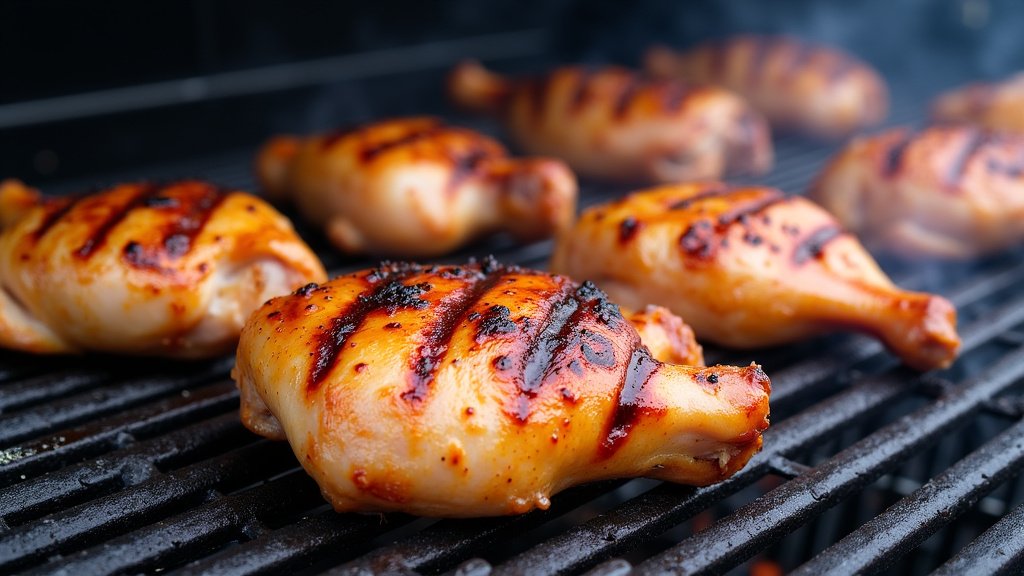
These cuts benefit from a slightly longer cook time. You can often grill them entirely over medium-high direct heat, turning frequently, or start direct and finish indirect. Aim for an internal temperature of 170-175°F (77-79°C) for optimal tenderness (USDA).
Grilling Whole Chicken or Halves
Grilling a whole chicken takes patience. It’s almost always done primarily with indirect heat. A consistent grill temperature around 375-400°F (190-200°C) is ideal.
You might start with a quick sear on direct heat for crispy skin, but then move it over to indirect heat for the majority of the cooking. The internal temperature needs to reach 165°F (74°C) in the thickest part of the thigh, without touching bone.
Your Grill Type Matters
Charcoal grills, gas grills, and even electric grills heat up and distribute heat differently. You’ll need to learn the quirks of your specific grill.
Understanding your grill’s personality helps you master temperature control. A good grill thermometer is your best friend here.
Gas Grill Temperature Control
Gas grills offer precise temperature control with their individual burners. You can easily set up direct and indirect zones.
To create zones, simply turn on some burners to high for direct heat and leave others off or on low for indirect heat. This flexibility makes them very popular.
Charcoal Grill Temperature Control
Charcoal grills require a bit more practice. You control temperature by adjusting vents and how you arrange the coals.
For direct heat, spread the coals evenly. For indirect heat, push coals to one side or bank them around the edges. Learning to manage airflow through the vents is key to maintaining a consistent temperature.
The Indispensable Meat Thermometer
You simply cannot grill chicken safely and perfectly without a reliable meat thermometer. This isn’t optional; it’s essential.
Eyeballing doneness is a recipe for dry chicken or, worse, undercooked poultry. Always check the internal temperature.
The USDA recommends cooking all poultry to an internal temperature of 165°F (74°C). For dark meat, many chefs prefer 170-175°F (77-79°C) for a better texture.
Insert the thermometer into the thickest part of the chicken, making sure it doesn’t touch any bone. That bone can give you a false, higher reading.
Preheating Your Grill: A Non-Negotiable Step
Never put chicken on a cold grill. Always preheat your grill to the target temperature before you start cooking.
Preheating ensures the cooking surface is hot enough for proper searing and helps maintain a consistent temperature throughout the cooking process. It typically takes 10-15 minutes for a gas grill and slightly longer for a charcoal grill.
A Quick Checklist for Perfect Grilled Chicken
Want a quick reminder of the key steps? Here’s what we recommend to help you get that perfectly grilled chicken every time.
- Target Temperature: Aim for 375-450°F (190-230°C) on your grill’s thermometer.
- Preheat Fully: Don’t rush it; let your grill get to temperature.
- Create Zones: Set up direct and indirect heat zones, especially for thicker cuts.
- Use a Meat Thermometer: Confirm internal doneness; 165°F (74°C) minimum.
- Rest Your Chicken: Let it sit for 5-10 minutes after grilling for juiciness.
Troubleshooting Common Grilling Issues
Even seasoned grill masters have off days. Don’t worry if your first few attempts aren’t perfect. We’ve all been there.
Understanding common problems can help you adjust your technique next time. Practice makes perfect, right?
Chicken Burning on the Outside, Raw Inside
This is a classic sign that your grill is too hot, or you’re cooking over direct heat for too long. Try turning down the heat a bit.
Also, move the chicken to an indirect heat zone sooner. That intense direct heat is great for char, but not for cooking all the way through.
Chicken Too Dry
If your chicken is dry, it’s likely overcooked or cooked at too low a temperature for too long. Low heat can dry out lean meats.
Make sure you’re hitting that 165°F (74°C) target and no more for white meat. Forgiving dark meat can go a little higher, but still, don’t push it too far.
Unevenly Cooked Chicken
This often happens when your grill has hot spots, or you’re not turning the chicken often enough. Get to know your grill’s hot zones.
Rotating your chicken every few minutes and utilizing those direct and indirect zones can help ensure an even cook. Sometimes, simply closing the lid more often helps too.
Final Thoughts on Temperature Mastery
Mastering grill temperature for chicken is a game-changer. It’s about combining the right heat settings with proper technique and the essential tool: a meat thermometer.
Don’t be afraid to experiment a little within that 375-450°F (190-230°C) range. Every grill is unique, and you’ll soon find what works best for yours and for your favorite chicken dishes.
| Chicken Cut | Recommended Internal Temp | Primary Heat Zone | Approx. Grill Temp |
|---|---|---|---|
| Boneless Breast | 165°F (74°C) | Direct then Indirect | 375-425°F (190-218°C) |
| Bone-in Thighs/Drumsticks | 170-175°F (77-79°C) | Direct or Direct then Indirect | 400-450°F (200-230°C) |
| Whole Chicken/Halves | 165°F (74°C) | Mostly Indirect | 375-400°F (190-200°C) |
| Wings | 170-175°F (77-79°C) | Direct then Indirect | 400-450°F (200-230°C) |
Conclusion
You’ve seen how mastering grill temperature is key for fantastic chicken. Aiming for that 375-450°F (190-230°C) sweet spot, understanding your heat zones, and always using a meat thermometer will transform your grilling.
Remember, different cuts need different love. But with these tips, you’re ready to tackle any chicken challenge. Go ahead, fire up that grill. Your perfectly juicy, flavorful chicken awaits!
Frequently Asked Questions
Should I grill chicken with the lid open or closed?
For most chicken grilling, you’ll want the lid closed. This helps maintain a consistent temperature, similar to an oven, allowing the chicken to cook through more evenly.
Keep the lid open when initially searing for a few minutes or when applying sauce, but close it for the majority of the cooking time.
How long should I preheat my grill for chicken?
We recommend preheating your grill for 10-15 minutes for gas grills, and a bit longer for charcoal, to reach your target temperature.
This ensures the grates are hot enough for a good sear and helps maintain steady heat throughout cooking.
Can I grill frozen chicken?
It’s generally not recommended to grill chicken from frozen. Thawing chicken first ensures more even cooking and significantly reduces the risk of foodborne illness.
Frozen chicken will cook unevenly, potentially leading to dry outsides and raw insides.
What’s the best way to get crispy skin on grilled chicken?
To achieve crispy skin, start your chicken over direct, medium-high heat for a few minutes per side to render the fat and crisp the skin.
You can also finish cooking chicken, especially dark meat, at a slightly higher internal temperature (170-175°F) for better skin texture, provided the cut allows for it.
Why is my grilled chicken tough?
Tough grilled chicken is usually a sign of overcooking. When chicken cooks beyond its ideal internal temperature, the muscle fibers tighten up, making the meat dry and chewy.
Always use a meat thermometer and pull the chicken off the grill as soon as it reaches 165°F (for white meat) or 170-175°F (for dark meat).
