
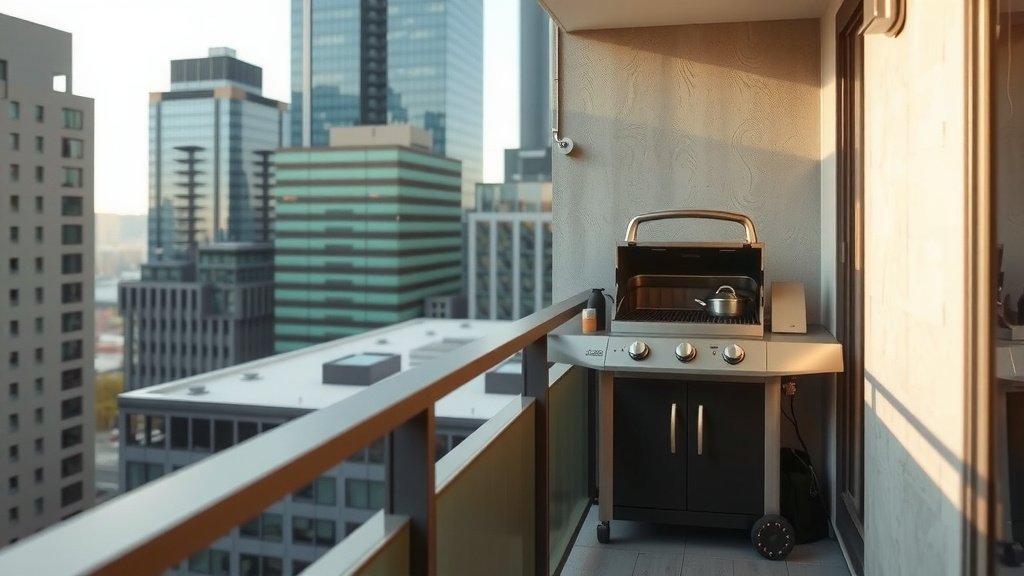
Yes, you can often use an electric grill on a balcony, but it truly depends on specific local regulations and your building’s rules.
Always check your lease agreement, HOA bylaws, and local fire codes to understand the electric grill on a balcony regulations before you even plug it in.
- Check your lease agreement and HOA rules first.
- Review local fire codes and city ordinances; they can override building rules.
- Electric grills are generally permitted more often than charcoal or gas due to lower fire risk.
- Safety is always your top priority when grilling on any balcony space.
Picture this: a beautiful evening, you’re craving some perfectly seared burgers or grilled veggies. You look out at your balcony and think, “Could I use my electric grill right here?” It’s a fantastic idea for many, but the real question is, “Can you use an electric grill on a balcony regulations?” This isn’t just about your personal preference; it’s about rules, safety, and being a good neighbor.
Can You Use An Electric Grill On A Balcony Regulations?
Generally, yes, electric grills are frequently permitted on balconies where other types of grills are banned due to their lower fire risk.
However, specific regulations vary greatly by location and building management, so always verify your situation first.
Why Do Balcony Grill Rules Exist?
Balcony grill rules aren’t designed to spoil your fun. They are primarily there for safety, mainly fire prevention (National Fire Protection Association guidance).
Living in multi-unit buildings means you share walls and air with others, and a grill mishap can impact everyone quickly.
Fire Risk Differences: Electric vs. Other Grills
Think of it like this: a charcoal grill has open flames and hot embers, while a propane grill involves flammable gas. Both pose significant risks on a small, often enclosed balcony space.
Electric grills, on the other hand, don’t use open flames or combustible fuels, making them a much safer option in many building codes.
Many local fire marshal guidelines point to this distinction as why electric models get a pass.
Where to Find Your Balcony Grill Rules
Finding the rules might seem complex, but it’s a critical first step. You don’t want a nasty surprise or, worse, a safety incident.
Start with the closest sources of information, then broaden your search.
Your Lease Agreement and HOA Rules
Your rental lease agreement or homeowners association (HOA) bylaws are often the first place to check. These documents usually outline specific rules for grilling or cooking devices on balconies.
Some explicitly forbid all grilling, while others may allow electric models (we found this to be common).
Local Fire Codes and City Ordinances
Even if your landlord or HOA says “yes,” local fire codes or city ordinances might say “no,” or place additional restrictions. These are laws you must follow.
A quick search on your city’s official website for “grilling regulations” or “fire codes balconies” will usually give you the information you need.
Common Restrictions You Might Encounter
Even when electric grills are allowed, you often find conditions attached. These aren’t just suggestions; they are rules designed to keep everyone safe.
Being aware of them helps you grill responsibly.
Distance from Combustibles
Many regulations require grills to be a certain distance from walls, railings, and any flammable materials like furniture or curtains (Local Building Codes often specify this).
This “safe zone” helps prevent heat from causing damage or starting fires.
Balcony Size and Ventilation
Some buildings might have rules about the minimum size of a balcony for grilling. Good ventilation is key to prevent smoke buildup, even with electric grills.
An enclosed balcony with poor airflow is generally not a good spot for any grill.
Types of Grills Allowed (or Banned)
Here’s a quick look at how different grill types are typically viewed for balcony use:
| Grill Type | Typical Balcony Fire Risk | Smoke/Fumes Production | Common Balcony Legality |
|---|---|---|---|
| Electric Grill | Low | Minimal | Often Permitted with Regulations |
| Propane/Gas Grill | Moderate | Moderate | Frequently Restricted or Banned |
| Charcoal Grill | High | High | Almost Always Prohibited |
Making Your Electric Grilling Safe and Compliant
So, you’ve checked the rules, and your electric grill gets the green light. Great news! Now, let’s make sure your grilling experience is both delicious and super safe.
Compliance and safety go hand-in-hand here.
Essential Safety Checks Before You Grill
Before you even plug in, take a moment for a quick safety scan. Think of it as your pre-flight checklist for deliciousness.
These simple steps can make a big difference.
- Check your power cord for any fraying or damage.
- Ensure your grill is on a stable, flat surface.
- Confirm there’s enough open space around the grill.
- Have a working fire extinguisher or a bucket of sand nearby.
- Make sure your balcony isn’t cluttered with flammable items.
Best Practices for Electric Grilling on a Balcony
Always supervise your grill while it’s hot. Don’t wander off to check your phone or watch TV inside (that’s a common mistake).
Keep children and pets away from the grilling area for their safety.
After you’re done, unplug the grill and let it cool completely before cleaning or storing it.
What If You Can’t Grill on Your Balcony?
What if, after all your research, you discover balcony grilling isn’t allowed? Don’t despair! There are still fantastic ways to get that grilled flavor without breaking any rules.
Your grilling dreams aren’t over; they just need a slight pivot.
Portable Grills for Parks
Many local parks have designated grilling areas where you can use portable electric or even charcoal grills. Pack a cooler, grab your portable grill, and enjoy an outdoor cooking adventure.
It’s a fun alternative, and you get to enjoy some fresh air.
Indoor Electric Grills
If outdoor grilling isn’t an option, a countertop electric grill or an indoor smokeless grill can be a real game-changer. These appliances bring the grilling experience right into your kitchen.
Many experts say they offer surprisingly good results for steaks, chicken, and vegetables.
Conclusion
Using an electric grill on your balcony can be a wonderful way to enjoy outdoor cooking, but it’s essential to approach it with knowledge and caution. The primary takeaway? Always check your specific regulations, including your lease, HOA rules, and local fire codes. When in doubt, it’s always better to err on the side of caution and safety.
Responsible grilling ensures delicious meals and a safe environment for you and your neighbors. Happy grilling!
What is the safest type of grill for a small apartment balcony?
An electric grill is generally considered the safest option for a small apartment balcony because it operates without open flames, charcoal, or propane tanks, which significantly reduces fire risks.
Can a landlord legally ban all grills on balconies, including electric ones?
Yes, a landlord can legally ban all types of grills, including electric ones, on balconies if it’s stipulated in the lease agreement or aligns with building-wide safety policies. Always review your lease carefully.
Do all cities have the same regulations for balcony grilling?
No, balcony grilling regulations vary significantly by city, county, and even neighborhood. Local fire codes and city ordinances differ, so you must research your specific location’s rules.
What should I do if my neighbor is using a banned grill on their balcony?
If your neighbor is using a banned grill, the best first step is to politely inform your building management or HOA. They are responsible for enforcing the rules and ensuring everyone’s safety.
Are there any specific electrical requirements for using an electric grill on a balcony?
Ensure your balcony has a dedicated outdoor electrical outlet that can handle the wattage of your grill. Avoid using extension cords, especially thin indoor ones, as they can be a fire hazard (Electrical Safety Foundation International recommends this).
