
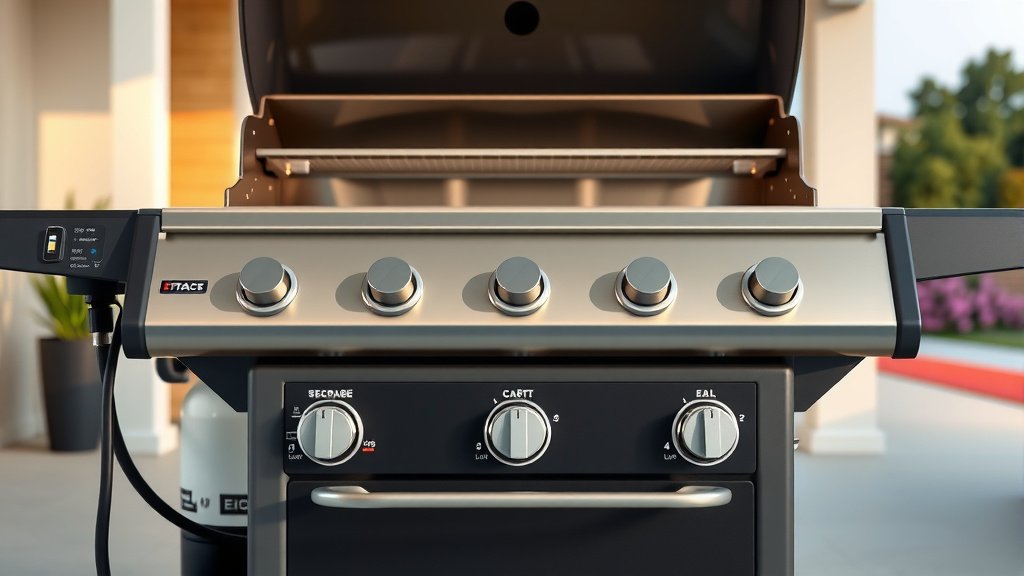
For most standard gas grills, the 20-pound (5-gallon) propane tank is the most common and practical choice. This size provides enough fuel for approximately 18-20 hours of grilling on a medium setting.
This standard tank is widely available, easy to exchange or refill, and perfectly suited for the average residential gas grill.
- The 20-pound propane tank is standard for most gas grills.
- It offers about 18-20 hours of grill time.
- Tank size affects portability, refill frequency, and cost.
- Larger tanks exist but are less common for residential grills.
- Always prioritize safety when handling and storing propane tanks.
You’re standing in front of the grill, ready for some delicious food. But wait, what about the propane tank? Is it the right size? Will it last through your cookout? Choosing the correct propane tank for your gas grill can feel like a small puzzle. Let’s solve it together.
What Size Propane Tank For Gas Grill?
The vast majority of residential gas grills operate perfectly with a 20-pound (5-gallon) propane tank. This is the industry standard for a good reason, offering a balance of capacity and portability.
Why the 20-Pound Tank is Your Go-To
Why is this specific size so popular? We found that it hits a sweet spot for convenience and performance. It’s light enough to carry to the refill station but substantial enough to power many grilling sessions.
Many experts say this tank size is the ideal pairing for standard backyard grills (Propane Education & Research Council).
You will find these tanks everywhere, from hardware stores to gas stations, making refills or exchanges very simple.
How Much Grilling Time Do You Get?
A typical 20-pound propane tank, filled to its safe capacity, holds about 4.7 gallons of liquid propane. This translates to roughly 425,000 BTUs of energy.
How long does that last? For a medium-sized grill running on a medium setting, you can expect around 18-20 hours of continuous grilling. Think about that—many summer cookouts!
Of course, this time can change. A large grill running on high heat will empty faster. A smaller grill on low heat will last longer. It’s like how a car’s gas mileage changes with driving style.
Other Propane Tank Sizes for Grills
While the 20-pound tank rules the roost, you might encounter other sizes. Are they right for your grill? Probably not your main one, but they have their uses.
The Smaller 11-Pound Option
Sometimes you see smaller, 11-pound tanks. These are often used for very small portable grills, camping stoves, or turkey fryers. They are lighter and more compact.
You would choose this if portability is your main concern. It’s perfect for tailgating or a quick picnic. But you will be refilling or exchanging it more often.
Larger, Less Common Sizes
You might find 30-pound or even 40-pound propane tanks. These are generally not for typical residential gas grills.
These bigger tanks are usually for RVs, commercial use, or very large outdoor heating units. They are heavy and less convenient for regular grill use. Imagine lugging one of those around!
Factors to Consider for Your Grill Tank
When choosing, or simply using, your propane tank, a few things matter. Your grilling habits, space, and even the grill itself play a role.
How Often Do You Grill?
If you grill once a week, a 20-pound tank is likely perfect. If you’re grilling every night, you might find yourself refilling more often. That’s okay, just something to plan for.
Consider keeping a backup tank if you grill often. This avoids that dreaded moment when your steak is half-cooked and the gas runs out. We’ve all been there!
Portability and Storage Space
Are you moving your grill around a lot? The 20-pound tank is a good balance. Do you have limited storage space? This standard size is generally easy to tuck away safely when not in use.
Always store propane tanks upright and outdoors, away from direct sunlight or heat sources. Safety first, always.
Grill BTUs and Fuel Consumption
Your grill’s British Thermal Units (BTUs) tell you how much heat it can produce. Higher BTUs mean more fuel burned per hour. A bigger, hotter grill will consume propane faster than a smaller one.
Check your grill’s manual for its BTU rating. This helps you estimate how long a tank might last for your specific model.
Propane Tank Comparison
Let’s look at the common options side-by-side to help you choose.
| Tank Size | Liquid Propane (Gallons) | Typical Grill Time (Medium Heat) | Best For |
|---|---|---|---|
| 11-pound | 2.5 | 8-10 hours | Portable grills, camping |
| 20-pound | 4.7 | 18-20 hours | Most residential gas grills |
| 30-pound | 7.1 | 25-30 hours | RVs, larger commercial uses |
Propane Tank Safety First!
Propane is a safe fuel when handled correctly. But it’s pressurized and flammable, so always be careful.
Proper Storage
- Always store tanks outdoors, never indoors or in an enclosed space like a garage.
- Keep tanks in a well-ventilated area, away from direct sunlight or heat.
- Store tanks upright on a firm, level surface.
- Ensure the valve is closed tightly when not in use.
Handling Your Tank
Never store tanks near ignition sources like a pilot light or electrical equipment. When transporting, secure the tank upright in your vehicle. Don’t leave it in a hot car for long periods.
Always check for leaks using a soapy water solution if you suspect an issue. Bubbles mean a leak. Turn off the gas immediately.
Refilling vs. Exchanging Propane Tanks
When your tank runs low, you have two options: exchange it or get it refilled. Both have their pros and cons.
Making the Best Choice for You
Exchanging a tank is quick and convenient. You drop off your empty tank and pick up a full, certified one. This is great if you’re short on time.
However, when you exchange, you usually don’t get a truly “full” tank. Many exchanged tanks are filled to about 15 pounds, not 20. We found that you might pay a bit more per pound this way.
Refilling a tank often means you get your specific tank back, filled to the proper capacity (which is 80% to allow for expansion). It can be cheaper per gallon, and you know the history of your tank.
The downside? Refilling takes a bit more time. You might have to wait for an attendant, and not all locations offer refills. It depends on your local options and schedule.
Propane Tank Checklist
Keep these points in mind for smooth grilling:
- Is your tank upright and secure?
- Are all connections tight?
- Do you have a backup tank?
- Is the tank stored outdoors?
- Have you checked for any leaks recently?
- Is the tank within its certification date?
Conclusion
Choosing the right propane tank for your gas grill is straightforward. For most home grillers, the 20-pound (5-gallon) tank is undoubtedly the best option. It provides ample grilling time, is widely available, and balances capacity with manageability.
Consider your grilling frequency, storage options, and local refilling versus exchange services. Always prioritize safety when handling and storing propane. With the right tank, you’re ready to enjoy countless delicious meals from your grill.
What does “20-pound propane tank” actually mean?
A “20-pound propane tank” refers to the weight of the propane fuel it can hold, which is 20 pounds. The tank itself has its own weight (tare weight), which is separate from the fuel weight.
How do I know when my propane tank is getting low?
You can check your propane level in several ways: pour warm water down the side of the tank (a cool line indicates the liquid level), use a pressure gauge, or simply lift and feel the weight. The tank will feel much lighter when nearly empty.
Can I use a larger propane tank, like a 30-pound one, on my gas grill?
While physically possible to connect, a 30-pound tank is generally not recommended for standard residential gas grills. They are heavy, cumbersome, and offer little practical benefit for typical home use over the standard 20-pound tank.
Is it safe to store a full propane tank inside my garage?
No, it is not safe to store a full or partially full propane tank inside your garage, basement, or any enclosed space. Propane tanks should always be stored outdoors in a well-ventilated area, away from direct sunlight and heat sources, and safely away from building openings.
How long do propane tanks last before needing replacement?
Propane tanks, specifically the 20-pound type, have a recertification date stamped on the collar. They typically need to be inspected and recertified every 5, 7, or 10 years, depending on the tank type and inspection method. Tanks without a current certification cannot be refilled or exchanged by authorized vendors.
