
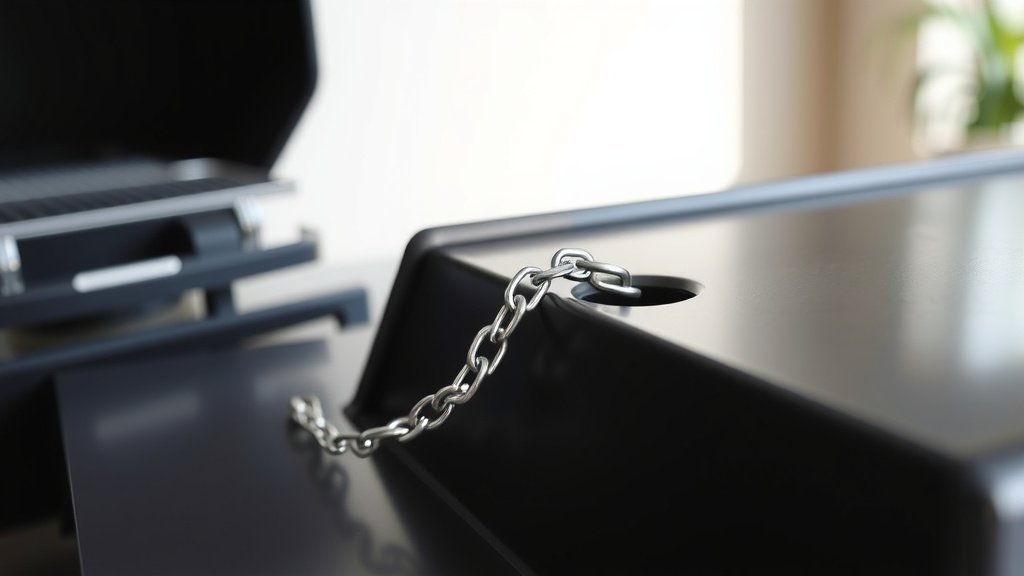
The little chain you see on your gas grill is a manual lighting chain, designed to give you a safe way to light your grill when the electronic igniter fails.
It typically hangs near the burner tubes, offering a crucial backup so your outdoor cooking isn’t put on hold, ensuring you can always fire up your gas grill.
Here’s a quick overview of what that little chain means for your grilling adventures:
- That small chain on your grill is for manual ignition.
- It’s a safety backup if your electronic igniter stops working.
- Always use a long match or lighter attached to it to ignite the burners.
- Knowing how to use it ensures you can still grill, even with an igniter issue.
- Regular grill maintenance helps keep both igniters and manual lighting safe.
What Is The Little Chain For On A Gas Grill?
That small chain, often found hanging near your grill’s burner box, is a simple yet vital safety device. It allows you to manually light your gas grill if the built-in electronic ignition system isn’t sparking.
Think of it as your reliable Plan B for starting the grill. You attach a long match or lighter to it, then push it through the grates to safely reach the burner and ignite the gas.
Understanding Your Grill’s Ignition System
Most modern gas grills come equipped with an electronic ignition system. You press a button, and a spark jumps to light the gas.
But sometimes, these systems can be a bit finicky. That’s where the little chain becomes your grilling hero, preventing delays for your cookout.
How Piezo Igniters Work
Many grills use a piezo ignition system. We found these work by a spring-loaded hammer striking a crystal, which creates a small electrical charge.
That charge then travels to an electrode near the burner, producing a spark. It’s a reliable system, but parts can wear out over time, stopping the spark.
The Role of Battery-Powered Igniters
Other grills use igniters powered by a simple AA or AAA battery. These generate a constant spark when the button is held down.
They’re often more robust but are useless with a dead battery. This is why having a manual option is so important for consistent grilling fun.
When The Little Chain Comes Into Play
When you press your igniter button and hear nothing, or see no spark, it’s frustrating. This is the moment to reach for that little chain.
It means your grilling plans don’t have to be canceled. You can still get dinner on the table, even if your igniter is having an off day.
Why Your Igniter Might Fail
Several common culprits can stop your electronic igniter from working. Understanding these helps you troubleshoot or prevent issues.
Many experts say that simple problems often lead to frustrating igniter failures (NFPA).
Clogged Burner Ports
Grease and food debris can clog the tiny holes in your burner tubes. This prevents gas from flowing evenly, making ignition difficult or impossible.
A good cleaning can often solve this problem. You might even find stubborn debris that needs a stiff brush to remove.
Wet or Dirty Electrodes
The igniter’s electrode, which creates the spark, can get wet or covered in grease. Moisture can stop a spark from forming, and grime can insulate it.
Regularly cleaning around the igniter tip can prevent this common issue. A simple wipe often makes a big difference.
Dead Battery Issues
For battery-powered igniters, a dead battery is a frequent cause of no spark. It’s a quick fix, but easily forgotten.
It’s always a good idea to keep spare batteries on hand for your grill. This prevents last-minute dashes to the store when you’re ready to cook.
Gas Flow Problems
Sometimes, the issue isn’t the igniter at all, but the gas flow. A low propane tank or a tripped regulator can prevent gas from reaching the burners.
Always check your gas tank levels and ensure the regulator is reset correctly. It’s a fundamental step in troubleshooting any grill issues.
Using the Chain: Your Manual Lighting Guide
Manually lighting your grill is straightforward, but safety is key. Always proceed with caution when dealing with gas.
This method ensures you can still enjoy delicious grilled meals, even without a functioning electronic igniter.
Step-by-Step Manual Lighting
Here’s how to use that little chain safely:
- Open your grill lid completely. This is a must for safety.
- Turn on the gas supply from your propane tank or natural gas line.
- Light a long match or use a long lighter.
- Attach the flame to the end of the little chain.
- Carefully guide the chain and flame through the grill grates to one of the burner ports.
- Turn the control knob for that burner to the LOW or START position.
- Wait for the burner to ignite, then remove the chain and flame.
- Close the lid after all burners are lit and you’re ready to grill.
Safety First: Essential Tips
When lighting manually, your safety is the absolute priority. Gas can be dangerous if not handled correctly.
Always remember these crucial points to keep your grilling experience safe and enjoyable:
- Always open the lid before turning on gas or attempting to light.
- Never lean over the grill when lighting.
- Use only long matches or a long utility lighter, not short matches.
- If the burner doesn’t light in 5 seconds, turn off the gas, wait 5 minutes, and try again.
- Keep children and pets away from the grill during lighting.
Maintaining Your Gas Grill for Reliable Ignition
A well-maintained grill means fewer igniter problems and safer operation. Regular care extends the life of your grill and its components.
Many grill manufacturers suggest routine checks to prevent unexpected issues.
Regular Cleaning Habits
Clean your grill grates and burner tubes regularly. Use a grill brush to remove food residue after each use.
Periodically, remove the grates and heat deflectors to clean around the burners and igniter electrodes. This keeps everything running smoothly.
Checking Your Igniter Regularly
Before each grilling season, or at least once a month if you grill often, test your igniter. Press the button and listen for the spark.
If there’s no spark, check the battery first. Then, inspect the electrode for dirt or damage. This proactive approach helps avoid manual lighting when you least expect it.
When to Seek Professional Help
While many grill issues are DIY-friendly, some problems require professional attention. If you’ve cleaned everything, checked the battery, and still have no igniter spark, it might be time for an expert.
Issues with gas regulators or persistent leaks should always be handled by certified technicians. Your safety is paramount, so don’t hesitate to call for help.
| Igniter Issue | Common Cause | Quick Fix | When to Use Manual Chain |
|---|---|---|---|
| No Spark | Dead battery, dirty electrode | Replace battery, clean electrode | If fixes don’t work immediately |
| Weak Spark | Corroded wires, loose connections | Check connections (if accessible) | Anytime spark isn’t reliable |
| Gas Not Igniting | Clogged burner ports, low gas | Clean burners, check tank level | If gas flows but won’t light easily |
| No Click Sound | Faulty piezo unit, broken button | Consider professional repair | Definitely use for every cooking session |
Conclusion
That little chain on your gas grill might seem insignificant, but it’s a critical piece of your outdoor cooking setup. It’s your reliable backup, ensuring that a faulty igniter never stops your grilling plans.
By understanding its purpose, knowing how to use it safely, and maintaining your grill, you’re always prepared. So, fire up that grill, confident that you’ve got all your bases covered for delicious meals!
What should I do if my gas grill igniter stops working?
First, check the igniter’s battery if it’s a battery-powered model; often, a fresh battery is all you need. Next, inspect the igniter’s electrode for any grease or food buildup and clean it gently with a wire brush or abrasive pad. If these steps don’t resolve the issue, you can safely use the manual lighting chain with a long match or lighter.
Is it safe to light a gas grill manually with a match?
Yes, it is perfectly safe to light a gas grill manually with a match or a long lighter, provided you follow the correct safety procedures. Always ensure the grill lid is open, turn on the gas to only one burner, and use a long flame source to ignite the gas while keeping your face and hands away from the burner area. Never lean over the grill.
How often should I clean my gas grill’s igniter?
We found it’s a good practice to visually inspect and clean your gas grill’s igniter electrode every few months, or more frequently if you grill often. Grease and food debris can accumulate rapidly, causing ignition problems. A quick wipe-down during your regular grill cleaning helps maintain its reliability.
Can a dirty burner prevent the igniter from working?
Absolutely. If your burner ports are clogged with grease or food particles, the gas may not flow evenly or reach the igniter’s spark, preventing ignition. Even if the igniter sparks, a poor gas flow will make it difficult to light. Regular cleaning of your burner tubes is key to reliable starting.
Where can I find the little chain on my gas grill?
The little manual lighting chain is usually located near one of the primary burner tubes, often hanging down inside the firebox. It’s typically attached to a small metal plate or bracket under the cooking grates, designed to be easily accessible for guiding a flame towards the gas ports. If you can’t spot it immediately, consult your grill’s owner’s manual.
