
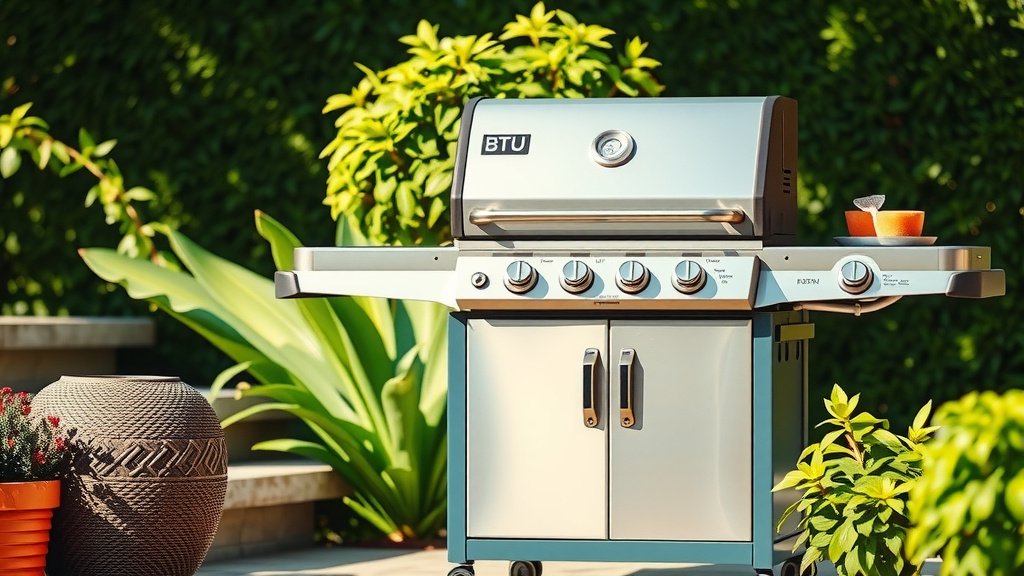
The best BTU for a gas grill depends on its size and how you plan to cook, with larger grills needing more BTU output.
For most home grillers, a BTU range of 10,000 to 12,000 BTUs per main burner is a good starting point for effective grilling and searing.
- BTU indicates heat output, not efficiency.
- Larger grills often need more BTUs overall, but also consider BTU per square inch.
- Aim for 10,000-12,000 BTUs per main burner for good searing.
- Features like lid type and grill construction also impact heat retention.
- Don’t solely focus on BTU; even heat distribution is key for great results.
What Is The Best BTU For A Gas Grill?
Choosing the best BTU for your gas grill isn’t about finding the highest number; it’s about matching the grill’s power to your cooking style and the grill’s size. It’s a balance of heat output and how efficiently that heat is used.
You want enough heat to sear a steak perfectly but also maintain lower temperatures for slow cooking, right?
Understanding BTUs: What Are They Really?
BTU stands for British Thermal Unit. It’s a standard measurement that tells you how much heat a gas grill can produce. Think of it like a car’s horsepower; it describes the engine’s power, not necessarily its speed or fuel economy.
Simply put, a higher BTU rating means the grill can generate more raw heat. But that’s just one piece of the puzzle for a fantastic grilling experience.
BTU Basics for Your Grill
When you see a grill’s BTU rating, it usually refers to the total output of all its main burners combined. Some brands might also list BTUs for side burners or rotisserie burners separately.
We found that understanding this distinction helps you compare grills accurately. It’s all about how much energy is being converted into usable cooking heat.
Does More BTU Always Mean Better Grilling?
This is a common question many grill enthusiasts ask. The short answer is: not always. While a high BTU count might sound impressive, it doesn’t automatically mean a superior grill.
A grill with excellent construction and design can often outperform a high-BTU, poorly built model. It’s about how the heat is managed, not just generated.
The Myth of Super High BTUs
We’ve observed that some grills boast incredibly high BTU numbers, but this can sometimes be misleading. A massive BTU output from a thin, poorly insulated grill might just escape into the air, wasting gas and energy.
Many experts say a good grill retains and distributes heat well, regardless of an over-the-top BTU rating. What good is a lot of heat if it just flies away?
Finding Your Grill’s Sweet Spot: BTU Per Square Inch
Instead of focusing only on total BTUs, a more useful metric is the BTU output per square inch of cooking surface. This gives you a clearer idea of how effectively each part of your grill will heat up.
It’s like comparing apples to apples, no matter the overall size of the basket. This helps ensure your food cooks evenly across the grates.
Calculating Your Ideal BTU
To calculate BTU per square inch, simply divide the total main burner BTU by the primary cooking area in square inches. For example, a grill with 40,000 BTUs and 500 square inches has 80 BTUs per square inch.
Research suggests that a range of 80 to 100 BTUs per square inch is typically excellent for most grilling needs. This range offers plenty of power for searing without being wasteful.
Grill Size Matters: Matching BTUs to Your Needs
The total BTU requirement changes significantly based on the size of your grill. A small portable grill certainly doesn’t need the same power as a massive outdoor kitchen unit.
Consider your available space and how many people you typically cook for. Here’s a general guide:
| Grill Size Category | Primary Cooking Area (Approx.) | Recommended Total BTU Range | Ideal Use |
|---|---|---|---|
| Compact/Portable | 150-300 sq. inches | 10,000-25,000 BTUs | Camping, small balconies, 1-2 people |
| Mid-Size | 300-500 sq. inches | 25,000-45,000 BTUs | Family meals, entertaining 3-6 people |
| Large/Full-Size | 500-700+ sq. inches | 45,000-70,000+ BTUs | Large gatherings, avid grillers |
Compact Grills and Their BTU Range
If you have a small patio or love to take your grill on the go, a compact model is perfect. These grills don’t need excessive BTUs to heat up quickly because of their smaller cooking surface.
Look for compact grills around 10,000 to 25,000 BTUs. They are efficient and usually reach high temperatures fast.
Mid-Size Grills for Family Feasts
This is where most home grillers find themselves. A mid-size grill handles everything from weeknight dinners to small backyard parties. You want enough power to cook several items at once without losing heat.
We often see mid-size grills in the 25,000 to 45,000 BTU range. This ensures versatility for different cooking styles, from direct to indirect heat.
Large Grills for Entertaining Crowds
If you’re hosting big cookouts or love to smoke large cuts of meat, a large grill is your best friend. These require more BTUs to heat their expansive cooking surfaces evenly.
Expect to see larger grills ranging from 45,000 BTUs up to 70,000 BTUs or more. This allows you to create multiple heat zones for diverse dishes.
Beyond BTU: Other Factors for Great Grilling
While BTUs are a good starting point, they are just one ingredient in the recipe for a great grill. Many other elements significantly influence cooking performance.
Think about the overall quality, just like you would with any kitchen appliance. A well-designed grill makes a huge difference.
Grill Construction and Materials
The materials used in your grill’s construction play a big part in heat retention. Heavy-gauge stainless steel or cast aluminum fireboxes hold heat better than thinner metals.
A well-sealed lid and sturdy double-wall construction mean less heat escapes, making your grill more efficient and consistent (culinary research indicates this).
Burner Quality and Design
The burners are the heart of your gas grill. High-quality burners, often made of stainless steel, provide even heat distribution and last longer. Different burner designs, like U-shaped or rectangular, spread flame differently.
Evenly spaced burner ports and a robust flame ensure you don’t have frustrating cold spots on your grates.
Heat Distribution and Grate Material
Heat deflectors or flavorizer bars sit above the burners and help distribute heat evenly. They also vaporize drippings, adding flavor to your food. Grate material also affects searing and heat transfer.
Cast iron grates retain heat exceptionally well, giving you those coveted sear marks. Stainless steel grates are easier to clean and durable.
Tips for Optimizing Your Grill’s Heat Performance
You can get the most out of your grill, regardless of its BTU rating, by following a few simple practices. It’s all about working smart with the heat you have.
Here’s a quick checklist to help you:
- Always preheat your grill thoroughly for 10-15 minutes before cooking.
- Keep the lid closed as much as possible to maintain consistent temperatures.
- Clean your grill grates regularly to ensure efficient heat transfer.
- Check for obstructions in burner ports for an even flame.
- Use a reliable meat thermometer to avoid guesswork and ensure perfect doneness.
Conclusion
Ultimately, the “best” BTU for a gas grill isn’t a single magic number. It’s about finding a balance that suits your grilling habits, the grill’s size, and its overall construction quality.
Focus on a grill with enough BTUs per square inch for your needs, strong heat retention, and excellent heat distribution. That’s the recipe for consistent, delicious results every time you fire up your grill. Happy grilling!
What does BTU stand for in grilling terms?
BTU stands for British Thermal Unit. In grilling, it measures the amount of heat energy your grill can produce, essentially telling you how powerful its burners are.
Is a 30,000 BTU grill powerful enough?
A 30,000 BTU grill is often powerful enough for mid-sized grills (around 300-500 square inches of cooking space). It should provide ample heat for searing and general grilling for families and small gatherings.
How many BTUs do I need for a built-in outdoor kitchen grill?
For a built-in outdoor kitchen grill, which tends to be larger and sometimes includes multiple cooking zones, you’ll generally want higher BTUs. Many experts suggest looking for models in the 45,000 to 70,000+ BTU range, depending on the cooking surface area.
Do higher BTUs mean a grill heats up faster?
Not necessarily. While higher BTUs indicate more heat potential, how quickly a grill heats up also depends heavily on its insulation, lid seal, and burner design. A well-built grill with moderate BTUs might heat faster than a flimsy one with very high BTUs.
Can a grill have too many BTUs?
Yes, in a way. If a grill has extremely high BTUs but poor construction, much of that heat can be lost, making it inefficient. Also, excessive BTUs on a small grill can make it hard to control temperatures for delicate cooking or indirect heat methods, potentially burning food.
