
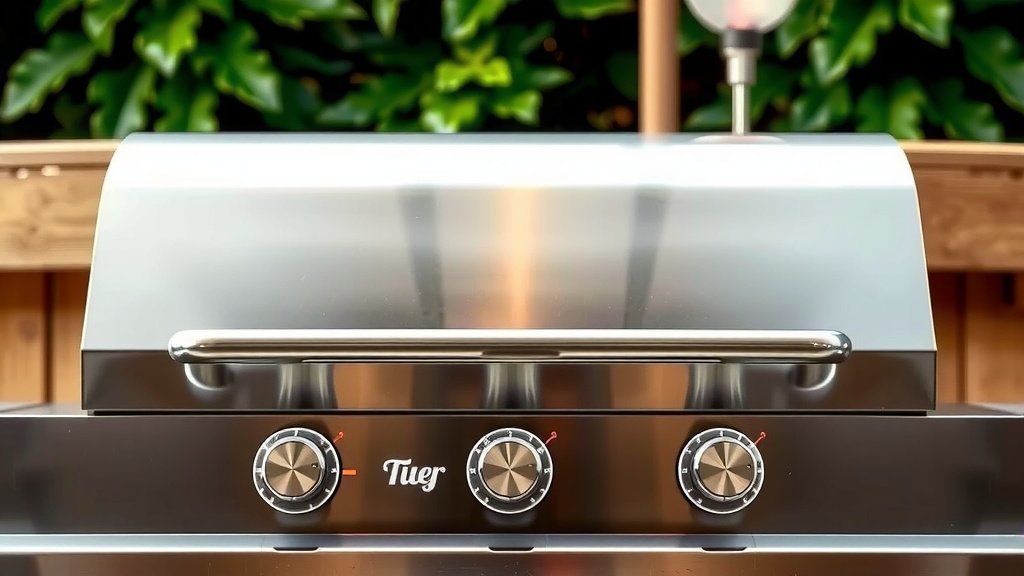
Medium temperature on a gas grill typically falls within a range of 350 to 450 degrees Fahrenheit. This heat level is very versatile, allowing you to cook a wide variety of foods with great results.
Achieving this medium temp on a gas grill means finding a sweet spot between high-heat searing and slow, low-heat cooking, perfect for items like chicken, pork, and many vegetables.
Here’s a quick look at what you’ll find:
- Discover the ideal temperature range for medium grilling on your gas grill.
- Learn how to accurately measure and control grill heat for consistent cooking.
- Understand which foods shine brightest when cooked at medium temperatures.
- Get practical tips for avoiding common mistakes and ensuring perfectly cooked meals.
- Uncover simple tricks to make your grilling experience easier and more enjoyable.
What Is Medium Temp On A Gas Grill?
When you set your gas grill to medium, you’re aiming for a consistent heat between 350 and 450 degrees Fahrenheit. This range offers excellent control for various cooking styles and food types. It’s often the most used setting for everyday grilling tasks.
Why Does Medium Heat Matter for Your Grill?
Medium heat is like the Swiss Army knife of grilling temperatures. It provides enough heat to cook food thoroughly without burning the outside too quickly. This balance is key for achieving juicy meats and tender vegetables, especially when cooking for a crowd.
This temperature lets you develop beautiful grill marks and a flavorful crust, known as the Maillard reaction, without charring your food. Many experts say it offers the best of both worlds for delicious results (Cook’s Illustrated).
Getting Your Grill to the Right Medium Temperature
Preheating your gas grill is the first important step to reach any target temperature. Turn all burners to high, close the lid, and let it warm up for 10-15 minutes. This ensures the grill grates are hot and ready to cook evenly.
After preheating, adjust your burners down to the medium setting. Close the lid again for another 5 minutes. This allows the internal temperature to stabilize before you start cooking. It helps to prevent uneven hot spots.
Checking Your Grill’s Medium Heat: The Hand Test
The “hand test” is an old-school way to check grill heat, though we recommend a thermometer for accuracy. Hold your palm about five inches above the grates. If you can keep it there for 4-5 seconds, you’re likely in the medium heat range.
Of course, use extreme caution with this method, and never touch the grates directly. It’s a quick estimate, but a reliable thermometer gives a precise reading. Safety is always your top priority when grilling.
Reading Your Grill Thermometer Accurately
Many grills have a lid thermometer, but these can sometimes be inaccurate. We found that an internal probe thermometer offers the most precise reading of your grill’s actual cooking surface temperature. Place it near where your food will sit.
Regularly calibrating your thermometer ensures it gives correct readings. You can do this by checking it in boiling water or ice water (USDA). An accurate thermometer prevents you from under or overcooking your food.
Foods Perfect for Medium Grill Temperatures
Medium heat is ideal for a surprising variety of foods. It cooks them through while still creating appealing sear marks and flavors. Think about your favorite weeknight meals; many of them are perfect for this range.
| Food Type | Best Medium Temp (°F) | Notes for Success |
|---|---|---|
| Chicken Pieces (Bone-in/Boneless) | 375-400 | Cook until internal temp reaches 165°F (USDA). |
| Pork Chops/Tenderloin | 350-375 | Aim for 145°F internal temp, then rest. |
| Steaks (Medium-Rare to Medium-Well) | 400-450 | Varies by desired doneness, use a meat thermometer. |
| Thicker Fish Fillets (Salmon, Cod) | 350-375 | Cook until flaky, typically 145°F internal. |
| Vegetables (Corn, Asparagus, Bell Peppers) | 350-400 | Cook until tender-crisp, with nice char. |
| Burgers | 375-425 | Cook until 160°F internal temp (USDA). |
Cooking Steak to Medium Doneness on a Gas Grill
For a steak cooked to medium, you’re looking for an internal temperature of 135-140 degrees Fahrenheit after resting. Start with higher medium heat for a good sear, then move to a slightly cooler zone if needed to finish cooking. Flip your steaks every few minutes for even cooking (Meat Institute).
Always use a meat thermometer to check doneness, inserting it into the thickest part. After grilling, let your steak rest for 5-10 minutes. This helps the juices redistribute, making your steak incredibly tender and flavorful.
Mastering Zone Grilling for Medium Heat
Zone grilling is a game-changer for control. It means setting up your grill with different temperature zones. You can have one side on high, another on medium, and perhaps one burner off for indirect cooking. This flexibility is incredibly useful.
To create a medium-heat zone, you might light two burners on one side and set them to medium, leaving the other burners off. This gives you a direct medium heat zone and an indirect, lower-heat zone. It’s perfect for searing and then slowly finishing foods.
Common Mistakes When Grilling at Medium Heat
One common mistake is not fully preheating your grill. Starting on cold grates leads to uneven cooking and food sticking badly. Patience during preheating really pays off for great results.
Another error is constantly lifting the lid. Every time you open the grill, you lose heat, slowing down cooking and making temperature control harder. Try to “look, don’t peek” and only open when absolutely necessary to check or flip food.
Ignoring an internal meat thermometer is also a big mistake. Guessing doneness often leads to dry, overcooked food or, worse, unsafe undercooked meals. A quick temperature check ensures perfect results every time.
Adjusting Your Gas Grill for Medium Heat
Learning your specific grill’s quirks is essential. Each gas grill behaves a little differently. You might find that your “medium” setting on the burner knob translates to a slightly different temperature than your neighbor’s grill. Pay attention to your thermometer readings to truly understand your grill.
Most gas grills have knobs that control individual burners. For medium heat, you’ll typically turn these knobs to the ‘medium’ position, usually halfway between ‘low’ and ‘high’. Some grills have better heat distribution than others, so watch for hot and cold spots. We found that adjusting the main burner settings slowly and observing the thermometer helps you fine-tune the heat.
Signs Your Grill Is Too Hot or Not Hot Enough
If your grill is too hot, food will char quickly on the outside while remaining raw inside. You might see excessive smoke, and the flames could be very high. If it’s not hot enough, food will take too long to cook, drying out and not developing a good crust. This results in a pale, unappetizing appearance. Listen to the sizzle; a gentle sizzle is good, a roaring one means it’s likely too hot.
Medium-Heat Grilling Safety Tips
Grilling is fun, but safety comes first. Keep these quick tips in mind for a worry-free experience:
- Clean Your Grill Regularly: Remove old food bits and grease to prevent flare-ups and ensure even heat.
- Check Gas Lines: Before each use, quickly inspect gas hoses for cracks or leaks.
- Never Grill Indoors: Always use your gas grill outdoors in a well-ventilated area.
- Stay Nearby: Don’t leave a lit grill unattended, even for a moment.
- Keep a Fire Extinguisher Handy: Just in case of unexpected flare-ups, be prepared.
- Use Proper Tools: Long-handled tongs and spatulas keep your hands safe from the heat.
The Science Behind Medium Heat Grilling
At medium temperatures, the magic of the Maillard reaction truly shines. This chemical reaction creates hundreds of new flavor compounds, responsible for the delicious browning and savory taste of grilled foods. It’s what makes a perfectly grilled steak so appealing.
Medium heat also provides more consistent heat penetration than high heat. This means your food cooks evenly from edge to center, preventing a burned exterior with a raw interior. It helps to keep foods moist and tender by not shocking them with excessive heat from the start. Research often connects precise temperature control with superior cooking results (McGee, “On Food and Cooking”).
Conclusion
Mastering medium temperature on your gas grill opens up a whole world of delicious possibilities. It’s the sweet spot for many popular grilled dishes, offering a fantastic balance of thorough cooking and flavorful crust development. By understanding your grill, using reliable thermometers, and practicing a bit of patience, you’ll consistently create fantastic meals. So, fire up your grill, aim for that medium heat, and enjoy the incredible flavors you can achieve!
What’s the difference between medium and medium-low on a gas grill?
Medium heat typically ranges from 350-450°F, while medium-low is cooler, often between 250-350°F. Medium-low is better for slower cooking or keeping food warm without further cooking, whereas medium is for cooking most meats and vegetables through.
Can I grill delicate fish at medium temp?
Yes, you can grill delicate fish at medium temperatures, especially thicker fillets like salmon or cod. Aim for the lower end of the medium range, around 350-375°F. Use a grill basket or foil to prevent sticking and breaking apart, and cook until the internal temperature reaches 145°F (FDA).
How long does it take for a gas grill to reach medium heat?
Generally, a gas grill takes about 10-15 minutes to preheat to a stable medium temperature. This allows the grates and internal components to fully warm up, ensuring even cooking. Always use a thermometer to confirm the temperature before placing food on the grill.
Should I close the lid when grilling at medium heat?
Yes, closing the lid is usually best when grilling at medium heat. It helps to maintain a consistent temperature, circulates heat for more even cooking, and allows food to cook faster. Only open it to flip food or check doneness. For thinner foods that cook quickly, like shrimp, you might keep it open for a short time.
What if my grill doesn’t have temperature markings on the knobs?
Many grills just have “low,” “medium,” and “high” without specific degrees. In this case, rely on your lid thermometer or, even better, a separate grill grate thermometer. Turn the knobs to what feels like medium, let it stabilize for 5-10 minutes, and then adjust based on the thermometer reading to hit your target 350-450°F range.
