
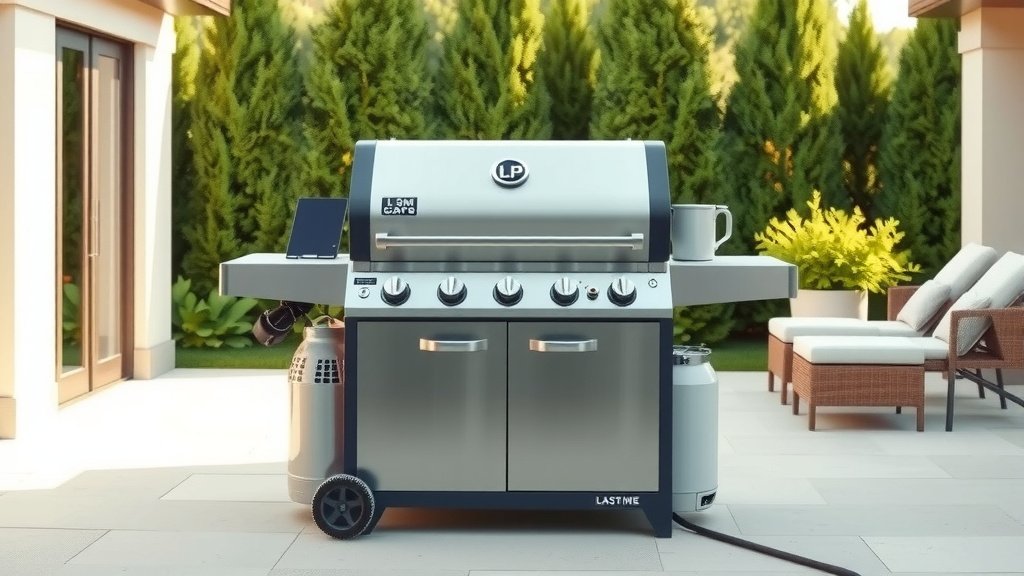
An LP gas grill, often called a propane grill, is an outdoor cooking appliance that uses liquid petroleum (LP) gas as its fuel source. These grills provide a convenient and efficient way to cook your favorite foods outdoors with consistent heat.
You connect an LP gas grill to a refillable propane tank, which supplies the fuel needed to ignite the burners and create the flames for grilling.
- An LP gas grill uses propane from a tank for outdoor cooking.
- It offers quick heating and precise temperature control, making grilling easy.
- You connect a propane tank, which fuels the burners for immediate cooking.
- These grills are popular for their convenience and straightforward setup.
- Regular cleaning and maintenance extend the life of your LP gas grill significantly.
What Is LP Gas Grill?
An LP gas grill is a popular outdoor cooking device fueled by liquid petroleum gas, commonly known as propane. It gives you immediate heat and allows for precise temperature adjustments.
How Does an LP Gas Grill Work?
It’s quite simple, really! Your LP gas grill connects to a propane tank. This tank holds the fuel under pressure. When you turn a knob, propane flows through a hose and into the grill’s burners. An igniter then sparks, lighting the gas to create a flame for cooking. Think of it like a giant gas stovetop for your backyard!
The flame then heats the cooking grates, transferring that heat to your food. You can control the flame intensity with each burner knob, giving you amazing command over your cooking zone. Many experts say this control is a key advantage over charcoal options.
Why Choose an LP Gas Grill?
Choosing an LP gas grill often comes down to convenience and ease of use. You get instant heat and consistent temperatures, which makes grilling a breeze. It truly transforms your outdoor cooking experience.
Quick Start and Heating
Imagine wanting to grill some burgers after a long day. With an LP gas grill, you just turn a knob, push a button, and you’re ready to cook in minutes. There’s no waiting for charcoal to ash over or wood to catch fire. This speed is a game-changer for spontaneous cookouts.
Precise Temperature Control
Ever tried to cook delicate fish and thick steaks at the same time? With multiple burners, an LP gas grill lets you create different heat zones. You can easily adjust the flame for each zone, allowing you to sear, roast, or warm with accuracy. Research often shows that precise temperature control leads to better cooking results (Cook’s Illustrated).
Minimal Cleanup
When the cooking is done, you want to relax, right? LP gas grills produce very little ash, unlike charcoal grills. Your main task is typically just brushing off the grates and wiping down surfaces. This means less mess and more enjoyment after your meal.
Understanding Propane (LP) Tanks
Your propane tank is the heart of your LP gas grill. Knowing how to handle it safely and understanding its capacity is crucial for a smooth grilling season. It’s like knowing your car needs gas before a road trip.
Propane Tank Sizes You’ll Find
Most common LP gas grills use a standard 20-pound (5-gallon) propane tank. These are easily swapped or refilled at many retail locations. You might also find smaller 1-pound tanks for portable grills, or larger tanks for permanent outdoor kitchens. We found the 20-pound tank is the most practical choice for most home grillers.
Safety Tips for Your LP Tank
Always store your propane tank upright and outdoors, away from direct sunlight or heat. Check the hose and connections for leaks using a soapy water solution before each use; bubbles mean a leak! Always ensure the valve is fully closed when not in use. These simple steps keep you and your family safe.
LP Gas Grills vs. Natural Gas Grills
While both use gas, LP and natural gas grills have some key differences that might sway your choice. Let’s look at them side by side so you can see what might fit your grilling needs best.
| Feature | LP Gas Grill | Natural Gas Grill |
|---|---|---|
| Fuel Source | Propane (from refillable tanks) | Natural gas (from home utility line) |
| Portability | Highly portable (tanks can move) | Not portable (fixed to gas line) |
| Installation | Simple hookup to tank | Requires professional gas line installation |
| Fuel Cost | Variable (tank refills/exchanges) | Generally lower and steady (utility bill) |
| Running Out? | Yes, tanks can run empty mid-cook | No, continuous supply |
Key Features to Look For in an LP Gas Grill
When you’re shopping for an LP gas grill, many features can make your grilling experience better. It’s not just about how it looks! Consider what truly matters for your cooking style.
Burner Power and Distribution
Look for grills with a good BTU (British Thermal Unit) rating. This indicates the heat output. More burners mean more control over heat zones. We found that evenly distributed heat across the cooking surface is often more important than just high BTU numbers.
Cooking Grate Material
The grates your food touches are super important. Stainless steel grates are durable and easy to clean. Cast iron grates hold heat wonderfully for great sear marks. Porcelain-enameled cast iron combines the best of both. Your choice can impact both your cooking and the grill’s longevity.
Additional Features That Matter
Side burners are handy for sauces or side dishes. A rotisserie kit lets you cook whole chickens. Warming racks keep food hot without overcooking. Built-in thermometers help you monitor temperatures without guessing. These small additions truly enhance your outdoor kitchen.
Setting Up Your New LP Gas Grill
Getting your new grill ready for its first cook is exciting! It’s like unboxing a new toy, but with delicious food as the reward. Proper setup ensures safe and enjoyable grilling.
First-Time Setup Checklist
Here’s a quick guide to get you started safely:
- Read the manual carefully for specific assembly instructions.
- Assemble the grill step by step, ensuring all parts are secure.
- Connect the propane tank firmly, checking for any leaks with soapy water.
- Perform a leak test again, even if you think it’s tight. Safety first!
- Do a “burn-off” by running the grill on high for 15-20 minutes to remove manufacturing residues.
- Season the grates with cooking oil if recommended by the manufacturer.
Maintaining Your LP Gas Grill for Longevity
Taking care of your grill isn’t just about keeping it shiny; it’s about extending its life and ensuring it cooks reliably. A little bit of effort goes a long way.
Regular Cleaning Habits
After each use, brush your grates clean. Periodically, give the entire grill a deeper clean, removing food debris and grease from inside. Many experts suggest cleaning the burners and heat deflectors at least once a season. This prevents flare-ups and keeps your grill performing its best.
Winterizing Your Grill
If you live in a colder climate, proper winter storage is key. Disconnect and store your propane tank in a well-ventilated outdoor area, separate from the grill. Clean the grill thoroughly, cover it, and store it in a dry, protected spot. This practice protects against rust and wear.
Common Mistakes to Avoid with LP Grills
Even seasoned grillers can make simple blunders. Being aware of these common pitfalls helps you avoid headaches and ensures a safer, more enjoyable grilling experience.
One common mistake is running out of propane mid-cook. Always keep a spare tank on hand or check your fuel gauge before starting. Another pitfall is ignoring a suspected gas leak; a simple soapy water test can prevent serious issues. We found that many beginners also forget to clean the grease tray regularly, which can lead to fires. Always remember to preheat your grill properly to get those perfect sear marks and avoid sticking food.
Conclusion
An LP gas grill offers incredible convenience and control for your outdoor cooking adventures. From its quick start-up to precise temperature management, it truly simplifies the grilling process. By understanding how it works, choosing the right features, and committing to regular maintenance, you ensure many years of delicious meals. So, fire up your grill and enjoy the art of outdoor cooking with confidence!
What is the difference between LP and propane?
LP gas is simply the broader term for liquid petroleum gas, and propane is the most common type of LP gas used in grills. So, when people say “LP gas grill,” they almost always mean a propane grill.
How do I know if my LP gas grill is leaking?
The simplest way is the “soapy water test.” Mix dish soap and water, then brush it onto the tank connection, hose, and regulator. If you see bubbles forming, that indicates a gas leak. Always turn off the gas immediately if you suspect a leak.
Can I use an LP gas grill indoors?
No, you should never use an LP gas grill indoors, in a garage, or any enclosed space. Propane combustion produces carbon monoxide, which is a colorless, odorless, and deadly gas. Always use your grill in a well-ventilated outdoor area.
How long does a 20-pound propane tank last?
The duration depends on your grill’s BTU output and how high you set the burners. On average, a 20-pound tank can last for about 10-15 hours of grilling time on a medium setting. Keeping a spare tank is always a good idea.
Is it worth getting a grill with a side burner?
Many grillers find a side burner very useful. It allows you to simmer sauces, boil corn, or sauté vegetables without needing to go back inside. It truly helps to keep your entire meal cooking outdoors. We found it adds significant versatility to your grilling station.
