
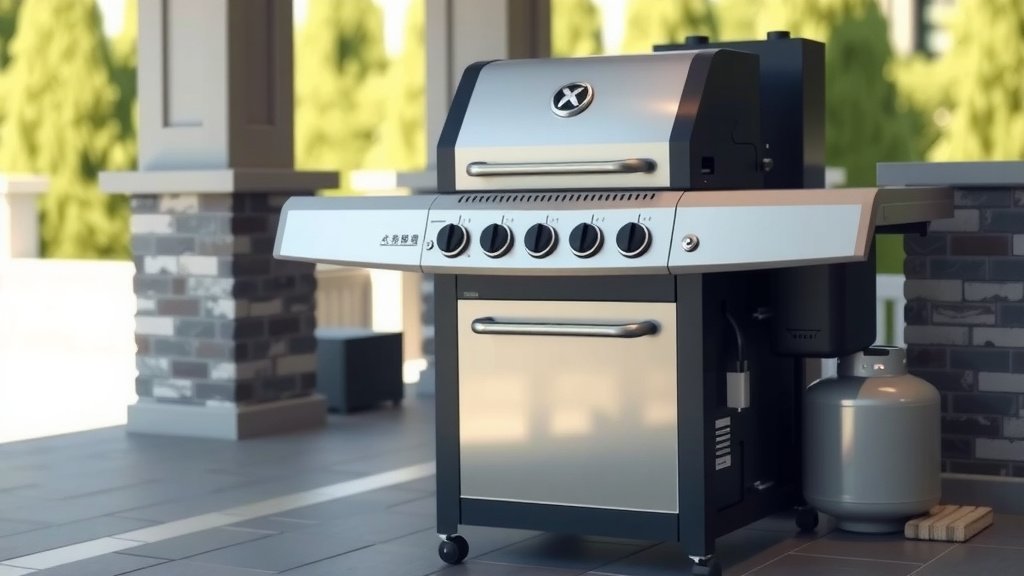
A liquid propane gas grill is a popular outdoor cooking appliance that uses propane gas stored in a tank as its fuel source. It offers a convenient, clean-burning way to grill your favorite foods quickly and efficiently.
You simply connect a refillable propane tank to the grill, turn a knob to release the gas, and ignite the burners for instant heat, making outdoor cooking easy.
For those looking for a quick overview before diving deep, here’s what you need to know about liquid propane gas grills:
- They provide instant heat and precise temperature control, much like your kitchen stove.
- Using them means no messy charcoal or ash cleanup, saving you time and effort.
- Propane tanks are portable and widely available, so refueling is simple.
- They are versatile for various cooking styles, from searing steaks to slow-cooking roasts.
- Choosing one often comes down to convenience and ease of use over charcoal’s smoky flavor.
What Is Liquid Propane Gas Grill?
A liquid propane (LP) gas grill is an outdoor cooking appliance that heats food using propane, a compressed gas stored in a portable tank. These grills are known for their quick heating and user-friendly design.
You attach a standard propane tank, open the gas valve, and use an igniter button to light the burners. This creates a consistent flame under your cooking grates.
How LP Gas Grills Operate
When you turn on your grill, liquid propane travels from the tank through a hose and regulator. The regulator controls the gas flow and pressure, keeping it steady.
The gas then reaches the burners, where it mixes with air and ignites. This generates the heat needed for grilling. It’s a pretty simple and effective system for outdoor cooking.
Why Many People Choose Propane
Many grill enthusiasts choose propane because it is so easy to start and control. You don’t wait for coals to heat up, and you can adjust the flame instantly.
This means more time enjoying your guests and less time fussing with the grill. It’s truly about convenience and consistent results.
Key Benefits You’ll Enjoy
One of the biggest perks of an LP grill is its fast startup time. You can go from zero to grilling temperature in minutes, perfect for busy weeknights.
They also offer exceptional temperature control. You can precisely manage the heat for different foods, ensuring your chicken cooks through without burning the outside.
Clean and Convenient Cooking
Propane burns cleanly, so you won’t have charcoal dust or ash to deal with. This means easier cleanup after your cookout, which is always a bonus.
Many experts say this clean burn is a major advantage (Grill Association studies). Your grill stays tidier, and your patio remains free of soot.
Versatility on the Grate
LP grills often come with multiple burners, letting you create different heat zones. This allows you to sear a steak on one side while gently warming vegetables on the other.
This versatility makes it possible to cook a wide range of foods effectively, from delicate fish to thick cuts of meat.
Understanding Propane Fuel
Liquid propane is stored under pressure in a steel tank. It’s actually a gas that turns into a liquid when compressed. When you open the valve, it converts back to gas.
These tanks are refillable and widely available at gas stations, hardware stores, and supermarkets. Just swap your empty for a full one!
Safety with Propane Tanks
Always keep your propane tank upright and away from direct sunlight or excessive heat. Ensure the valve is tightly closed when not in use.
We found that regular checks for leaks with a soapy water solution are also a smart safety practice (Consumer Product Safety Commission).
How Long Does a Tank Last?
A standard 20-pound propane tank usually lasts for about 10-25 hours of grilling, depending on your grill’s BTU output and how high you set the flame.
Lower and slower cooking uses less fuel than high-heat searing. It’s smart to keep a spare tank on hand to avoid running out mid-cook.
Comparing LP Grills to Others
When you weigh an LP grill against a charcoal one, you’re often choosing between convenience and a particular flavor profile. Propane offers speed; charcoal offers smoke.
Here’s a quick look at some general trade-offs:
| Feature | LP Gas Grill | Charcoal Grill |
|---|---|---|
| Heat Up Time | Fast (minutes) | Slow (20-30 minutes) |
| Temperature Control | Precise, instant | Variable, harder to adjust |
| Flavor | Clean, pure food taste | Smoky, char flavor |
| Cleanup | Easy (no ash) | Messy (ash disposal) |
| Fuel Cost | Moderate per tank | Lower per bag |
Choosing Your Perfect LP Grill
Finding the right propane grill means considering your needs. Do you grill for a small family or host large parties? This will help determine the size you need.
Think about the cooking area and how many burners you might use regularly. More burners often mean more cooking flexibility.
Understanding BTUs
BTU stands for British Thermal Unit, and it measures the heat output of your grill. Higher BTUs generally mean a grill can get hotter faster.
However, a higher BTU number isn’t the only factor; efficient design also plays a big role in heat distribution across the grates.
Grates Material Matters
You’ll find grill grates made from cast iron, stainless steel, or porcelain-coated materials. Each has its pros and cons for heat retention and cleaning.
Many experts say cast iron provides excellent searing, while stainless steel is often easier to maintain and clean (Consumer Reports data).
Handy Extra Features
Some LP grills include side burners for sauces or side dishes, rotisserie kits for roasting, or even built-in thermometers. Consider what extras would make your grilling life easier.
These features can add to the grill’s cost but might greatly improve your overall cooking experience.
Keeping Your Grill in Top Shape
Regular maintenance is key to a long-lasting grill. After each use, it’s a good idea to brush the cooking grates clean while they are still warm.
This prevents food from sticking and makes your next grilling session much smoother. You want your grill ready when inspiration strikes!
Seasonal Maintenance Checklist
Here’s a quick checklist to keep your LP grill performing its best:
- Clean burner tubes: Clear out any debris or spiderwebs.
- Check hoses for cracks: Ensure gas lines are sound and free from damage.
- Clean drip tray regularly: Prevent grease fires and unwelcome pests.
- Inspect igniter: Make sure it sparks reliably for quick starts.
- Clean exterior surfaces: Wipe down the outside to protect against rust.
Winterizing Your Grill
If you live in a colder climate and store your grill for winter, disconnect the propane tank and store it separately in a well-ventilated area.
Clean your grill thoroughly, cover it, and keep it in a sheltered spot. This helps protect it from the elements and ensures it’s ready for spring.
Conclusion
A liquid propane gas grill offers a fantastic way to enjoy outdoor cooking with minimal fuss. Its convenience, precise temperature control, and quick startup times make it a favorite for many.
While it might not deliver the smoky flavor of charcoal, it more than makes up for it in ease of use and consistent results. By understanding how they work and keeping yours well-maintained, you’ll be enjoying delicious grilled meals for years to come. Isn’t that what grilling is all about?
How do I know when my propane tank is empty?
A simple way to check is to pour warm water down the side of the tank. Feel for a cool spot; this indicates the level of liquid propane remaining inside. Many tanks also have a built-in gauge, or you can buy an external one.
Can I convert an LP grill to natural gas?
Yes, many LP grills can be converted to natural gas, but it requires a special conversion kit and often professional installation. Natural gas needs a different orifice size and regulator pressure due to its lower BTU content compared to propane. Always check your grill’s manual for compatibility.
Is it safe to store a propane tank indoors?
No, it is not safe to store a propane tank indoors, especially not in your home or garage. Propane is heavier than air, so if there’s a leak, it can accumulate in low areas and pose a serious fire or explosion hazard. Always store tanks outdoors in a well-ventilated area.
What’s the ideal grilling temperature for most foods?
The ideal temperature varies by food. For searing steaks, you’ll want high heat (450-650°F). For chicken or pork, medium heat (350-450°F) is often preferred. Low heat (250-350°F) is excellent for delicate foods or slow roasting. Using your grill’s thermometer and a meat thermometer will guide you best.
How often should I clean my grill grates?
It’s best to clean your grill grates after every use while they are still warm. This prevents food from hardening and becoming difficult to remove. A quick brush takes seconds and makes a big difference in food taste and grill longevity. A deeper clean every few months is also helpful.
