
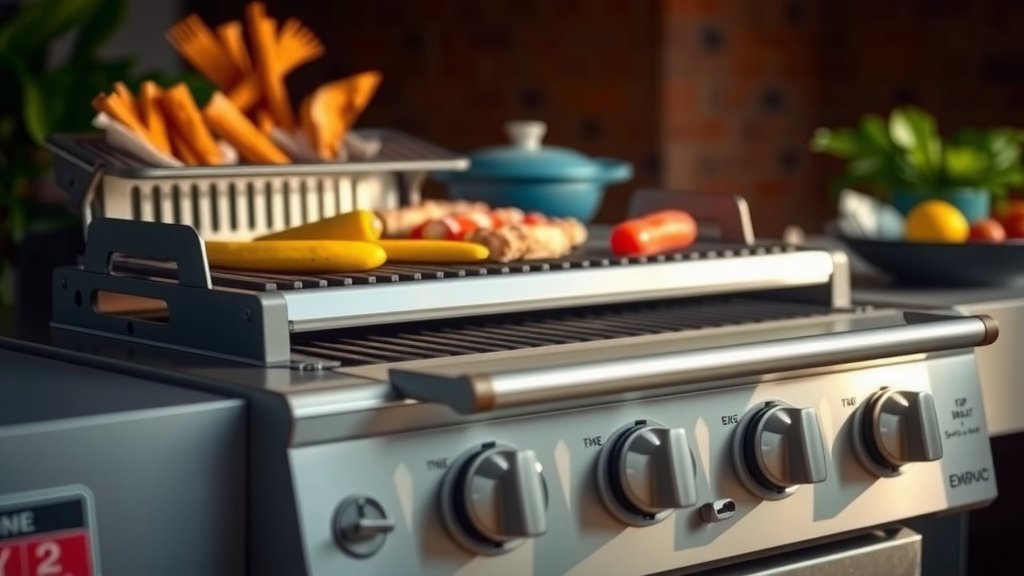
Indirect heat on a gas grill means cooking food with the burners directly underneath it turned off, creating an oven-like environment.
This technique allows your food to cook slowly and evenly, preventing burning while still delivering that beloved smoky flavor.
- Indirect heat cooks food gently and consistently, just like an oven.
- It prevents flare-ups, which is great for fatty meats and delicate items.
- This method works wonders for larger cuts of meat, whole chickens, and even baking.
- You simply turn off the burners directly beneath your food while keeping others lit.
What Is Indirect Heat On A Gas Grill?
Indirect heat on a gas grill is a cooking method where the food sits next to the lit burners, not directly over them. This creates a balanced, circulated heat, similar to a convection oven.
It lets you cook without direct flame exposure, making it perfect for items that need longer cooking times without scorching.
Why Use Indirect Heat for Grilling?
Using indirect heat opens up a world of grilling possibilities beyond just searing steaks. It transforms your grill into a versatile outdoor oven. Think about cooking larger items that usually dry out or burn.
Many grill masters consider it essential for perfectly cooked, juicy results. It’s a game-changer for dishes you might otherwise never attempt on a grill.
Avoiding Pesky Flare-ups
Ever had a burger night ruined by sudden bursts of flame? Indirect heat helps you say goodbye to flare-ups. When fats drip onto active flames, they ignite, charring your food.
By moving food away from direct heat, you eliminate this problem. This keeps your cooking experience safer and your food looking much better (Cleveland Clinic).
Achieving Even, Consistent Cooking
With indirect heat, the warmth circulates all around your food. This means no more worries about one side cooking faster than the other. You get a much more predictable cooking process.
It’s like a gentle hug of heat, ensuring your meal cooks through beautifully from edge to center. This is especially useful for dense or thick cuts.
How Do You Set Up Indirect Heat on Your Gas Grill?
Setting up indirect heat on your gas grill is surprisingly straightforward, but it varies slightly by your grill’s burner count. The basic idea is always the same: create a cooler zone. You’ll want to warm your grill first, then adjust the heat.
This method lets you control the temperature inside the grill with precision. Many guides recommend preheating to your target temperature before placing food (Weber Grills).
Two-Burner Grill Setup
If you have a two-burner grill, the process is simple. You’ll light one burner and keep the other off. Place your food over the unlit burner. This creates your low-heat zone.
Keep the lid closed as much as possible to maintain a steady temperature. This setup is ideal for smaller roasts or items that fit well on one side.
Three or More Burner Grill Setup
For grills with three or more burners, you have more flexibility. Light the outside burners, leaving the middle one off. Your food goes right over that unlit center burner.
You can also light one burner on one side, keeping the rest off, and place food on the opposite side. This method is fantastic for large roasts or even multiple dishes at once.
What Foods Are Best for Indirect Grilling?
Indirect grilling truly shines with specific types of food. If it takes longer than 20-25 minutes to cook, it’s often a good candidate. This method handles delicate or large items with grace. Think about your oven favorites, now with a smoky twist.
We found that meats with bones or higher fat content particularly benefit. They cook slowly, rendering fat and staying incredibly moist.
- Whole chickens or turkeys
- Full racks of ribs
- Pork shoulders or Boston butts
- Beef roasts (like prime rib or chuck roast)
- Whole fish or delicate fish fillets
- Thick-cut vegetables (corn on the cob, potatoes)
- Baked goods (pizza, bread, desserts)
Roasts and Whole Poultry
Imagine a perfectly cooked, juicy whole chicken with crispy skin, fresh off your grill. This is where indirect heat truly excels. Roasts like pork loin or beef tenderloin also come out beautifully. They cook through without drying out the exterior.
Many experts agree that long-cooking, large cuts benefit most from this gentle heat. It ensures every bite is tender and flavorful.
Delicate Foods and Baking
Don’t underestimate your grill’s ability to bake or handle delicate items. Indirect heat allows you to bake pizzas, breads, or even casseroles. It’s perfect for whole fish that might fall apart over direct flame.
Even vegetables like corn on the cob or potatoes can slow roast to perfection. It’s a wonderful way to expand your outdoor cooking repertoire.
Temperature Control with Indirect Heat
Managing temperature is key when using indirect heat. You’re aiming for a steady, consistent heat, not fluctuating spikes. Most indirect cooking happens in the 250-375°F range. Your grill’s lid thermometer gives you a good starting point.
Remember that opening the lid lets heat escape quickly. Try to keep the lid closed as much as possible for consistent results.
| Feature | Direct Heat Grilling | Indirect Heat Grilling |
|---|---|---|
| Heat Source | Food directly over flame | Food next to unlit burner |
| Cooking Speed | Fast, high heat | Slow, moderate heat |
| Best For | Steaks, burgers, hot dogs, thin veggies | Roasts, whole poultry, ribs, delicate fish |
| Goal | Searing, charring, quick cooking | Even cooking, smoking, baking, tender results |
| Flare-ups | Common risk | Minimal risk |
Essential Tips for Indirect Grilling Success
To really master indirect grilling, a few simple tips can make a huge difference. These aren’t just tricks; they’re practical steps that improve your results significantly. Think about how professional chefs manage their ovens.
Small adjustments can lead to big payoffs in flavor and texture. We found these suggestions helpful for many home grillers.
- Always preheat your grill thoroughly before adding food.
- Use a reliable meat thermometer to check internal temperatures.
- Consider a drip pan to catch juices and add moisture.
- Resist the urge to constantly lift the lid; “if you’re looking, it’s not cooking.”
- Adjust unlit burner positions slightly for hotter or cooler indirect zones.
- For smoky flavor, add wood chips (in a smoker box) over a lit burner.
Using a Drip Pan
A drip pan is a simple yet powerful tool for indirect grilling. Placed under your food in the unlit zone, it catches drippings. This prevents them from burning on your grill grates. You can even add water or broth to the pan. This adds moisture to the cooking environment.
It’s especially helpful for long cooks, keeping your meat from drying out. This also makes cleanup much easier later on.
Monitoring Temperature is Vital
A good grill thermometer, and even better, a leave-in meat thermometer, is your best friend. The thermometer built into your grill lid gives you an ambient temperature reading. But knowing your food’s internal temperature is essential. It ensures your food is safe and perfectly cooked.
Research consistently shows that using a meat thermometer prevents undercooking and foodborne illness (USDA). Don’t just guess; measure for certainty.
Conclusion
Indirect heat grilling is a powerful technique that expands your gas grill’s capabilities. It allows you to cook larger, more delicate foods with gentle, even heat. By understanding how to set up your burners and control the temperature, you open up a world of culinary possibilities. It’s about being smarter with your grill, not just hotter.
So next time you plan a big roast or a whole chicken, give indirect heat a try. You’ll likely discover a new favorite way to enjoy your grill and impress your guests with incredibly tender and juicy results.
What is the main difference between direct and indirect heat?
The main difference is where the food sits in relation to the flame. Direct heat cooks food right over the lit burners for searing. Indirect heat places food next to unlit burners, using circulating heat for slow, oven-like cooking.
Can I smoke food using indirect heat on a gas grill?
Yes, absolutely! Indirect heat is the ideal setup for smoking on a gas grill. You simply add wood chips in a smoker box or foil packet over one of your lit burners. This allows the smoke to circulate around the food cooking in the indirect zone.
Is it better to use indirect or direct heat for thick steaks?
For very thick steaks (over 1.5 inches), many grillers prefer a combination. They sear the steak over direct high heat for a beautiful crust, then move it to an indirect heat zone to finish cooking through without burning the exterior. This two-zone method offers the best of both worlds.
Do I need to flip food when cooking with indirect heat?
While not strictly necessary as often as with direct heat, flipping food occasionally (perhaps once halfway through) can still promote incredibly even browning and cooking. For large items like whole chickens, you might rotate them for crispier skin all around.
How do I know what temperature my grill is at for indirect cooking?
Your grill’s built-in lid thermometer provides a good general reading of the ambient temperature. For more precise control, especially for longer cooks, many experts recommend placing an oven thermometer or a probe thermometer on the grill grates near your food to monitor the actual cooking zone temperature.
