
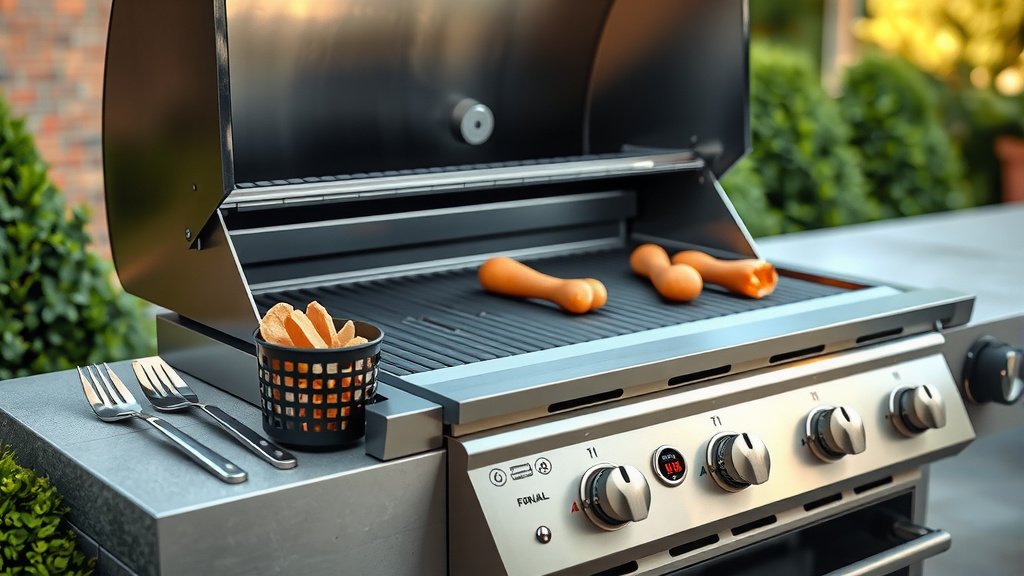
An infrared gas grill uses radiant heat directly from an infrared burner to cook food, rather than relying on hot air like traditional gas grills.
This method allows for extremely high temperatures, intense searing, and even heat distribution across the cooking surface.
TL;DR: Here’s the scoop on infrared gas grills:
- Infrared grills use direct radiant heat for faster, hotter cooking.
- They excel at searing meats and locking in juices due to high temperatures.
- You’ll find models as full infrared or hybrid, combining traditional burners.
- Expect more even heat and fewer flare-ups compared to standard grills.
- Maintenance involves cleaning the emitter plate, but they’re built for durability.
What Is An Infrared Gas Grill?
An infrared gas grill is a cooking machine that uses a special burner to emit infrared radiation, directly heating your food. Think of it like the sun’s warmth on your skin, but for your steak! This method creates incredible heat, perfect for searing.
How Infrared Grilling Works
Unlike a conventional gas grill that heats the air around your food, an infrared grill works differently. It uses a burner to heat a ceramic or metallic emitter plate. This plate then glows red-hot, sending out infrared waves that cook your food directly.
The Science Behind Infrared Heat
When you turn on an infrared grill, the gas ignites, heating thousands of tiny ports on a ceramic or stainless steel surface. This surface converts the flame’s energy into radiant heat. We found this direct energy transfer makes infrared grills remarkably efficient and powerful (Food Safety and Inspection Service).
Why Choose Infrared Grilling?
You might be wondering, “Why should I pick an infrared grill over my trusty old gas grill?” Well, there are some pretty compelling reasons! Many people choose infrared for its specific advantages in cooking performance and speed.
Key Benefits You’ll Love
- Unmatched Searing Power: Infrared grills reach temperatures up to 900-1000°F very quickly. This high heat creates a beautiful crust on steaks and chops, locking in moisture and flavor.
- Faster Cooking Times: Because of the intense direct heat, your food cooks faster. This is great for those weeknights when you want a delicious meal without a long wait.
- Even Heat Distribution: Many experts say infrared burners provide a remarkably uniform heat across the cooking surface. This reduces frustrating hot spots and cold zones, leading to consistently cooked food.
- Fewer Flare-Ups: Drippings often vaporize instantly upon hitting the hot infrared surface, creating a smoky flavor without causing large, flame-licking flare-ups that can char your food.
Different Kinds of Infrared Grills
Not all infrared grills are exactly alike. You’ll find two main types when you’re looking to buy one. Understanding the difference helps you choose what suits your grilling style best.
Full Infrared Models
A full infrared grill uses infrared burners for its entire cooking surface. These models are designed for maximum searing power and quick cooking. If you dream of perfectly seared steaks and chops every time, a full infrared grill might be your ideal match.
Hybrid Infrared Options
Hybrid grills offer a mix of traditional convection burners and one or two infrared burners. This setup gives you versatility. You can use the infrared burner for high-heat searing and the regular burners for lower-temperature cooking, like roasting or indirect grilling. It’s like having two grills in one!
Infrared vs. Conventional Gas Grills
Let’s talk about the big differences. Thinking about buying a new grill, and wondering whether to go infrared or stay traditional? Here’s a quick look at how they stack up.
| Feature | Infrared Gas Grill | Conventional Gas Grill |
|---|---|---|
| Heat Source | Radiant infrared energy | Convection (hot air circulation) |
| Max Temperature | Up to 900-1000°F | Typically 400-600°F |
| Cooking Speed | Much faster | Standard speed |
| Searing Ability | Excellent, intense sear | Good, but less intense |
| Flare-Ups | Minimal | Can be common |
| Moisture Retention | High, locks in juices | Good |
As you can see, infrared grills excel in high-heat applications, making them a favorite for meat lovers. We found that the direct heat impacts the texture and juiciness of your food (National Library of Medicine).
Making the Most of Your Infrared Grill
So, you’ve got an infrared grill, or you’re thinking about getting one. How do you ensure you get the best out of it? It’s a bit different from a regular grill, but simple to master.
Essential Cooking Techniques
Because of the extreme heat, we recommend keeping an eye on your food. Searing usually takes just a few minutes per side. For thicker cuts, you might sear on infrared and then finish cooking on a lower heat zone if you have a hybrid grill.
Many experts suggest experimenting with different foods. You can grill vegetables, seafood, and even pizza with great results. Just remember that cooking times will be shorter.
Keeping Your Infrared Grill Clean
Cleaning your infrared grill is key to its performance and lifespan. After each use, let the grill cool down a bit, then use a grill brush to scrape off food residue from the grates and the emitter plate.
We found that burning off excess food at high heat for a few minutes after cooking also helps. It turns most residue to ash, which is easier to brush away. Keep the drip tray clean to prevent grease fires.
Is an Infrared Grill a Match for Your Grilling Style?
Considering all this, is an infrared grill the right addition to your outdoor kitchen? It really depends on what you love to cook and how you love to cook it. Here’s a quick checklist to help you decide:
- Do you prioritize perfectly seared steaks and chops?
- Are you looking for faster cooking times for quick meals?
- Do you want to achieve professional-level grill marks?
- Are you tired of frequent flare-ups and uneven cooking?
- Do you appreciate the idea of a grill that locks in food moisture?
- Are you willing to learn slightly different cooking techniques for high heat?
If you answered “yes” to most of these questions, an infrared grill sounds like a fantastic fit for you! It offers a different, often superior, grilling experience for certain types of foods.
Conclusion
An infrared gas grill brings a unique and powerful way to cook outdoors. With its ability to generate intense, direct heat, you can achieve amazing searing, faster cooking, and more flavorful results. Whether you opt for a full infrared unit or a versatile hybrid, you’re choosing a grilling experience focused on performance.
It’s a fantastic tool for anyone who appreciates a well-cooked meal with a beautiful crust and juicy interior. We hope this guide helps you understand the magic of infrared grilling and empowers your next outdoor cooking adventure!
What is the main advantage of an infrared grill?
The main advantage is its ability to reach extremely high temperatures very quickly, providing superior searing power that locks in juices and creates a delicious crust on meats.
Can you cook anything other than meat on an infrared grill?
Absolutely! While infrared grills excel at searing meats, you can also cook vegetables, fish, poultry, and even pizza. You just need to monitor cooking times closely due to the intense heat.
Are infrared grills difficult to clean?
No, they are generally not difficult to clean. Many experts suggest burning off residue at high heat after cooking. The remaining ash can then be easily brushed off the grates and emitter plate.
Do infrared grills use more gas than traditional grills?
Not necessarily. While they get hotter, they often cook food much faster, meaning they might be on for less time overall. Their efficiency in heat transfer also plays a role in gas consumption.
Can I convert my existing gas grill to infrared?
Some grill manufacturers offer conversion kits for specific models, allowing you to replace a standard burner with an infrared one. However, it’s not a universal option, and you should check with your grill’s manufacturer for compatibility.
