
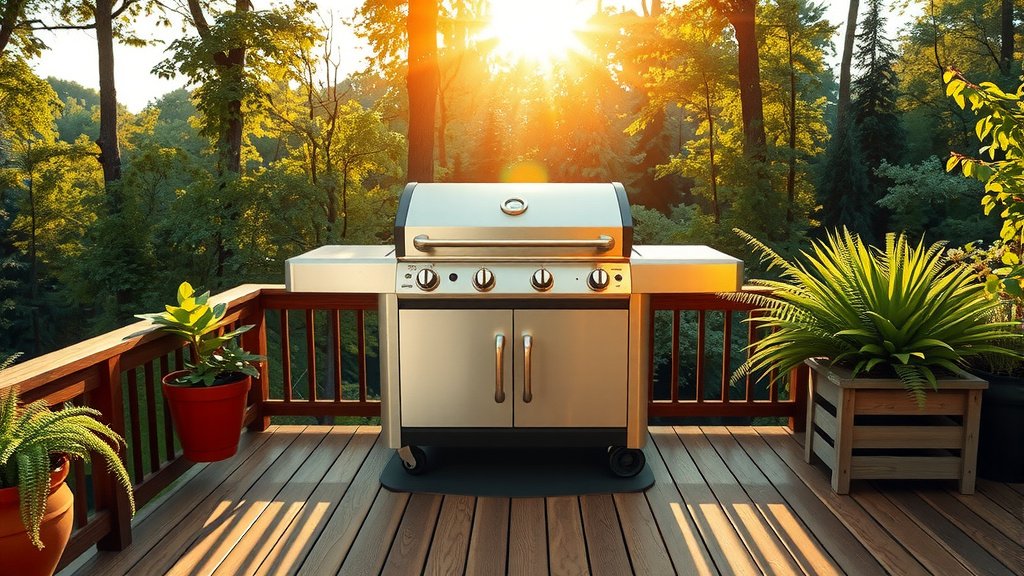
A gas grill is an outdoor cooking appliance that uses either propane gas from a tank or natural gas piped from your home to heat cooking grates.
It lets you cook food quickly and conveniently using a clean-burning fuel, offering precise temperature control at the push of a button.
TL;DR: Thinking about a gas grill? Here’s what you need to know quickly:
- Gas grills use propane or natural gas for easy outdoor cooking.
- They offer instant heat and precise temperature control, much like your kitchen stove.
- Benefits include fast startup, simple cleanup, and less mess compared to charcoal.
- Look for features like BTU output, grates material, and sturdy construction.
- Always prioritize safety with proper setup and ventilation.
What Is A Gas Grill?
A gas grill is an outdoor cooking appliance that uses propane or natural gas as its fuel source. It heats up quickly and provides a consistent flame for cooking your favorite foods.
You can think of it as bringing your kitchen stovetop outdoors, but with grilling power.
How Does a Gas Grill Actually Work?
When you turn the knob on a gas grill, fuel flows to a burner, igniting a flame. This flame heats up metal deflectors or lava rocks, which then radiate heat up to your cooking grates.
This radiant heat cooks your food evenly and helps create those appealing grill marks you love. It is a straightforward process, making grilling very accessible.
Propane vs. Natural Gas Models
Most gas grills run on propane, which comes in a portable tank you connect to the grill. Propane tanks are great for flexibility, as you can move your grill anywhere.
Natural gas grills connect directly to your home’s gas line. They offer an endless fuel supply, so you never run out mid-cook. However, natural gas grills need a fixed location.
Why Choose a Gas Grill? The Key Advantages
Many grillers choose gas for several compelling reasons. They offer a blend of convenience and performance that is hard to beat.
Instant On and Precise Control
One of the biggest perks is speed. You can start grilling in minutes, often with just the push of an igniter button. We found that this fast startup saves a lot of time (Consumer Reports).
Gas grills also give you incredibly precise temperature control. You can adjust burners up or down, just like a stove, making it easier to cook different foods at once.
Cleanliness and Convenience
Cooking with gas means a cleaner experience. There is no charcoal ash to dispose of, and gas burns with very little smoke. This makes cleanup much simpler after your meal.
Also, many experts say that gas grills are often more user-friendly for beginners. You do not need to manage coals or worry about flare-ups as much.
Understanding the Core Components of Your Gas Grill
Knowing the parts of your grill helps you understand how it operates and how to maintain it. It is not just a metal box; each part has a job.
- Burners: These are the heart of the grill, producing the flame. They come in various shapes and materials.
- Cooking Grates: Where your food sits. Cast iron and stainless steel are common choices.
- Heat Deflectors/Flavorizer Bars: These sit above the burners, spreading heat and vaporizing drippings for flavor.
- Ignition System: Lights the burners with a spark or hot coil.
- Lid/Hood: Holds in heat and smoke for roasting and convection cooking.
- Side Burner: Many grills include a side burner for pots and pans, just like a stove.
Choosing the Right Gas Grill for You
With so many options, finding the right grill can feel like a task. Think about your cooking needs and available space.
Consider Your Cooking Habits
Do you grill every day, or just on weekends? If you cook for a crowd, a larger grill with multiple burners is wise. For occasional meals, a smaller model might suit you perfectly.
Research often connects larger families with grills offering more cooking surface (Good Housekeeping).
Key Features to Look For
When shopping, pay attention to BTUs (British Thermal Units). This measures the heat output. More BTUs often mean faster preheating and higher searing temperatures.
Look at the construction materials. Stainless steel often means better durability. Also, consider the grates – cast iron holds heat well for searing.
Here is a quick comparison of gas and charcoal grilling:
| Feature | Gas Grill | Charcoal Grill |
|---|---|---|
| Startup Time | Fast (5-10 minutes) | Slower (20-30 minutes) |
| Temperature Control | Excellent, precise | Good, but requires practice |
| Flavor Profile | Clean, food-focused | Smoky, char-grilled |
| Fuel Cost | Moderate (propane/NG) | Lower (charcoal) |
| Cleanup | Easy (no ash) | More effort (ash disposal) |
Safety First: Tips for Operating Your Gas Grill
Grilling is fun, but safety is paramount. Always handle gas appliances with care.
A Quick Safety Checklist
Before you fire up your grill, a quick check can make a big difference.
- Always grill in a well-ventilated outdoor area.
- Keep the grill at least 10 feet away from your house and other structures.
- Check gas lines and connections for leaks regularly using a soapy water solution.
- Ensure the propane tank is upright and secured.
- Never use a grill indoors or in an enclosed space.
- Keep a fire extinguisher or bucket of sand nearby.
Maintaining Your Gas Grill for Lasting Performance
Proper care extends the life of your grill and keeps it cooking efficiently. A little effort goes a long way.
Regular Cleaning and Inspections
After each use, clean your cooking grates. Many experts suggest a wire brush while the grates are still warm. This prevents food from sticking.
Periodically, inspect the burners for blockages and ensure the drip tray is clean. Many guidelines point to a deep clean at least once a season (Weber).
Conclusion
A gas grill is a fantastic investment for anyone who loves outdoor cooking with minimal fuss. It offers convenience, precise control, and a clean cooking experience that makes every meal a joy. By understanding its components, choosing the right model, and following safety and maintenance tips, you can enjoy delicious grilled food for many years to come.
How do I know if my propane tank is empty?
You can tell if your propane tank is empty by pouring a cup of hot water down the side of the tank. The propane inside absorbs heat, making the empty section feel warmer than the section with liquid propane. The point where the temperature changes indicates the fuel level.
Can I convert a propane grill to natural gas?
Yes, many propane grills can be converted to natural gas, but it requires a specific conversion kit from the manufacturer. This kit usually includes different orifices and a natural gas hose. Always follow the manufacturer’s instructions and consider professional installation for safety.
What is the ideal temperature for grilling chicken on a gas grill?
For most chicken pieces, a medium heat, around 350-400 degrees Fahrenheit, is ideal. This allows the chicken to cook through without burning the exterior. The internal temperature of chicken should reach 165 degrees Fahrenheit (USDA).
How often should I clean my gas grill’s burners?
It is a good idea to inspect and clean your burners at least once a year, or more often if you grill frequently. Remove any debris that might block the gas ports, which can cause uneven heating. A soft brush or a paperclip can help clear small holes.
What does “indirect grilling” mean on a gas grill?
Indirect grilling means cooking food next to, rather than directly over, the heat source. On a gas grill, you turn off the burners directly under the food and use adjacent burners for heat. This method is great for larger cuts of meat, poultry, or delicate items that need longer, slower cooking.
