
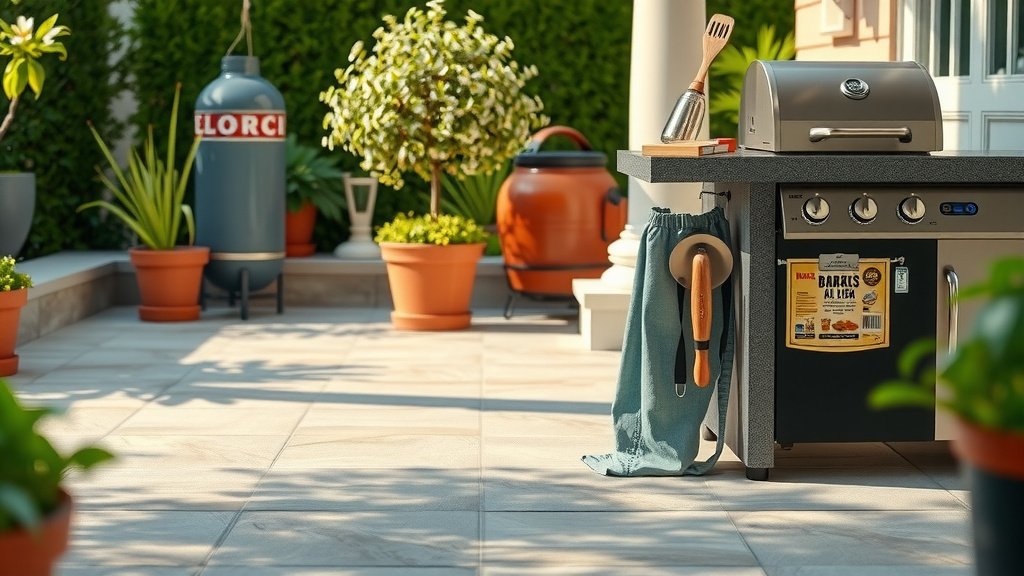
To use a gas grill for the first time, begin by ensuring your propane tank is securely connected and all gas lines are tight. Then, open the tank valve slowly, open the grill lid, turn one burner to high, and press the igniter button until it lights.
Always perform a quick leak test with soapy water on connections before your initial cookout, and allow the grill to preheat fully for 10-15 minutes to burn off manufacturing residues and reach optimal cooking temperature.
- First-timers should connect the propane tank safely and check for leaks with soapy water.
- Always open the grill lid before igniting to prevent gas buildup.
- Start with one burner on high, then use the igniter for a smooth, safe startup.
- Preheat your grill for at least 10-15 minutes; this cleans and readies the grates for cooking.
- Learn to manage heat zones for different foods, creating both direct and indirect cooking areas.
How To Use A Gas Grill For The First Time?
Using a gas grill for the first time can feel like a big step, but it’s simpler than you think. You’ll be grilling your favorite foods in no time with a few easy steps.
Unboxing and Assembly: Your First Steps
Congratulations on your new grill! First, lay out all the parts. Does everything look right? Follow the instruction manual for assembly very carefully. Many common grilling mishaps stem from hurried assembly (Consumer Reports).
Checking for Damage
Before you build, look for any dents or broken parts. Shipping can be tough on boxes. A quick check now saves trouble later. If you find issues, contact the retailer right away.
Connecting the Propane Tank: A Critical Step
This is where the magic starts. Your propane tank connects to the grill’s gas line. Screw it on tightly, but don’t overtighten. Hand-tight is usually enough.
Performing a Leak Test: Safety First
Safety is not a maybe, it’s a must. Mix some dish soap with water to make a bubbly solution. Spray or brush this mix onto all connections, especially where the tank meets the hose. Open the gas valve slowly. If you see bubbles forming, you have a leak. Turn off the gas immediately and tighten the connections. Repeat the test until no bubbles appear (Fire Safety Foundation).
Your First Ignition: Lighting the Grill
Ready to light it up? It’s exciting! Make sure your grill lid is open. Never try to light a closed gas grill. Gas can build up and flash back.
Step-by-Step Lighting Process
- Open the gas tank valve fully. This releases the propane.
- Turn one burner knob to HIGH. Pick any burner to start.
- Press the igniter button. You might hear a clicking sound. Keep pressing until you see a flame.
- Once one burner is lit, you can turn on other burners. Use the main burner to light the others if your igniter isn’t working for all.
Preheating Your Grill: The Foundation of Good Grilling
Think of preheating like warming up before exercise. It gets your grill ready for action. Close the lid once all burners are lit. Let it heat for 10-15 minutes on high.
Why Preheating Matters
Preheating does two main things. First, it burns off any residue from manufacturing. This also helps sanitize the grates. Second, it gets your grill hot enough for a good sear. This prevents food from sticking and creates delicious grill marks.
Temperature Control: Master Your Heat Zones
One great thing about gas grills is precise heat control. You have knobs, right? Those are your power. Adjust them to manage the flame intensity.
Understanding Direct vs. Indirect Heat
Imagine your grill surface. Direct heat is right over a lit burner. This is for searing steaks or quick-cooking veggies. Indirect heat is an unlit section, used for roasting larger items. Many experts suggest creating both zones for versatility (Grill Master Association).
| Heat Type | Burner Setting | Best For |
|---|---|---|
| Direct Heat | Burner On (Medium-High) | Steaks, Burgers, Chops, Quick-cooking Vegetables |
| Indirect Heat | Burner Off (Adjacent to Lit Burner) | Roasts, Whole Chicken, Ribs, Delicate Fish |
| Low Heat | Burner On (Low) | Warm Buns, Slow Cooking, Keeping Food Warm |
Your First Cookout: Simple Starts
For your very first cook, keep it simple. Burgers or hot dogs are perfect. They cook fast and forgive small mistakes. Don’t try to grill a whole turkey just yet!
Preparing Your Grates
Once hot, brush your grates clean. Then, use a paper towel dipped in high-heat oil (like canola) to lightly oil the grates. This helps prevent sticking. Always use tongs to hold the paper towel, not your bare hand!
Grill Maintenance: Keeping It Clean
After the feast, it’s clean-up time. This isn’t the most fun part, but it makes your next grilling session much easier. Let the grill cool down a bit, but still warm.
Post-Grill Cleaning Checklist
- Scrape grates immediately: Use a grill brush while they are still warm.
- Wipe down surfaces: Use a damp cloth on the exterior and side tables.
- Empty the grease tray: This prevents flare-ups and pests.
- Cover your grill: A good cover protects it from weather and dirt.
Troubleshooting Common Issues
What if it won’t light? Don’t panic! Check the propane tank. Is it full? Is the valve fully open? Is the igniter clicking? Sometimes a faulty igniter needs a long lighter. Many issues are simple fixes (Weber Grill Guide).
What if I smell gas?
If you smell gas, turn off the tank valve immediately. Step away from the grill. Check all connections again. If the smell continues, do not use the grill. Call for professional help. Your safety always comes first.
Conclusion
Using a gas grill for the first time is an exciting step into the world of outdoor cooking. Remember to prioritize safety by performing a leak test and always lighting the grill with the lid open. Preheating is your secret weapon for delicious results, and mastering temperature control opens up a world of culinary possibilities. With these practical tips, you’re ready to ignite your grilling journey and create some fantastic meals. Happy grilling!
How do I know if my propane tank is full?
A simple way to check your propane tank level is by pouring warm water down the side of the tank. The tank will feel cool to the touch where the liquid propane is, and warmer where it’s empty. Alternatively, many newer tanks have a built-in gauge, or you can weigh the tank (an empty 20-lb tank weighs about 17 lbs; a full one weighs about 37 lbs).
Can I use charcoal on a gas grill?
No, you should never use charcoal on a gas grill. Gas grills are specifically designed for propane or natural gas. Adding charcoal can damage the grill, create dangerous flare-ups, and pose a significant fire hazard due to the intense, uncontrolled heat.
How often should I clean my grill grates?
You should clean your grill grates after every use. Scrape them with a grill brush while they are still warm to remove food residue. For a deeper clean, especially at the start of grilling season, you can remove the grates and wash them with warm, soapy water.
What should I do if my grill catches fire?
If your grill catches fire, first turn off the gas supply at the propane tank. If safe to do so, close the grill lid to cut off oxygen. If the fire persists or is large, move away from the grill and call emergency services. Never use water on a grease fire.
Is it okay to store my gas grill uncovered outdoors?
While some grills are built to withstand elements, it’s generally not recommended to store your gas grill uncovered outdoors. Exposure to rain, snow, and sun can lead to rust, corrosion, and damage to components like burners and igniters, significantly shortening its lifespan. A grill cover is a worthwhile investment.
