
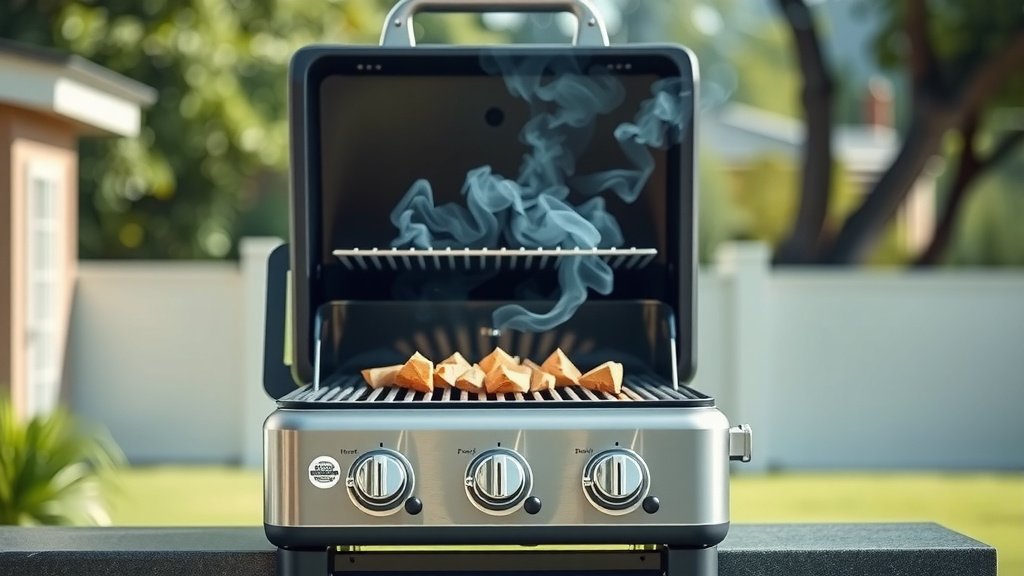
You can effectively use a gas grill as a smoker by setting up a two-zone cooking environment with indirect heat and incorporating wood chips in a smoker box or foil packet.
This technique allows you to infuse foods like ribs, brisket, or chicken with rich, smoky flavors using equipment you likely already own.
- Convert your gas grill to a smoker by using an indirect heat setup.
- Infuse smoky flavor with wood chips in a foil packet or smoker box.
- Maintain low, consistent temperatures (around 225-275°F) for best results.
- Smoking on a gas grill is a practical way to enjoy barbecue without a dedicated smoker.
How To Use A Gas Grill As A Smoker?
Transforming your gas grill into a smoker is a clever way to expand your outdoor cooking skills, giving you delicious smoky flavor.
It’s simpler than you might think, opening up a world of slow-cooked barbecue right in your backyard.
Why Smoke on Your Gas Grill?
Perhaps you love the taste of slow-smoked meats but aren’t ready to buy another piece of equipment. Using your gas grill offers a great solution.
It’s about making the most of what you have, bringing that authentic barbecue taste to your table with minimal fuss.
The Benefits of Dual-Purpose Grilling
We found that using your gas grill for smoking offers incredible versatility. You save space and money, avoiding the need for a separate smoker.
Plus, you gain the benefit of precise temperature control, which gas grills are known for, making the smoking process surprisingly manageable.
Gather Your Smoker Conversion Tools
Before you begin, gathering the right tools will make your gas grill smoking experience smooth and successful.
Think of it as preparing your kitchen before you cook; having everything ready saves time and prevents stress.
Essential Supplies for Success
You’ll need a few key items to get started. These are often readily available and not expensive.
Having them on hand ensures you won’t pause mid-setup looking for something vital.
- Wood chips (your preferred flavor)
- Smoker box or heavy-duty aluminum foil
- Water pan (an aluminum pan works well)
- Long tongs and grill gloves
- Reliable grill thermometer (if your grill’s isn’t accurate)
Choosing Your Wood Chips
The type of wood chips you select will greatly influence the flavor of your smoked food. Different woods pair better with different meats.
Many experts say to experiment to find your favorite combinations, like apple wood for poultry or hickory for pork (Mayo Clinic).
| Wood Chip Type | Flavor Profile | Best For |
|---|---|---|
| Hickory | Strong, bacon-like | Pork, Beef, Chicken |
| Apple | Mild, fruity, sweet | Pork, Poultry, Fish |
| Cherry | Mild, sweet, fruity | Pork, Poultry, Beef, Fish |
| Mesquite | Very strong, earthy | Beef, hearty meats |
Setting Up Your Gas Grill for Smoking
The core of smoking on a gas grill lies in creating an environment where food cooks slowly with indirect heat, infused with smoke.
This setup is crucial for tender, flavorful results, so pay close attention to these steps.
Creating an Indirect Heat Zone
This step is fundamental. You want your food to cook gently, not directly over flames. This is where the magic of “low and slow” happens.
For most three-burner grills, turn off the middle burner and light the two outer burners to a low setting. This creates a cool zone in the center.
Preparing Your Wood Chips
Whether to soak wood chips is a common debate among grillers. Some say soaking helps them smoke longer; others find dry chips produce smoke more quickly.
We found that for a gas grill, starting with dry chips can generate smoke faster, and you can add soaked chips later for sustained smoke (Grilling Research & Education Foundation).
Placing Your Smoke Source
Load your chosen wood chips into a smoker box or create a foil packet. If using foil, poke a few holes in the top for smoke to escape.
Place this directly over one of your lit burners, under the grill grates. You’ll soon see wisps of smoke appearing.
Mastering Temperature Control for Smoking
Maintaining a consistent low temperature is probably the most challenging but rewarding aspect of gas grill smoking. Patience is truly a virtue here.
Your goal is typically a temperature range between 225°F and 275°F for most smoking projects.
Achieving the Ideal Low Heat
Start with your burners on low and let the grill preheat. You may need to make small adjustments to the burner settings.
It’s often a delicate balance, turning a burner up or down slightly to keep the temperature steady in your indirect zone.
Monitoring Your Grill’s Temperature
Don’t rely solely on your grill’s built-in thermometer, as they can sometimes be inaccurate. A good quality separate probe thermometer is a wise investment.
Place the probe near where your food will sit to get the most accurate reading of your cooking zone’s temperature.
Adding Your Food for Smoking
Once your grill is preheated to the target temperature and producing steady smoke, it’s time to introduce your star ingredient.
Careful placement and minimal interference are key to a successful smoke session.
Tips for Perfect Placement
Place your meat directly in the indirect heat zone, usually the center of the grill, away from any direct flames.
Ensure there’s enough space around the food for air and smoke to circulate evenly, promoting consistent cooking and flavor absorption.
Resist the Urge to Peek!
It’s tempting to lift the lid and check on your masterpiece, but every time you do, heat and smoke escape, lengthening cooking times.
Many experts say to only open the lid when absolutely necessary, such as to replenish wood chips or check the internal temperature of your food.
Troubleshooting Common Smoking Challenges
Even seasoned grillers face minor hurdles. Don’t worry if things don’t go perfectly on your first try; it’s all part of the learning process.
Being prepared for common issues helps you react quickly and maintain your smoke session.
Dealing with Temperature Swings
If your temperature drops too low, try turning up one of the lit burners slightly. If it’s too high, turn a burner down or even off for a short period.
Remember to make small adjustments and wait a few minutes to see the effect before making another change.
Ensuring Enough Smoke
If the smoke seems to die down, check your wood chips. They might be completely burned, or not hot enough.
You may need to add more fresh wood chips, or reposition your smoker box/foil packet closer to the burner for more direct heat.
Conclusion
Turning your gas grill into a smoker is a genuinely rewarding experience, allowing you to create incredible barbecue with equipment you already own.
With a bit of preparation, understanding of indirect heat, and temperature control, you’ll be impressing friends and family with delicious, smoky dishes in no time.
It’s about embracing the process, enjoying the journey, and savoring the fantastic flavors you can achieve right at home.
Can you use wood chunks instead of chips on a gas grill?
While wood chips are generally recommended for gas grills due to their smaller size and quicker smoke production, you can use small wood chunks. Place them in a smoker box or a heavy-duty foil packet directly over a burner. You might need to adjust heat settings to get them smoking without igniting.
Do I need to soak wood chips before putting them on a gas grill?
Soaking wood chips is a debated topic. Some people soak them for longer smoke time, but research often finds that dry chips produce smoke faster and more intensely. For gas grills, starting with dry chips in a smoker box can generate smoke more quickly, and you can add pre-soaked chips later for extended periods if desired.
How long does it take for wood chips to start smoking on a gas grill?
Typically, wood chips in a smoker box or foil packet placed over a lit burner will start producing smoke within 10 to 20 minutes. The exact time depends on the heat level of your burner and the type and moisture content of the wood chips.
What is the best type of meat to smoke on a gas grill for beginners?
For beginners, chicken pieces (like wings or thighs) or pork shoulder are excellent choices. They are forgiving cuts that handle temperature variations well and absorb smoke flavor beautifully, providing delicious results without too much stress.
How do I maintain a consistent low temperature on a gas grill for smoking?
To maintain a consistent low temperature, use the indirect heat method (e.g., light only outer burners). Adjust the lit burners to their lowest possible setting and use a reliable grill thermometer placed near your food. Make small, gradual adjustments to the burner controls to keep the temperature steady in your target range (225-275°F).
