
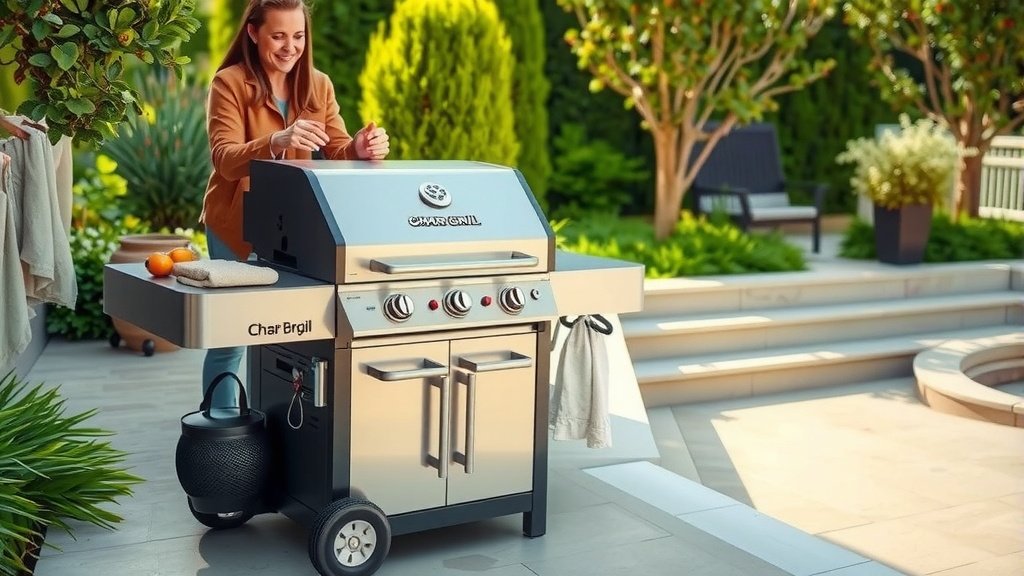
To use a Char-Broil gas grill, first ensure it’s clean and connected to a propane tank, then open the tank valve and light the burners by turning a control knob to HIGH and pressing the igniter.
You’ll then preheat your Char-Broil gas grill to the desired temperature, place your food on the grates, cook, and finally clean the grill after it cools down.
TL;DR: Ready to fire up your Char-Broil gas grill? Here’s the quick scoop:
- Safety First: Always check for gas leaks before lighting.
- Preheat is Key: Get those grates hot before adding food for best results.
- Direct vs. Indirect: Know when to use high heat for searing or lower heat for slow cooking.
- Clean After Use: A quick brush after each cook keeps your grill ready for next time.
- Storage Tips: Keep it covered and disconnected when not in use to prolong its life.
How To Use A Char Broil Gas Grill?
Using a Char-Broil gas grill means enjoying easy, flavorful outdoor cooking with simple steps for setup, lighting, and maintenance.
Getting Your Grill Ready
Before you even think about lighting your Char-Broil gas grill, a little preparation goes a long way. Think of it like getting ready for a fun road trip; you wouldn’t just jump in the car, right?
Unpacking and Assembly
When your grill first arrives, you’ll need to assemble it carefully. Follow the manufacturer’s instructions to the letter. We found that rushing this step can lead to future issues, so take your time.
Connecting the Propane Tank
This is a big one! Make sure your propane tank is full and connected properly. You’ll screw the regulator hose fitting onto the tank valve. Hand-tight is usually all you need; don’t overtighten. Open the tank valve slowly, all the way.
The All-Important Leak Test
Safety first, always! Many experts say you should always check for leaks before your first use and after replacing a tank (Consumer Product Safety Commission). Mix soapy water (half water, half dish soap) and brush it onto hose connections. If you see bubbles, you have a leak. Tighten connections or replace parts as needed before continuing.
Lighting Your Char-Broil Gas Grill
Ready to get some heat? Lighting your grill is quite simple once you know the steps. It’s almost like turning on a gas stove in your kitchen, just outdoors.
Opening the Gas Flow
First, ensure your propane tank valve is completely open. Then, open your grill lid. Never light your grill with the lid closed; this can cause gas to build up.
Igniting the Burners
Turn one burner knob to HIGH. Now, press the igniter button, usually a red or black button on your grill’s front panel. You should hear a clicking sound and see a flame. If it doesn’t light right away, wait five minutes with the lid open before trying again (National Fire Protection Association).
Manual Lighting (If Needed)
What if the igniter isn’t working? Don’t fret! Many Char-Broil gas grills come with a manual lighting option. Use a long lighter or a match in a holder, carefully placing it near the burner while turning the knob to HIGH. Always be cautious when lighting manually.
Preheating for Success
Preheating is not just a suggestion; it’s a golden rule for grilling! It ensures your food cooks evenly and prevents sticking.
Reaching Optimal Temperature
Once lit, close the lid and let your grill heat up for about 10-15 minutes. You’ll want to reach temperatures typically between 350-450°F (175-230°C) for most foods. A good thermometer helps here to monitor the temperature inside.
Why Preheat Matters
Think of searing a steak. If the grates aren’t hot enough, you won’t get that beautiful crust. Preheating ensures grill grates are hot, clean, and ready to cook without food sticking. Many chefs agree this step is non-negotiable.
Cooking on Your Char-Broil Gas Grill
Now for the fun part: cooking! Whether you’re a beginner or a seasoned pro, understanding a few basics will make your meals even better.
Direct vs. Indirect Heat
Knowing the difference between direct and indirect heat is a game-changer. Direct heat is when food sits directly over a lit burner, perfect for searing steaks or quick-cooking burgers. Indirect heat means food is over an unlit burner, with lit burners on either side, ideal for larger roasts or chicken (Meat Institute).
Here’s a simple breakdown:
| Cooking Method | Burner Setup | Best For |
|---|---|---|
| Direct Heat | Food over lit burner(s) | Steaks, burgers, hot dogs, thin veggies |
| Indirect Heat | Food over unlit burner(s), lit burners surrounding | Roasts, whole chicken, ribs, delicate fish |
Mastering Temperature Control
Your Char-Broil gas grill has multiple burners for a reason! Use them to create different heat zones. You can have a high-heat zone for searing and a lower-heat zone for finishing. This flexibility is key for diverse cooking.
Monitoring Your Food
Always use a meat thermometer! Don’t guess if your chicken is done. We found that relying on sight alone can lead to undercooked food or overcooked, dry meals. Proper internal temperature ensures safety and taste (USDA).
Post-Grilling Care
You’ve enjoyed a delicious meal, but the grilling process isn’t truly over until you’ve tidied up. A clean grill is a happy grill, ready for its next adventure.
Cleaning the Grates
After your food is off the grill, turn the burners to HIGH for about 10-15 minutes. This will burn off any leftover food particles. Then, turn off the burners and gas. Once the grates cool down a bit, scrape them with a brush. This prevents buildup.
Emptying the Grease Tray
Don’t forget the grease tray! Regularly emptying this tray prevents flare-ups and keeps your grill safe. We found that a simple foil liner can make this job much easier. Do this after every few cooks, or when it gets full.
Storing Your Grill
Once cool, disconnect the propane tank if you won’t be grilling again soon. Cover your Char-Broil gas grill with a grill cover to protect it from the elements. This extends its lifespan significantly.
Quick Troubleshooting Tips
Even the best grills can have a hiccup. Here are a few common issues and quick fixes.
Burner Not Lighting?
Check your propane tank first. Is it open? Is it empty? If so, try another tank. Also, check the igniter battery if your grill has one. Clean any clogged burner ports with a wire brush.
Uneven Heat?
This often points to partially clogged burner ports. After the grill cools, remove the grates and flame tamers. Use a wire brush to clean the burner ports. Sometimes, spiders or insects can nest inside the burner tubes, which you can clear with a long wire.
Your Grilling Checklist
Before you start, quickly run through this list:
- Propane tank full and connected?
- Leak test done?
- Grill grates clean?
- Igniter working?
- Lid open for lighting?
- Grill tools ready?
Conclusion
Using your Char-Broil gas grill is a straightforward process when you follow these simple steps. From proper setup and safe lighting to intelligent cooking techniques and diligent cleaning, each phase contributes to a better grilling experience. Remember, confidence comes with practice, and soon you’ll be grilling like a pro, enjoying delicious meals and creating lasting memories. Happy grilling!
FAQ: How do I know if my propane tank is empty?
You can tell if your propane tank is empty by its weight; a full 20-pound tank weighs about 37 pounds total. You can also pour hot water down the side of the tank and feel for a cool spot, which indicates the propane level.
FAQ: Can I use charcoal in a Char-Broil gas grill?
No, you should never use charcoal in a Char-Broil gas grill. Gas grills are designed specifically for gas fuel, and introducing charcoal can be dangerous and damage your unit. If you enjoy charcoal flavor, look into a separate charcoal grill or a dual fuel model.
FAQ: How often should I clean my grill grates?
Many experts recommend cleaning your grill grates after every use. A quick scrape with a grill brush while the grates are still warm can prevent food buildup and make your next grilling session much easier and cleaner.
FAQ: Why is my Char-Broil gas grill not getting hot enough?
If your grill isn’t heating up, check your propane tank for a low fuel level or an open “bypass valve” (often caused by opening the tank valve too quickly). Ensure burner tubes are free of clogs and the igniter is working correctly. Sometimes cold weather can also affect heating efficiency.
FAQ: Is it safe to leave the propane tank connected to the grill?
For safety, it’s generally recommended to turn off the propane tank valve after each use. While leaving it connected isn’t always harmful, disconnecting it during prolonged storage or inclement weather reduces the small risk of leaks and extends the life of your hose and regulator.
