
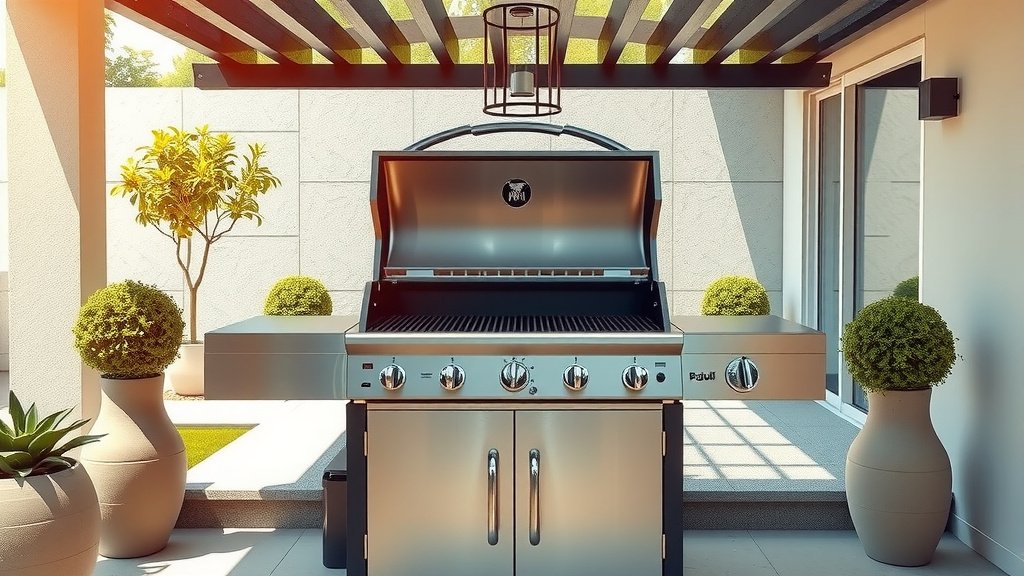
To turn on your Bull gas grill, first ensure the propane tank valve is fully open or your natural gas line is active, then slowly turn a burner control knob to the “High” setting and immediately press the electronic igniter button.
Hold the igniter for a few seconds, listening for the gas flow and watching for the burner to light; verify the flame is active before moving to other burners or releasing the igniter.
Here’s a quick summary for firing up your Bull gas grill:
- Always check your gas supply first, ensuring the tank valve is completely open.
- Slowly turn one burner knob to HIGH and press the igniter.
- Watch for the burner to light up; if it doesn’t, wait and try again.
- If the igniter fails, know how to light it manually and safely.
- Once lit, close the lid and preheat your grill to the desired temperature.
How To Turn On Bull Gas Grill?
Turning on your Bull gas grill correctly is simple, ensuring a safe and successful grilling experience every time. The process involves checking your gas supply, activating the igniter, and verifying the flame.
Starting Your Bull Grill: The Quick Steps
You’re ready for some delicious food, right? Let’s get that grill fired up. Many grilling enthusiasts agree that preparation is key before lighting any gas appliance (National Fire Protection Association).
Gas Supply Check: Is Your Tank Ready?
Before doing anything else, you need to confirm your grill has fuel. For a propane grill, walk over to your tank. Is it connected properly? More importantly, is the valve open?
For natural gas grills, you typically have an always-on supply. Just ensure the main shut-off valve for the grill line is in the open position. You might find this valve near the grill itself.
Opening the Propane Tank Valve
If you have a propane tank, turn the valve counter-clockwise until it’s fully open. Many experts we found advise opening it all the way. This ensures maximum gas flow and consistent burner performance.
A partially open valve can restrict gas, making your burners hard to light or unevenly heated. Think of it like a garden hose; you want a full stream, not a trickle.
Igniting the Burners Safely
With the gas supply flowing, it’s time to get some heat going. This is where your grill’s ignition system comes into play. It’s designed for convenience and safety.
Turning the Control Knobs
Now, select a burner. We suggest starting with one of the main burners first. Slowly turn its control knob to the “High” position. You should hear a faint hiss as the gas begins to flow to the burner.
Don’t turn on all the burners at once. This can flood the grill with gas, creating a potentially unsafe situation. One burner at a time is the safest approach.
Pressing the Igniter Button
Immediately after turning the knob, press and hold the electronic igniter button. You’ll hear a clicking sound. Keep holding it for a few seconds while you watch the burner.
You should see a flame ignite. Once you confirm the burner is lit, you can release the igniter button. If it doesn’t light, release the button, turn the knob off, wait a minute, and try again.
Troubleshooting Ignition Issues
Sometimes, a grill might be a bit stubborn. Don’t worry, it’s often a simple fix. We found many common issues can be resolved quickly.
| Problem | Possible Cause | Solution |
|---|---|---|
| Burner won’t light | Gas tank empty or valve closed | Check/refill tank, open valve fully |
| Weak or no spark | Igniter battery dead or loose | Replace battery, check connections |
| No gas smell | Gas line clogged or disconnected | Inspect lines, clean burner ports (when cold) |
| Flame sputters or is low | Low gas pressure or partial clog | Ensure tank is full and valve is open |
What if the Igniter Fails? Manual Lighting
Even the best igniters can fail sometimes. It’s a good idea to know how to light your grill manually. This can happen if the battery is dead or the igniter component is worn.
Always have a long grill lighter or match handy. Many safety manuals stress this as a backup method.
- Ensure the gas tank valve is open.
- Open the grill lid completely.
- Hold the long lighter or match near the burner port you want to light.
- Slowly turn the corresponding burner knob to “High.”
- The burner should ignite immediately.
- Once lit, quickly remove the lighter.
Always keep your face and body away from the burner area when lighting manually. Safety is paramount when dealing with gas (NFPA).
Preheating Your Bull Grill for Best Results
Once your chosen burners are lit, close the grill lid. Allow your Bull grill to preheat. This usually takes 10-15 minutes, depending on the desired temperature and outside conditions.
Preheating allows the cooking grates to get hot, which is essential for searing food and achieving those beautiful grill marks. It also helps to burn off any residual food particles from previous cooks.
Temperature Control and Zones
After preheating, you can adjust the burner knobs to achieve your desired cooking temperature. Many Bull grills offer multiple burners, allowing you to create different heat zones. This is super helpful for cooking different types of food at once.
For example, you might have a high heat zone for searing steaks and a lower heat zone for indirect cooking of vegetables. Mastering these zones comes with practice.
Turning Off Your Bull Gas Grill Safely
When the grilling is done and the feast is over, it’s just as important to turn off your grill correctly. This prevents gas leaks and ensures safety.
First, turn all the burner control knobs to the “Off” position. Then, and this is important, turn off the propane tank valve by rotating it clockwise until it’s snug. For natural gas, close the main gas line valve.
Allow the grill to cool down completely before covering it. This prevents damage to the cover and allows the internal components to cool properly.
Maintaining Your Grill for Longevity
A little care goes a long way. Regularly cleaning your grill grates and checking burner ports can prevent many future ignition issues. Many experts agree that routine maintenance extends grill life considerably.
Consider brushing the grates after each use while they are still warm. This makes cleaning much easier. Also, keeping your grill covered when not in use protects it from the elements.
Conclusion
Turning on your Bull gas grill is a straightforward process when you know the steps. From ensuring your gas supply is open to igniting the burners and preheating, each step plays a part in a successful grilling session. Remember to always prioritize safety, verify the flame, and know how to manually light your grill if needed. With these tips, you’re all set to enjoy countless delicious meals from your Bull grill.
Can I use a Bull gas grill without a propane tank?
Yes, if your Bull grill is specifically designed or converted for natural gas, you can connect it directly to your home’s natural gas line, eliminating the need for propane tanks. Always ensure it’s the correct type for your gas source.
What should I do if my Bull grill smells like gas but won’t light?
If you smell gas but no flame ignites, immediately turn off the gas supply at the tank or main line, open the grill lid, and wait at least five minutes for the gas to dissipate before attempting to light it again. This allows any accumulated gas to clear safely.
How do I know if my igniter battery needs replacing?
A weak or inconsistent spark, or no clicking sound when you press the igniter button, typically indicates a dead or dying battery. Most Bull grills use standard AA or AAA batteries for the igniter module, usually found behind the control panel.
Is it safe to light a Bull gas grill with a match every time?
While manual lighting with a long match or lighter is safe as a backup, it’s generally not recommended as the primary method for every use. The electronic igniter is designed for convenience and safety, keeping your hands further from the flame.
My Bull grill heats unevenly after lighting, what could be wrong?
Uneven heating after lighting often points to partially clogged burner ports or low gas pressure. Ensure your propane tank is full and its valve is completely open. If the problem persists, clean the burner ports carefully when the grill is cold to remove any debris. This improves gas flow.
