
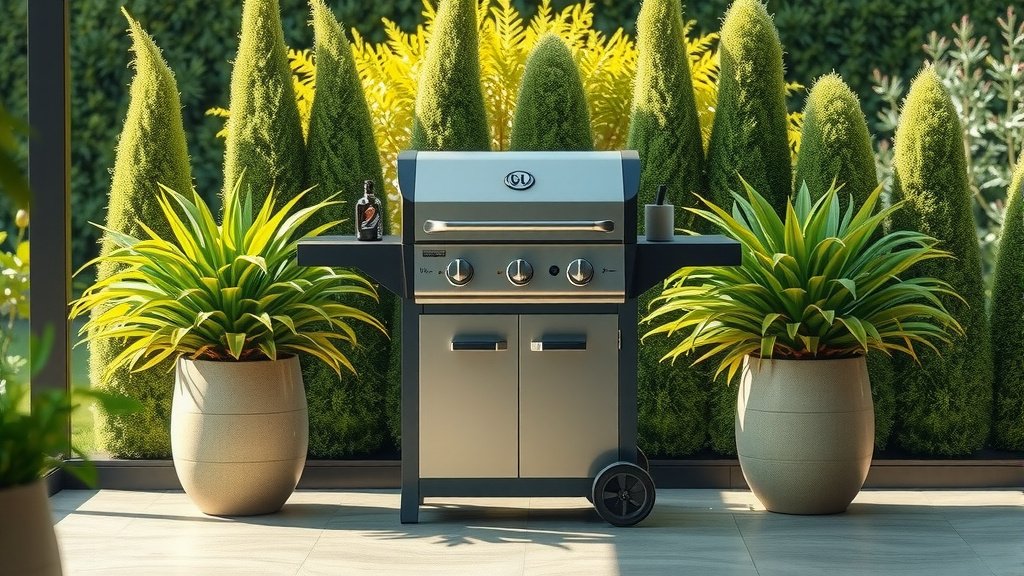
Selecting a gas grill involves carefully evaluating its size, heat output, burner configuration, and construction materials.
To choose the best gas grill, consider your cooking habits, available space, and budget, focusing on durability and features you will actually use.
TL;DR: Here’s what you need to know quickly about selecting a gas grill:
- Match the grill size to your household and entertaining needs.
- Look beyond just BTUs; even heat distribution is key.
- Prioritize durable materials like stainless steel for longevity.
- Consider useful features like side burners or rotisseries, but avoid unnecessary ones.
- Set a realistic budget and remember that a good warranty offers peace of mind.
How To Select A Gas Grill?
Selecting a gas grill means finding the right balance between cooking power, sturdy build, and smart features that fit your lifestyle. You want a grill that ignites reliably, cooks food evenly, and lasts for many seasons of outdoor meals.
Why a Gas Grill? Your Outdoor Kitchen Companion
Gas grills offer fantastic convenience. They heat up fast, provide precise temperature control, and are easy to clean. Many experts say these qualities make them a top choice for regular use (Consumer Reports).
Think about how often you grill. If it’s a few times a week, the ease of a gas grill becomes a real time-saver. You just turn a knob, press a button, and you are ready to cook in minutes.
Your Grilling Style Matters
Before you even look at models, pause and think about your grilling. Do you host big parties, or is it usually just for your family? Are you a quick burger flipper or a slow-roasting enthusiast?
Your answers will guide you. Someone cooking for two has different needs than a master of backyard feasts. This personal touch will ensure your selection feels right for you.
Key Factors to Consider When Choosing a Gas Grill
There are several elements that make up a great gas grill. Understanding each part helps you compare models fairly. We found that focusing on these core components gives you the most value.
Grill Size and Cooking Area
How much food do you typically cook at once? This is the first question to ask yourself. Grill size refers to the primary cooking grates, plus any warming racks.
A smaller grill is fine for a couple or small family. Larger grills handle more servings, great for entertaining. Don’t forget to measure your patio or deck space, too.
How Many Burners Do You Need?
The number of main burners often correlates with the grill’s size and cooking zones. A grill with three or more burners lets you create different temperature zones.
This is really handy for cooking various foods at once. You can sear steaks on one side and gently roast vegetables on the other. It offers great flexibility.
Heat Output (BTUs)
BTUs, or British Thermal Units, measure how much heat a grill can produce. A common mistake is thinking higher BTUs automatically means a better grill.
While important, raw BTU numbers do not tell the whole story. You also need to consider how efficiently that heat is distributed. A lower BTU grill with a tight lid and good design can often outperform a high BTU grill that leaks heat.
Don’t Just Look at BTUs
Focus on BTUs per square inch, not just total BTUs. We found that a grill’s construction quality impacts heat performance significantly. A well-built lid and firebox help retain heat.
Look for grills that reach high temperatures quickly and hold them steadily. This means more consistent cooking results for you.
Construction Materials
The materials used in your grill directly affect its durability and how well it performs. Cheap materials often mean a shorter lifespan and uneven cooking.
Many experts point to stainless steel as a strong choice for the main components. Cast aluminum is another excellent option for its rust resistance.
Stainless Steel Grades
Not all stainless steel is equal. Look for heavier gauge stainless steel, particularly for the burners and cooking grates. Type 304 stainless steel offers better corrosion resistance than lower grades.
While more expensive, better quality materials mean your grill can withstand the elements for years. This saves you money in the long run.
Burner Types and Materials
The burners are the heart of your gas grill. They ignite the gas and distribute heat. Material choice here is especially critical for even cooking and longevity.
Here’s a quick look at common burner types you might encounter:
| Burner Material | Pros | Cons |
|---|---|---|
| Stainless Steel | Resists rust, durable, good heat retention. | Can be expensive, quality varies by grade. |
| Cast Iron | Excellent heat retention and even heating. | Prone to rust if not maintained well. |
| Brass | Very durable, corrosion-resistant, long-lasting. | Often found in higher-end models, more costly. |
| Ceramic Infrared | Very high heat for searing, efficient. | More fragile, typically a specialty burner. |
Ignition Systems
A reliable ignition system is a small detail that makes a big difference. Nobody wants to fumble with matches or lighters. Most grills use either a push-button piezo igniter or an electronic ignition.
Electronic ignitions, powered by a battery, often offer a more consistent spark across multiple burners. Many people find them more dependable than piezo systems which can wear out faster.
Extra Features to Love
Modern gas grills come with a host of optional features. Some are genuinely useful, while others might just add to the cost. Think about what truly helps your grilling experience.
- Side Burner: Perfect for sauces, sides, or boiling corn without going back inside.
- Rotisserie Kit: Great for roasting whole chickens or large cuts of meat slowly.
- Built-in Thermometer: A good lid thermometer helps monitor internal grill temperature.
- Storage Cabinets: Keep your grilling tools, propane tank, and covers neatly stored.
- Grill Lights: Handy for those late-night grilling sessions after the sun sets.
Setting Your Budget for a Gas Grill
Grills range widely in price, from a few hundred dollars to several thousand. Decide how much you are comfortable spending before you start looking. This helps narrow your choices.
Remember that a higher price does not always mean better performance. We found that mid-range grills often offer the best value, balancing features with construction quality.
Warranty and Customer Support
A good warranty signals that the manufacturer stands behind their product. Look for warranties that cover the burners for at least 5 to 10 years, as these are often the first parts to fail.
Research customer reviews about service and support. Knowing you have help if something goes wrong brings great peace of mind.
Before You Buy: A Quick Checklist
Use this quick guide to double-check your choices before making a purchase. It will help ensure you get the perfect gas grill for your needs.
- Does the grill fit my outdoor space?
- Is the cooking area sufficient for my usual needs?
- Are the main components (burners, grates) made from durable materials?
- Does the ignition system feel reliable?
- Are the features truly useful for my grilling style?
- Is the warranty comprehensive, especially for burners?
Conclusion
Choosing a gas grill feels like a big decision, but it becomes much simpler when you focus on your personal grilling needs. By considering size, construction quality, effective heat output, and genuinely useful features, you will find a grill that you love.
Invest in quality, and your gas grill will be a reliable center for countless delicious meals and cherished outdoor moments for years to come. Happy grilling!
How do I know if a gas grill distributes heat evenly?
One good indicator is the design of the heat deflectors or flavorizer bars above the burners. These help spread heat. Reviews often mention even heat, but you can also look for heavier grates and a tightly sealed lid, which aid in consistent temperature across the cooking surface.
Should I get a natural gas or propane grill?
This depends on your setup. Propane grills use portable tanks, offering flexibility. Natural gas grills connect directly to your home’s gas line, meaning you never run out, but require professional installation and are fixed in one spot. Consider convenience versus mobility.
Are infrared burners worth the extra cost?
Infrared burners excel at searing meats at very high temperatures, creating a delicious crust. If you frequently cook steaks or similar items and want restaurant-quality searing, they can be a great addition. For general grilling, they are not always essential, but they offer a unique cooking experience.
What maintenance is needed for a gas grill?
Regular maintenance is key for longevity. This includes cleaning the cooking grates after each use, emptying the drip tray, and inspecting the burners and gas lines annually. Covering your grill when not in use also helps protect it from the elements, as many experts suggest.
Can I convert a propane grill to natural gas, or vice-versa?
Some grills are designed to be convertible, but it requires a specific conversion kit from the manufacturer and often professional installation. Attempting to convert a grill not designed for it is unsafe and can void your warranty. Always check the grill’s specifications and user manual first.
