
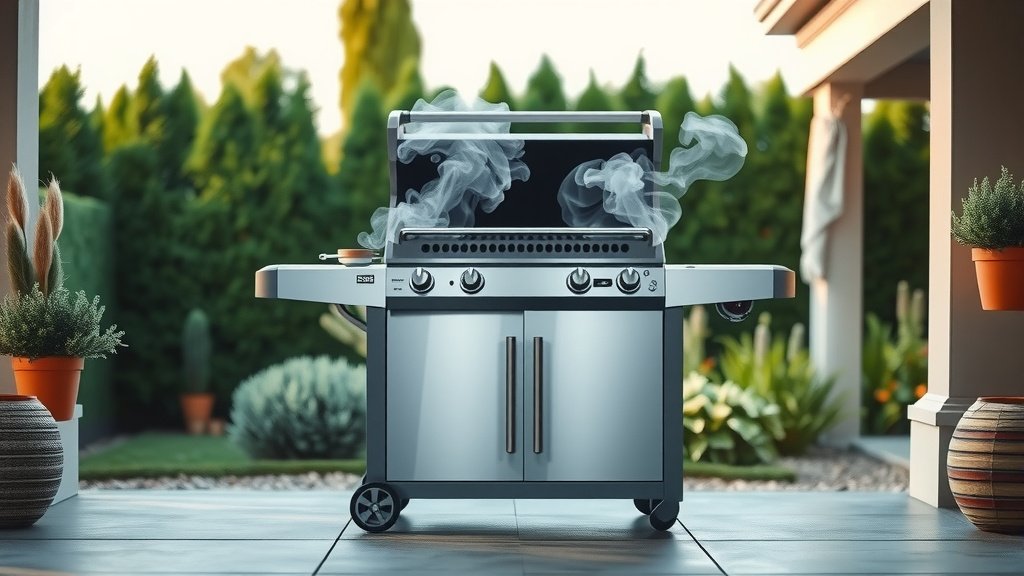
To put out a gas grill fire, immediately turn off the gas supply at the tank or natural gas line. Keep the lid closed to starve the flames of oxygen and allow the fire to extinguish itself.
Your main goal is to cut off the fuel source and remove oxygen to safely manage any gas grill fire quickly and effectively.
TL;DR: Here’s what you need to know for quick action:
- Immediately turn off the gas supply at the propane tank valve or natural gas line.
- Keep the grill lid closed to suffocate the flames by cutting off oxygen.
- Do NOT use water on a grease fire, as it can spread the flames.
- For persistent grease fires, use a Class B fire extinguisher or baking soda.
- If the fire grows or becomes uncontrollable, evacuate the area and call emergency services.
How To Put Out Gas Grill Fire?
The fastest way to put out a gas grill fire is to shut off the gas at the source and keep the grill lid closed to smother the flames.
When a Grill Fire Happens: Stay Calm
Seeing flames where you don’t expect them can be alarming. Your first reaction might be panic. However, staying calm is your greatest tool when a grill fire starts. Take a deep breath.
Quick, clear thinking helps you act safely. Remember, most grill fires are manageable if you know what to do. Many experts say a calm approach prevents further danger (NFPA).
Identifying Different Types of Grill Fires
Not all grill fires are the same. Understanding the type helps you choose the right action. Is it a sudden flare-up or a persistent blaze?
Knowing the difference helps you react appropriately. Your safety depends on a correct assessment.
Grease Fires
These are the most common grill fires you might encounter. They happen when accumulated grease or food drippings ignite. You’ll often see tall, bright yellow flames.
Grease fires can spread quickly if not managed. They can also create a lot of smoke. We found that preventing grease buildup is key to avoiding them.
Gas Leaks and Flare-Ups
A gas leak fire is different and much more serious. This occurs if there’s a leak in a gas line or connection that ignites. You might hear a hissing sound or smell gas.
Flare-ups are smaller, momentary bursts of flame. They usually come from fats dripping onto hot burners. These are often brief and self-correcting.
Your Immediate Action Plan: Shutting Off the Gas
This is the most critical first step for any gas grill fire. You need to cut off the fuel supply. Go directly to your propane tank or natural gas line connection.
Turn the valve clockwise until it’s completely closed. This stops the flow of gas to the burners. No fuel means no fire.
The Power of Closing the Lid
Once the gas is off, immediately close the grill lid. This simple action does something powerful. It starves the flames of oxygen.
Without oxygen, most fires cannot continue to burn. This method works well for contained fires. It’s often all you need after turning off the gas.
What NOT To Do: Avoid These Mistakes
Some actions can make a grill fire much worse. Knowing what to avoid is as important as knowing what to do. Your safety depends on this knowledge.
Never take unnecessary risks. A small fire can become big if mishandled.
- Never use water on a grease fire: Water can cause burning grease to splatter. This spreads the fire rapidly and dangerously.
- Do not open the lid repeatedly: This feeds oxygen to the fire. It makes the flames grow instead of shrinking.
- Avoid moving the grill if it’s actively burning: You risk spreading burning materials or hot grease. It can also cause a gas line to rupture.
- Do not try to blow out the fire: This introduces more oxygen. It will only make the fire more intense.
When to Reach for a Fire Extinguisher
Sometimes, closing the lid isn’t enough. For persistent grease fires, a fire extinguisher is your next best friend. Always keep one near your grilling area.
Look for a Class B or ABC rated extinguisher. Aim at the base of the flames. Use short, controlled bursts. Many fire safety experts recommend this for household use (UL Solutions).
Alternative Fire Suppression Methods
If you don’t have an extinguisher, there are other options. These are for grease fires only, not gas leaks.
| Method | Application | Effectiveness |
|---|---|---|
| Baking Soda | Pour a generous amount directly over flames. | Good for small grease fires, smothers flames. |
| Sand | Dump sand directly onto the burning area. | Effective for smothering, readily available. |
| Fire Blanket | Place over the grill to cut off oxygen. | Quickly smothers flames, minimal mess. |
Baking soda works by releasing carbon dioxide. This gas smothers the fire. Sand also effectively cuts off oxygen. These are good backup options.
What If the Fire Won’t Go Out?
If the fire doesn’t extinguish after turning off the gas and closing the lid, something more serious might be happening. Or if it’s too large to manage.
Your safety is the priority. Evacuate everyone from the area immediately. Then, call emergency services. Let the professionals handle it. Never try to be a hero.
After the Fire: Inspecting Your Grill
Once the fire is completely out and the grill has cooled, inspect it carefully. Look for any damage to hoses, connections, or burners.
A damaged grill can be dangerous to use again. If you see any signs of wear or melting, do not use the grill. Consider getting it professionally inspected or replacing parts.
Preventing Future Grill Fires: A Quick Checklist
Prevention is always better than reaction. A few simple habits can greatly reduce your risk of a grill fire. Take these steps before you light up.
- Clean your grill regularly: Scrape grates and clean drip trays.
- Check gas lines for leaks: Use soapy water on connections; bubbles indicate a leak.
- Position your grill safely: Keep it away from structures, overhangs, and dry vegetation.
- Never leave a lit grill unattended: Stay nearby while cooking.
- Have safety equipment ready: Keep a fire extinguisher or baking soda close.
- Avoid over-greasing food: Trim excess fat to reduce drippings.
Conclusion
A gas grill fire can be frightening, but with the right knowledge, you can handle it safely. Remember your core strategy: turn off the gas, then close the lid. Always prioritize your safety and the safety of those around you.
By understanding what to do, what to avoid, and how to prevent fires, you can enjoy many safe grilling seasons. Grill smart, grill safe, and keep those delicious meals coming!
What causes most gas grill fires?
Most gas grill fires are caused by accumulated grease, fat, and food debris igniting on the burners or inside the grill. A lack of regular cleaning allows these flammable materials to build up, leading to flare-ups or larger fires during cooking.
Should I disconnect the propane tank during a grill fire?
No, you should not attempt to disconnect the propane tank if there is an active fire. Your immediate action should be to turn off the gas at the tank’s main valve. Disconnecting a hot tank can be very dangerous due to the risk of propane release and burns.
Is it safe to grill again after a small flare-up?
After a small, contained flare-up, it is generally safe to continue grilling once the flames have subsided and you’ve confirmed no damage to the grill components. However, always inspect the grill for any melted hoses or cracked parts before resuming cooking to ensure it’s still safe to operate.
Can I use a garden hose to put out a grill fire?
Using a garden hose is not recommended for putting out a gas grill fire, especially if it involves grease. Water can cause burning grease to splatter and spread the fire. It can also damage the grill’s electrical components or thermal shock the metal, potentially making it unsafe.
How often should I clean my gas grill to prevent fires?
You should clean your gas grill after every use to prevent grease buildup on the grates and in the drip tray. A deeper cleaning of the entire grill, including burner covers and inside the firebox, is recommended at least two to four times during the grilling season, depending on how often you use it.
