
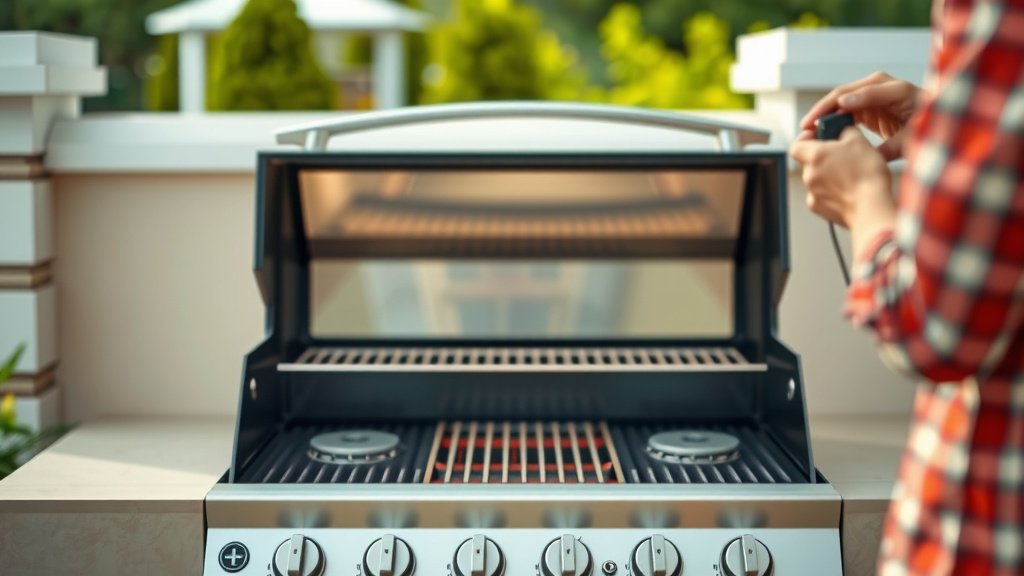
To manually light a gas grill, you generally open the lid, turn one burner to low, and immediately insert a long lighter or match near the burner port to ignite the gas.
Always proceed with caution and ensure no excessive gas builds up before attempting to light your grill manually.
Before you dive into the full details, here’s the quick lowdown on manually lighting your gas grill:
- Always open the grill lid first for safety.
- Turn on one burner to a low setting.
- Use a long lighter or match to ignite the gas near the burner.
- Check for ignition and then proceed to light other burners.
- Safety is your top priority throughout the process.
How To Manually Light A Gas Grill?
You can manually light a gas grill by opening the lid, turning a single burner knob to low, and carefully using a long match or a grill lighter to ignite the burner port.
This method provides a reliable way to get your grill ready for cooking when the electronic ignition fails.
Why Would You Need to Manually Light Your Grill?
Sometimes, the built-in electronic igniter on your gas grill decides to take a vacation. It’s a common issue, and it can be frustrating when you’re ready to grill.
Things like dead batteries, loose wires, or even moisture can prevent your igniter from sparking. Knowing how to light it manually means your cookout is never delayed.
Essential Tools for Manual Ignition
Before you even think about lighting your grill, gather a few key items. These tools make the process safer and much easier for you.
Having the right gear prevents accidents and ensures a smooth start to your grilling session. We found that preparation makes all the difference (Grill Safety Institute).
The Right Lighter Makes a Difference
You’ll need a long lighter or a long fireplace match. A standard cigarette lighter or a short match puts your hand too close to the gas valve and flame.
A long-stemmed lighter, often called a utility lighter, provides the necessary distance for safety. Many experts recommend these for all manual grill lighting tasks.
Safety Gloves and Fire Extinguisher
While not always strictly needed, heat-resistant gloves can offer an extra layer of protection for your hands. It’s always good practice to have them nearby.
More importantly, always have a small fire extinguisher or a bucket of sand or water close by. This is a precaution, not an expectation, but it’s important for grill safety (NFPA).
Your Step-by-Step Guide to Manual Lighting
Ready to get your grill fired up? We’ll walk you through each simple step. Remember, patience and attentiveness are your best friends here.
Follow these instructions carefully, and you’ll be cooking in no time. Think of it like learning to ride a bike; once you know, it’s easy.
Open the Lid – Safety First!
This is arguably the most critical first step. Always, always open your grill lid completely before turning on any gas.
If gas builds up under a closed lid and then ignites, it can cause a dangerous flare-up. An open lid lets any stray gas dissipate safely into the air.
Turn On One Burner to Low
Locate one of your grill’s burner knobs. Turn it to the “low” setting. You should hear the faint hiss of gas flowing.
Only turn on one burner at this stage. Turning on multiple burners increases the amount of unlit gas, which is a safety concern.
Introduce the Flame
Immediately after turning on the gas, position your long lighter or match near the burner port. These are the small holes where the gas exits and ignites.
Bring the flame close to the burner, ideally directly over the port, until you see it ignite. You might hear a soft “whoosh” sound.
Confirm Ignition and Close Lid
Once you see the flame, you’ve successfully lit that burner. You can now turn the other burners on, one by one, using the ignited burner to light them.
Close the lid and allow your grill to preheat to your desired temperature. You’re now ready for some delicious grilling!
What If It Doesn’t Light Immediately?
Don’t panic if it doesn’t light right away. Sometimes it takes a second. However, never leave the gas on for too long without ignition.
If it doesn’t light within a few seconds, turn off the burner, open the lid wide, and wait for about five minutes. This allows any built-up gas to clear before trying again.
Understanding Your Grill’s Burner Ports
Your grill’s burner ports are crucial. They are the tiny holes or slits on the burner tubes where the gas comes out to meet the flame.
Keeping these clean is important for even heating and easy ignition. Sometimes, food debris or grease can block these ports (Grill Maintenance Guide).
Propane vs. Natural Gas Grills: Any Differences?
The manual lighting process for propane and natural gas grills is essentially the same. The steps of opening the lid, turning on a burner, and introducing a flame remain constant.
The main difference lies in the gas supply itself. Propane comes from a tank, while natural gas connects to your home’s gas line. Both require the same careful handling during ignition.
Safety Tips for Manual Lighting
Safety should always be your top concern when dealing with gas appliances. Keep these additional tips in mind for a worry-free experience.
We found that small precautions go a long way in preventing big problems. These tips are based on general grill operation guidelines.
The 10-Second Rule
If a burner does not light within about 10 seconds of turning on the gas, turn the burner off immediately. Wait at least five minutes with the lid open before attempting to light it again.
This rule helps prevent a potentially dangerous accumulation of gas. It’s a simple waiting game that keeps everyone safe.
Always Stay Vigilant
Never walk away from your grill when manually lighting it. Stay present and focused on the task until all burners are properly ignited.
Your attention helps you react quickly if anything unexpected happens, like a flare-up or a burner failing to light.
Common Manual Lighting Mistakes to Avoid
Even experienced grillers can sometimes make errors. Being aware of these common pitfalls helps you stay safe and successful.
Avoiding these issues means less frustration and more delicious grilled food for you and your family. Nobody wants a burnt eyebrow!
| Mistake | Why It’s Risky | The Safe Approach |
|---|---|---|
| Lighting with lid closed | Gas accumulation can cause a dangerous flash fire. | Always open the lid fully before turning on gas. |
| Turning on multiple burners | Too much unlit gas creates a larger explosion risk. | Light one burner first, then others from it. |
| Using a short lighter | Puts your hand too close to the flame and gas outlet. | Use a long-stemmed utility lighter or fireplace match. |
| Leaving gas on too long unlit | Allows excessive gas to build up, increasing danger. | Turn off gas if no ignition within 10 seconds; wait 5 mins. |
Here’s a quick checklist to ensure you’re ready to manually light your gas grill:
- Grill lid is completely open.
- Gas tank valve is fully open (if applicable).
- You have a long-stemmed lighter or match ready.
- A fire extinguisher or water is nearby.
- All grill grates are in place and clean.
Conclusion
Manually lighting your gas grill might seem like a bit of a challenge at first, but it’s a valuable skill for any griller. When your electronic igniter falters, you now have the knowledge and confidence to get your BBQ going.
Always prioritize safety by opening the lid, using the right tools, and taking your time. With these simple steps, you’ll ensure your grilling plans are never put on hold. Go ahead, fire up that grill!
How do I know if my grill igniter is broken?
You’ll know your grill igniter is likely broken if you press the ignition button and hear no clicking sound, or if you hear clicking but no spark appears at the burner. If it consistently fails to light the gas even with a full gas tank, it’s time for manual ignition or repairs.
Can I use any lighter to manually light a gas grill?
No, you should only use a long utility lighter or a long fireplace match. A regular lighter or short match can put your hand dangerously close to the gas and potential flame, risking burns. Safety dictates maintaining a good distance from the ignition point.
How long should I wait between lighting attempts if it fails?
If your grill fails to light after a few seconds, turn off the gas to the burner immediately. Then, open the grill lid completely and wait for at least five minutes. This waiting period allows any unlit gas to dissipate safely, reducing the risk of a dangerous flare-up on your next attempt.
Is it normal for some burners to light manually but not others?
It’s possible. Sometimes one burner might have a slightly clogged port, or the gas flow to one specific burner could be weaker. If you can light one burner manually, you can usually light the others from it by turning them on after the first one is ignited.
What if my grill smells like gas but won’t light manually?
If you smell gas but can’t get your grill to light, turn off all burners and the main gas supply (either the tank valve or the natural gas line) immediately. Keep the lid open and wait at least 15 minutes. A strong gas smell without ignition indicates a potential leak or a significant gas build-up, which requires caution. Do not attempt to light it again until the smell dissipates and you can check for leaks (American Gas Association).
