
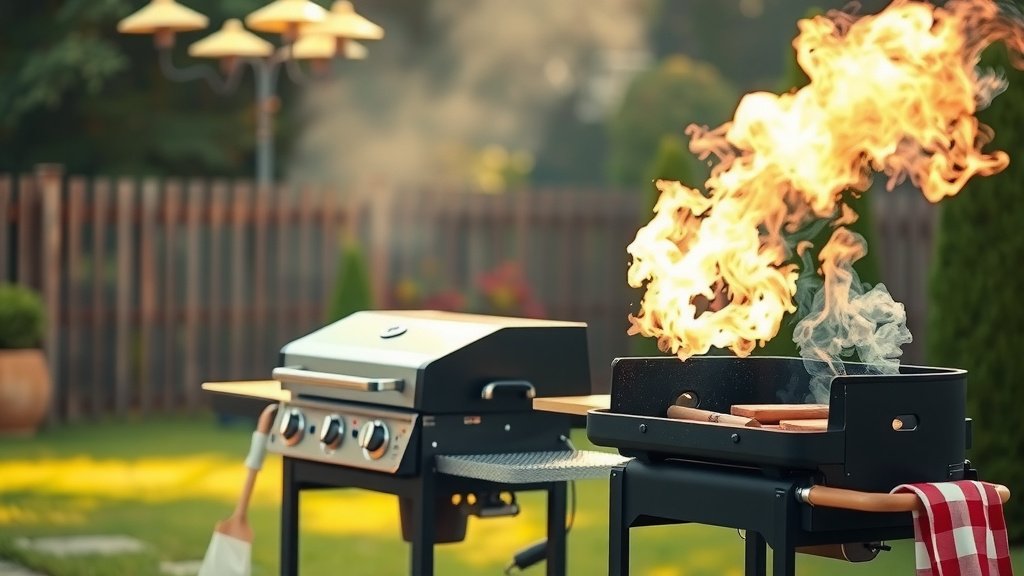
You can make your gas grill taste more like a charcoal grill by using wood chips or chunks in a smoker box or foil packet.
Enhancing your gas grill’s flavor also involves using a cast-iron griddle, achieving a good sear, and selecting the right marinades.
For those short on time, here’s the quick rundown:
- Infuse smoky notes with wood chips or chunks, placed correctly.
- Achieve a fantastic sear using high heat and a clean cooking surface.
- Deepen flavors with thoughtful marinades, rubs, and sauces.
- Set up your grill with direct and indirect heat zones for versatility.
- Always start with a clean, preheated grill for the best taste.
How To Make Gas Grill Taste Like Charcoal Grill?
Many grill enthusiasts miss the distinct smoky depth of charcoal when using a gas grill. You want that robust flavor, right?
Turning your gas grill into a charcoal flavor powerhouse is absolutely possible with a few smart techniques and tools.
Embracing Wood Smoke: Your Gas Grill’s Best Friend
The biggest difference between gas and charcoal is often the smoke. Charcoal combustion creates unique smoke compounds. Your gas grill can mimic this by adding wood.
Research confirms that real wood smoke imparts flavors missing from propane combustion alone (Food Science & Technology).
Smoker Boxes: A Simple Solution
Smoker boxes are fantastic for introducing wood smoke. You fill them with wood chips, then place them directly on the grates or under them.
The heat from your gas burners will smolder the chips, releasing that beloved smoky essence. Many experts say a good quality cast iron smoker box works best.
Foil Packets: The DIY Approach
No smoker box? No problem! You can easily create a foil packet. Just wrap wood chips in heavy-duty aluminum foil, poke a few holes, and place it under the grates.
This method works just as well for short cooks, giving you a burst of smoky flavor without extra equipment.
Choosing The Right Wood
The type of wood matters for flavor. Applewood is sweet and mild, great for poultry. Hickory offers a strong, bacon-like taste for pork and beef.
Mesquite is powerful and best for red meats, while oak is a classic all-rounder. Cherry wood gives a beautiful color and fruity smoke.
Achieving The Perfect Sear: Crust Is King
A gas grill can get very hot, but it often struggles to create the same intense, all-over radiant heat as charcoal. That beautiful crust, the Maillard reaction, is key.
We found that a fantastic sear is critical for mimicking charcoal grilled food. It adds a delicious caramelized layer.
Cast Iron Grates or Griddles
Consider replacing your standard grill grates with cast iron versions if possible. Cast iron retains heat incredibly well, providing a superior searing surface.
You can also place a cast iron griddle or pan directly on your grates. Let it preheat for a long time to get super hot, then sear your food.
High Heat Is Essential
For searing, you need maximum heat. Crank up your gas grill to its highest setting and let it preheat for at least 10-15 minutes.
The hotter your grates, the better the sear. Don’t be afraid of high heat for this initial step.
Flavor Boosters: Marinades, Rubs, And Sauces
While smoke and sear are vital, what you put on your food before and after grilling also plays a big role. Think of it as painting a flavor masterpiece.
These additions complement the smoky notes and add layers of complexity.
Building Flavor From Within
Marinades can penetrate meat, infusing it with flavor and often tenderizing it. Use ingredients like soy sauce, Worcestershire sauce, garlic, and onion powder.
Rubs, on the other hand, create a crust of flavor on the surface. Don’t be shy with your favorite spice blends!
The Power of Umami
Ingredients rich in umami, like mushrooms, tomatoes, or aged cheeses, can deepen the savory profile of your grilled food. A little tomato paste in a rub works wonders.
Many experts suggest using ingredients like anchovy paste or fish sauce in small amounts to boost umami without tasting fishy.
Grill Setup: Zoning For Success
Charcoal grills naturally offer hotter and cooler zones. You can replicate this on a gas grill for better cooking control.
This method allows you to sear intensely then finish cooking gently.
Two-Zone Cooking Explained
Set one side of your grill to high heat (direct zone) and the other side to low or off (indirect zone). This gives you versatility.
Sear your food over direct heat to get that beautiful crust, then move it to the indirect side to cook through without burning.
Direct vs. Indirect Heat
Direct heat cooks food quickly over the flame. Indirect heat cooks food slowly with ambient heat, like an oven. Both are important for great results.
Knowing when to use each zone helps prevent flare-ups and ensures evenly cooked food.
Why Do We Love That Charcoal Flavor?
What is it about charcoal that makes our taste buds sing? It’s more than just smoke; it’s a combination of unique processes.
Understanding this helps us replicate it on a gas grill.
The Maillard Reaction: Flavor Magic
Research often connects the Maillard reaction with the complex flavors and aromas we crave (Journal of Food Science). This browning reaction occurs at high heat.
It creates hundreds of new flavor compounds, giving food a rich, savory, and often nutty taste profile.
Smoke’s Secret Ingredients
Charcoal smoke contains various organic compounds that gas smoke does not. These compounds permeate the food, giving it a depth of flavor.
This is why adding natural wood smoke to your gas grill is so effective. It introduces those missing elements.
Mastering The Flame: Beyond Basic Grilling
You’re not just cooking; you’re crafting an experience. A few fundamental practices can truly elevate your gas grilling game.
These tips are crucial for achieving that charcoal-like flavor and overall deliciousness.
Preheating: The Often Overlooked Step
Always preheat your gas grill thoroughly. We found that a good 15-minute preheat on high ensures even cooking and prevents sticking.
Hot grates create a better sear and cook food more efficiently.
Keep It Clean: No Old Flavors
Scrub your grill grates before every cook. Old food bits can impart bitter, off-flavors to your fresh ingredients.
A clean grill is a happy grill, and it helps maintain those beautiful sear marks.
Pat Your Meat Dry: For Better Sear
Many experts say that moisture on the surface of meat steams it rather than sears it. Patting your meat dry with paper towels is a simple yet powerful step.
A dry surface allows for a quicker, more intense Maillard reaction.
Patience Is A Virtue: Don’t Rush The Cook
Don’t flip your food too soon. Let it develop a crust before turning. Resist the urge to press down on burgers or steaks; it pushes out the juices.
Good grilling takes time and observation. Trust the process.
Consider A Pellet Tube: Extra Smoke
For an even longer smoke duration on your gas grill, a pellet tube smoker is a great option. Fill it with wood pellets, light one end, and let it smolder.
This provides a steady stream of thin, blue smoke for hours, perfect for larger cuts of meat.
Wood Chips vs. Wood Chunks: A Quick Comparison
Understanding the difference between wood chips and chunks helps you choose the right fuel for your smoke flavor.
Here’s a simple breakdown:
| Feature | Wood Chips | Wood Chunks |
|---|---|---|
| Size | Smaller, shredded pieces | Larger, block-like pieces |
| Smoke Duration | Short (15-30 minutes) | Long (up to 1-2 hours) |
| Best For | Quick cooks, burgers, chicken breasts | Longer cooks, ribs, briskets, roasts |
| Preparation | Often soaked briefly | Rarely soaked, used dry |
Your Flavor Checklist for Gas Grilling
Ready to get that smoky, char-grilled taste? Use this quick checklist before your next cookout:
- Get wood chips or chunks and a smoker box or foil.
- Ensure your grill grates are clean and hot for searing.
- Have your favorite marinades, rubs, or sauces ready.
- Plan for a two-zone cooking setup on your grill.
- Pat your meat dry for optimal browning.
Conclusion
Transforming your gas grill into a charcoal flavor producer isn’t a pipe dream; it’s a series of practical, achievable steps. By adding wood smoke, mastering the sear, and employing smart cooking techniques, you can enjoy that deep, authentic grilled taste you crave.
So, fire up your gas grill with confidence. You’re now equipped to create incredible meals that taste like they came straight from a charcoal pit. Happy grilling!
How do I add wood chips to a gas grill without a smoker box?
You can create a simple smoker packet by wrapping about a cup of wood chips tightly in heavy-duty aluminum foil. Poke several small holes in the top of the packet to allow smoke to escape, then place it directly on your grill grates over a lit burner.
Should I soak wood chips before using them on a gas grill?
While some people recommend soaking wood chips, many experts now suggest against it. Soaking primarily creates steam, which delays the production of clean smoke. Dry chips ignite and smolder more quickly, producing better smoke for flavor.
Can I use charcoal briquettes on my gas grill for flavor?
No, you should not place charcoal briquettes directly on the grates or inside your gas grill. Gas grills are not designed for the ash and heat management of charcoal. Using charcoal could damage your grill or pose a fire hazard.
What are the best types of wood for a smoky flavor on a gas grill?
Popular choices include hickory for strong, bacon-like flavor; applewood for a mild, fruity smoke, great for chicken and pork; and oak for a robust, versatile smoke that pairs well with most meats. Mesquite offers a very strong flavor, best for red meat in moderation.
How long does it take for wood chips to start smoking on a gas grill?
Once placed over direct heat, wood chips in a smoker box or foil packet typically start producing visible smoke within 10 to 15 minutes. The smoke will usually last for about 15-30 minutes, depending on the amount and type of wood.
