
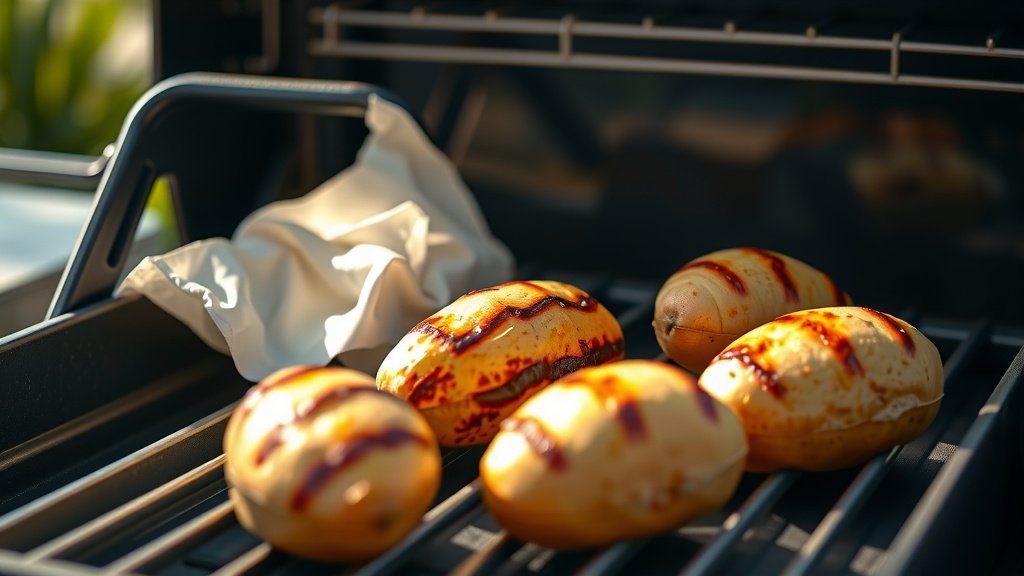
Making baked potatoes on the gas grill is a fantastic way to get a fluffy interior and delightfully crispy skin, all without heating up your kitchen. You achieve this by setting up your grill for indirect heat and managing the cooking time carefully.
To make baked potatoes on the gas grill, you will need to properly prepare your potatoes, preheat your gas grill to a consistent medium-low temperature, and cook the potatoes over indirect heat until they are tender throughout.
Here’s a quick overview of what you’ll learn in this guide:
- Choose the right potato variety for grilling.
- Learn simple, effective prep steps.
- Master your grill’s indirect heat zone.
- Understand cooking times and methods.
- Discover tips for the best results.
How To Make Baked Potatoes On The Gas Grill?
Making baked potatoes on your gas grill involves a few simple steps. You’ll prepare the potatoes, set up your grill for indirect cooking, and then let the consistent heat do its work for a perfectly tender result.
Why Grill Your Potatoes?
Grilling baked potatoes offers unique benefits. It frees up oven space, especially during big meals or holidays. Plus, many find that the grill imparts a subtle smoky flavor that ovens just can’t match.
You also get a wonderfully crisp skin when grilled, a texture often harder to achieve in a conventional oven. It’s perfect for summer cookouts when you want to keep the heat outside.
Picking the Right Potato for Grilling
The type of potato you choose greatly impacts your final dish. Not all potatoes are created equal when it comes to baking.
Russets Reign Supreme
We find that Russet Burbank potatoes are the undisputed champions for baking. Their high starch content means they become incredibly fluffy inside once cooked.
Their thick skins also hold up well to the grill’s direct and indirect heat. This makes them less likely to dry out or fall apart.
Essential Prep Steps for Perfect Potatoes
Proper preparation is key to a successful baked potato. A little effort here goes a long way to prevent issues like uneven cooking or burst skins.
The Wash and Dry Rule
Always start by thoroughly scrubbing your potatoes under cold running water. This removes any dirt or debris. Then, completely dry them with a paper towel. We found that a dry potato skin helps it crisp up better on the grill.
To Pierce or Not to Pierce?
Yes, always pierce your potatoes. Use a fork or knife to make several shallow holes all around each potato. Many experts say this prevents steam from building up inside, which can cause the potato to explode (USDA).
Think of it as creating tiny vents for pressure release. This simple step saves you from a messy grill incident.
Oil and Salt: Your Best Friends
Once dry and pierced, coat each potato lightly with olive oil or another high-heat cooking oil. This helps the skin crisp and keeps it from sticking.
Generously sprinkle the oiled potatoes with coarse salt, like kosher or sea salt. This not only seasons the skin but also helps draw out moisture for extra crispness. Some grillers even rub them with a little pepper too.
Setting Up Your Gas Grill for Success
Your gas grill is versatile, but baking potatoes requires a specific setup. You’re aiming for consistent, moderate heat, not direct searing heat.
Understanding Indirect Heat
Indirect heat means cooking food away from the flame. For a two-burner grill, you might light one burner to medium and place potatoes on the unlit side. For three or more burners, light the outer burners and leave the middle one off.
This setup creates an oven-like environment within your grill. It cooks the potato through evenly without burning the exterior.
Target Temperature
Preheat your grill to a consistent temperature between 375°F and 400°F (190°C to 205°C). Use your grill’s built-in thermometer, or an external one for accuracy.
Consistency is key for baking. We find that a stable temperature ensures the potato cooks uniformly from the outside in.
Grilling Times and Techniques
How long you cook your potatoes and how you handle them matters. Patience is a virtue here.
Place your prepared potatoes directly on the grill grates over the unlit burners. Close the lid to let the heat circulate.
The Foil Debate
Some people wrap their potatoes in foil; others don’t. Research often shows that foil-wrapped potatoes steam more, resulting in a softer skin. Unwrapped potatoes, however, achieve that desirable crispy skin.
If you prefer a crispy skin, skip the foil. If you want a softer, more steamed texture and don’t mind sacrificing some crispness, use foil. For this guide, we focus on unwrapped potatoes for maximum crisp.
How to Know When They’re Done
Baked potatoes typically take about 45-70 minutes, depending on their size and your grill’s consistency. Flip them every 15-20 minutes for even cooking.
A potato is done when it yields easily to a gentle squeeze or when an internal thermometer inserted into the thickest part reads between 205°F and 210°F (96°C to 99°C). Another great sign is a fork slides in easily with no resistance.
Here’s a quick checklist for perfectly grilled potatoes:
- Choose Russet potatoes.
- Wash and thoroughly dry them.
- Pierce skins all over.
- Coat with oil and salt.
- Preheat grill to 375-400°F (indirect heat).
- Cook for 45-70 minutes, flipping often.
Flavor Boosts and Toppings
A perfectly grilled potato is just waiting for your personal touch. What’s your go-to topping?
After grilling, slice open your potato and fluff the inside with a fork. Common toppings include butter, sour cream, chives, bacon bits, or shredded cheese. For a different twist, try grilled onions or a dollop of chili.
Common Mistakes to Avoid
Even seasoned grillers can make simple mistakes. Being aware of these can save your baked potatoes.
| Mistake | Why It’s a Problem | How to Avoid It |
|---|---|---|
| Using thin-skinned potatoes | Can dry out or fall apart | Stick to Russets for best results |
| Not piercing the skin | Potato can burst on the grill | Always pierce generously with a fork |
| Cooking over direct heat | Exterior burns before interior cooks | Always use indirect heat |
| Skipping oil and salt | Skin sticks, doesn’t crisp well | Coat thoroughly for texture and flavor |
| Not flipping potatoes | Uneven cooking, one side may burn | Flip every 15-20 minutes |
Many grill enthusiasts agree that these small adjustments make a big difference. You want a uniformly cooked potato, not a half-charred, half-raw one.
Conclusion
Baking potatoes on your gas grill is a straightforward process that yields delicious results. By selecting the right potato, applying simple prep techniques, and mastering indirect heat, you can enjoy perfectly cooked, crispy-skinned baked potatoes every time.
This method not only frees up your oven but also adds a fantastic, subtle grilled flavor. Give it a try at your next cookout; you might find it’s your new favorite way to bake a potato.
How do I prevent my potatoes from exploding on the grill?
You can prevent potatoes from exploding by always piercing their skins several times with a fork or knife before grilling. This allows steam to escape safely during cooking, preventing pressure buildup inside the potato.
Can I use sweet potatoes on the gas grill?
Yes, you can absolutely bake sweet potatoes on the gas grill using the same indirect heat method. Sweet potatoes generally cook a little faster than Russets, so start checking for tenderness around 35-50 minutes.
Should I wrap my grilled potatoes in foil?
Wrapping potatoes in foil is a personal preference. Many experts say that foil helps the potato steam, resulting in a softer skin. For a crispy skin, it’s best to grill them unwrapped directly on the grates over indirect heat.
What internal temperature indicates a baked potato is done?
A baked potato is fully cooked when an internal thermometer inserted into the thickest part reads between 205°F and 210°F (96°C to 99°C). The potato should also feel soft when squeezed gently.
Can I add flavor to potatoes before grilling beyond oil and salt?
Certainly! Before grilling, you can rub your oiled potatoes with garlic powder, onion powder, paprika, or a blend of your favorite dried herbs. Some people also like to brush them with melted butter mixed with herbs halfway through cooking.
