
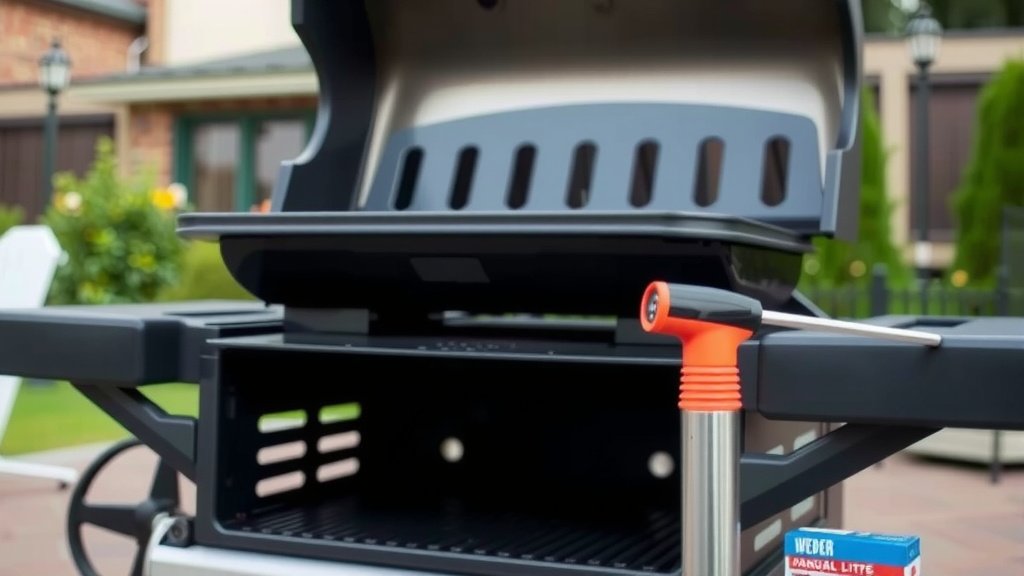
You can light your Weber gas grill with a broken ignitor using a long-stem lighter or an extra-long match. Always ensure the lid is open before turning on the gas and applying the flame.
To safely light a Weber gas grill when the ignitor fails, simply open the lid, turn one burner knob to high, and immediately use a long lighter to ignite the burner port. Maintain a safe distance and always keep the lid open during this process.
- First, always ensure the grill lid is fully open for safety.
- Next, turn one burner control knob to the “High” position.
- Immediately, use a long lighter or match to ignite the burner.
- Wait for that burner to light, then you can turn on adjacent burners.
- Always prioritize your safety by keeping your face and hands clear.
How To Light Weber Gas Grill If Ignitor Is Broken?
To light a Weber gas grill with a broken ignitor, simply open the grill lid, turn one burner to high, and then carefully use a long-stem lighter or match to ignite that burner directly.
Safety First: Your Top Priority
Before you even think about lighting your grill manually, your safety is the most important thing. Grilling is fun, but gas can be tricky. Always approach this task with caution and a clear mind.
We found that many grilling experts strongly recommend having a fire extinguisher nearby (NFPA guidelines). This is just a smart precaution, like wearing a seatbelt. Make sure you know where it is.
Gather Your Essential Tools
You will need a specific tool for this job. Forget those tiny pocket lighters; they are not safe for this task. You need something that keeps your hands far from the flames.
A long-stem lighter is your best friend here. These are often called barbecue lighters or utility lighters. If you do not have one, extra-long wooden matches can work. Just be extra careful.
Step-by-Step Manual Lighting Guide
This process is straightforward, but each step is important. Think of it like following a recipe for your favorite grilled meal. Missing a step can change everything.
Open the Grill Lid Fully
This is not optional; it is a must. Gas can build up under a closed lid. When you then try to light it, you risk a flare-up or even an explosion. Always open the lid completely.
We found that ventilation prevents gas buildup (Consumer Reports). It lets any lingering gas escape safely into the air before you introduce a flame.
Turn on the Gas Supply
If you have a propane tank, ensure its valve is fully open. If your grill connects to natural gas, check that the gas line valve is open. No gas, no flame, right?
Select One Burner to High
Pick one of your grill’s burner control knobs. Turn it to the “High” position. You only need to turn on one burner at this point. The others will light later.
Turning on only one burner helps control the amount of gas released. It prevents too much gas from accumulating before ignition.
Introduce the Flame Immediately
Now, this is the crucial part. With your long-stem lighter or match, reach through the grates to the burner. Place the flame right next to the burner port where the gas comes out.
Do this quickly after turning on the gas. You should see or hear the gas ignite. If it does not light within a few seconds, turn off the burner and wait a few minutes before trying again.
Light Remaining Burners (Optional)
Once your first burner is lit, you can then turn on the other burner knobs. The flame from the lit burner will easily ignite the adjacent ones. It is like a domino effect.
Understanding Your Weber Grill’s Anatomy
Knowing a bit about your grill helps. Your Weber has burners, heat deflector bars (often called Flavorizer bars), and grates. The ignitor system usually involves an electrode near a burner.
The ignitor itself creates a spark. When it fails, that spark is missing. But the gas still flows, ready for an external flame. This is why manual lighting works perfectly.
Why Did Your Ignitor Fail? Common Issues
It is frustrating when the ignitor stops working. But it is usually for simple reasons. Knowing why can help you fix it later or prevent it from happening again.
Many experts say that dirty components are a common culprit. Grease and food debris can block the spark from reaching the gas. Sometimes, it is just a loose wire.
Typical Ignitor Problems
Here is a quick look at common reasons your ignitor might not be sparking. You might be able to spot the issue during a quick check.
| Problem | What it Means | Quick Check |
|---|---|---|
| Dirty Electrode | Grease or food blocks the spark. | Inspect the ignitor tip for buildup. |
| Loose Wire | The electrical connection is faulty. | Check wires connecting to the ignitor module. |
| Dead Battery | Some ignitors use a small battery. | Replace the AA or AAA battery. |
| Cracked Porcelain | The ignitor’s ceramic insulation is damaged. | Look for visible cracks on the electrode. |
Quick Checklist Before Lighting
Before you grab that lighter, run through these fast checks. This ensures you are ready and safe. It takes only a few seconds and can save you trouble.
- Is the grill lid completely open?
- Is there enough gas in the tank or line?
- Do you have a long-stem lighter or match ready?
- Are children and pets at a safe distance?
- Is your grilling area clear of flammable items?
Maintenance Tips to Prevent Future Issues
A little care goes a long way. Keeping your grill clean can help extend the life of your ignitor. Think of it as preventative medicine for your grill.
After each use, brush your grates. Every few months, give your grill a deeper clean. Cleaning around the ignitor tip with a small brush can prevent debris buildup.
We found that checking your ignitor wires periodically for corrosion or damage can also prevent issues (Weber’s own guides often suggest this). A quick visual check is all it takes.
When to Call a Professional
Sometimes, despite your best efforts, things do not work. If you have tried everything and still feel unsafe, it is perfectly fine to call for help. Your grill is an appliance, after all.
If you suspect a gas leak, hear a hissing sound, or smell gas, turn everything off immediately. Then call a professional gas technician. Do not try to troubleshoot a gas leak yourself.
Conclusion
Lighting your Weber gas grill without a working ignitor is a straightforward and safe process if you follow simple steps. Always prioritize safety by keeping the lid open and using appropriate tools. While a broken ignitor can be annoying, it does not mean your grilling fun has to stop. With a long-stem lighter and a bit of caution, you will have those delicious burgers cooking in no time. Remember to check for common issues and keep up with regular maintenance to keep your grill running smoothly.
How do I know if my Weber gas grill ignitor is truly broken?
You can tell your Weber gas grill ignitor is broken if you hear the clicking sound when you turn the knob but no spark appears at the burner. Or, if there is no clicking sound at all, the ignitor system might be faulty.
Can I use a regular short lighter to ignite my gas grill?
No, you should not use a regular short lighter. It places your hand too close to the burner, risking burns from the ignition or a sudden flare-up. Always use a long-stem lighter or an extra-long match for safety.
What should I do if the gas smells strong but the burner won’t light manually?
If you smell a strong gas odor and the burner does not light, immediately turn off all burner knobs and the gas supply at the tank or main line. Wait several minutes for the gas to dissipate before attempting to light it again. If the issue persists, do not use the grill and consider calling a professional technician.
Is it safe to leave the gas on while trying to light the grill repeatedly?
No, it is not safe to leave the gas on while trying to light it repeatedly without success. If the burner does not light within a few seconds of turning on the gas, turn off the burner. Wait at least 5 minutes before trying again to allow any accumulated gas to clear. This prevents dangerous gas buildup.
How often should I check my Weber grill’s ignitor system?
It is a good idea to visually inspect your Weber grill’s ignitor system a few times a year, especially during spring cleaning or before the peak grilling season. Check for dirt, corrosion, or loose wires. This simple check can help catch small issues before they become bigger problems.
