
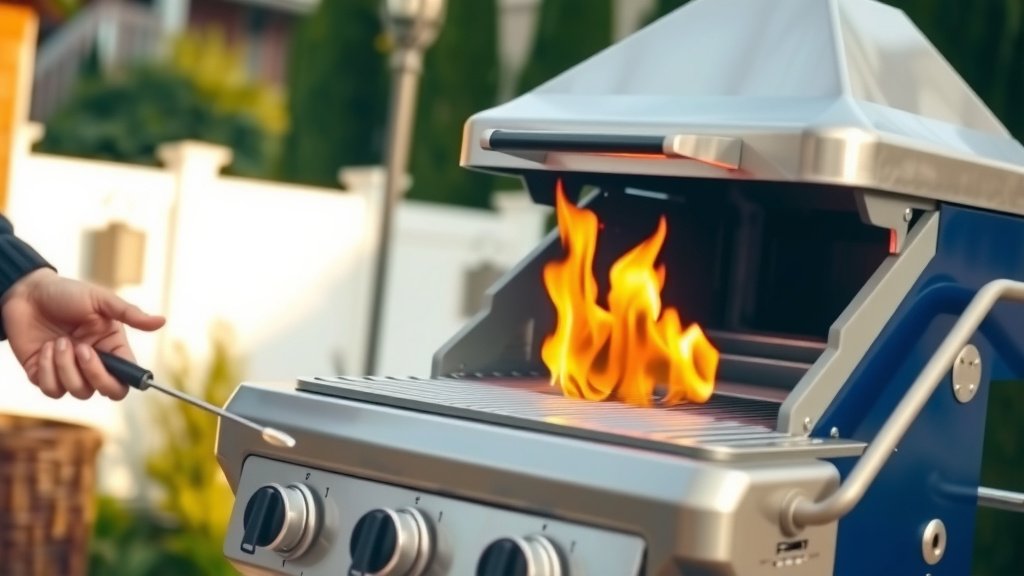
To light a propane gas grill, first ensure the lid is open. Then, slowly open your propane tank valve, turn one burner to the HIGH position, and immediately press the igniter button until the burner lights.
If your grill doesn’t light after a few attempts with the igniter, you can safely light it manually with a long lighter or a match holder, always exercising caution.
TL;DR: Here’s a quick rundown on lighting your propane grill safely and easily:
- Always open the grill lid before starting. This is a crucial safety step.
- Slowly open your propane tank valve all the way.
- Turn one burner knob to the HIGH setting.
- Press the igniter button right away; listen for the whoosh.
- If the igniter fails, use a long match or lighter for manual ignition.
How To Light A Propane Gas Grill?
Lighting a propane gas grill seems simple, but getting it right helps keep you safe and your cooking smooth. We found that following a few key steps makes all the difference for a quick, confident start every time.
Safety First: Your Essential Pre-Light Check
Before you even think about firing up that grill, take a moment. We often rush, but a quick check can prevent headaches. Think of it as your pre-flight checklist for deliciousness.
Is Your Propane Tank Ready?
First, check your propane tank. Is it connected properly? Is there enough fuel? We’ve all run out mid-burger, right? A quick shake can often tell you if it’s nearing empty, but some tanks have gauges to help.
Ensure the connection to your grill’s regulator is tight but not overtightened. Many experts say a hand-tight connection is sufficient for most standard tanks (NFPA guidelines).
Always Open the Grill Lid!
This is probably the most important safety rule for gas grills. Why open the lid? Propane can build up if it doesn’t ignite immediately. A closed lid could trap gas, leading to a dangerous flare-up.
Think of it as giving any unburnt gas an escape route. It’s a simple, yet critical step every time you light your grill.
The Simple Steps to Ignite Your Grill
Okay, lid’s open, tank’s good. Now we get to the fun part. Let’s walk through lighting your grill like a pro.
Open the Propane Tank Valve Slowly
Locate the valve on top of your propane tank. Turn it counter-clockwise, all the way open. Many experts suggest turning it slowly to prevent the “bypass mode” from activating, which can restrict gas flow.
If you open it too fast, your grill might only get a trickle of gas. This can be frustrating when you expect a roaring flame. Slow and steady wins this race, we found.
Engage a Burner to High
Now, turn one of your grill’s burner knobs to the HIGH setting. It doesn’t matter which one you choose, but usually, people start with the burner closest to the igniter.
Don’t turn on all the burners yet! Just one. We want to get that initial flame going strong before inviting other burners to the party.
Press That Igniter Button
With the burner on high, immediately press and hold the igniter button. You should hear a clicking sound. Listen for the whoosh of the gas igniting.
Hold the igniter for a few seconds if needed. Once you see a flame, congratulations! You’ve successfully lit your grill. If it doesn’t light after a few clicks, release the igniter, turn off the burner, and wait a moment before trying again.
Grill Not Lighting? Don’t Panic!
Sometimes, despite your best efforts, your grill just won’t ignite. It’s like trying to start an old car – frustrating, but usually fixable. Don’t worry, we’ve got you.
What if the Igniter Fails?
Igniters can wear out or get dirty. If you hear clicking but see no flame, the igniter might be the culprit. Research often points to dirty electrodes or old batteries as common causes (Weber support guides).
Give it a couple of tries, but if it persistently fails, it’s time for Plan B: manual lighting. Safety remains our top priority here.
How to Manually Light Your Grill Safely
If your igniter decides to take a day off, you can still light your grill. This method requires a bit more care. Always use a long match or a long-stem lighter.
- Ensure the grill lid is still open.
- With the propane tank valve open, turn one burner knob to HIGH.
- Carefully insert your long match or lighter through the cooking grate, aiming for the burner ports.
- Light the match/lighter and hold it near the burner until it ignites.
- Once lit, quickly remove the match or lighter.
- If it doesn’t light in a few seconds, turn off the burner, wait five minutes for any gas to dissipate, and then try again.
After Ignition: Getting Ready to Cook
Your grill is lit! Great job. But we’re not quite ready to toss on those steaks yet. There are a couple more steps for optimal grilling.
Close the Lid and Preheat
Once one burner is lit, you can now close the grill lid. This helps the grill come up to temperature quickly. Turn on any other burners you need for your cooking, adjusting them to your desired heat setting.
We often recommend preheating your grill for 10-15 minutes. This ensures the cooking grates are hot enough to create those beautiful sear marks and prevent sticking.
Crucial Safety Tips for Propane Grilling
Grilling is fun, but safety should always be your co-pilot. Many experts say that preventing accidents is easy with a few mindful habits (Consumer Reports).
Checking for Leaks is Smart
Periodically, check for gas leaks. A simple soap and water solution sprayed on connections will bubble up if gas is escaping. It’s a small step for big peace of mind.
If you ever smell gas, especially a strong odor, immediately turn off the tank valve and all burners. Do not use the grill until you’ve identified and fixed the leak.
Never Leave Your Grill Unattended
It’s tempting to pop inside for a moment, but a lit grill needs your attention. A sudden flare-up or a gust of wind can quickly turn a good time into a risky situation.
Just like watching a campfire, keep an eye on your grill. It’s part of the grilling experience, isn’t it? Enjoy the aromas and be present with your cooking.
Maintaining Your Grill for Smooth Starts
A well-maintained grill is a happy grill, and a happy grill lights easily. Regular cleaning and checks can keep your igniter system working without a hitch.
| Problem | Potential Cause | Simple Fix |
|---|---|---|
| Burner won’t light with igniter | Dirty igniter electrode | Gently clean with a wire brush |
| No gas flow/low flame | Propane tank valve opened too fast | Turn off, wait 5 min, re-open slowly |
| Igniter clicks but no spark | Low igniter battery | Replace the battery (if applicable) |
| Burner doesn’t light manually | Clogged burner ports | Clean burner tubes with a brush |
We often find that these small checks make a big difference. Think of it like preventative maintenance for your car – it just runs better.
Conclusion
Lighting your propane gas grill safely and effectively is a skill every grill master should master. By following these clear steps – opening the lid, checking your tank, and using the igniter correctly – you’ll be cooking up delicious meals in no time.
Remember, safety always comes first. A little caution and regular maintenance go a long way in ensuring your grilling experiences are not only tasty but also worry-free. So, fire up that grill with confidence and enjoy!
FAQs
Why is my propane tank clicking when I turn it on?
The clicking sound when you turn on your propane tank valve is often normal and usually comes from the safety device in the regulator. It’s designed to restrict gas flow if it senses a sudden surge, often happening if the valve is opened too quickly. Turning the tank valve off, waiting a few minutes, and then reopening it slowly can often resolve this and restore full gas flow.
How long should I preheat my gas grill?
Most experts suggest preheating your gas grill for 10 to 15 minutes. This allows the grill grates to reach a consistent, hot temperature. Preheating is crucial for preventing food from sticking and for achieving those desirable sear marks, ensuring even cooking across your food.
What does it mean if my grill lights but the flame is very low?
If your grill lights but the flames are unusually low, it’s often due to the grill’s “bypass mode” being activated. This safety feature limits gas flow, usually because the propane tank valve was opened too quickly. To fix it, turn off all burners and the tank valve, wait 5-10 minutes, and then slowly reopen the tank valve completely before lighting a burner.
Can I use lighter fluid on a propane grill?
Absolutely not. Lighter fluid is designed for charcoal grills and should never be used on a propane gas grill. Propane grills use a controlled gas flame, and adding lighter fluid can create an uncontrolled, dangerous flare-up that could cause serious injury or damage to your grill. Stick to the built-in igniter or a long-stemmed lighter.
How do I clean my igniter if it’s not sparking?
If your igniter isn’t sparking, first ensure its battery isn’t dead (if it has one). If not, you can often clean the igniter electrode with a small wire brush or emery cloth. Look for the small metal tip near a burner, often protruding slightly. Gently scrub away any grease or debris that might be preventing a good spark. Make sure the gas is off and the grill is cool before attempting this.
