
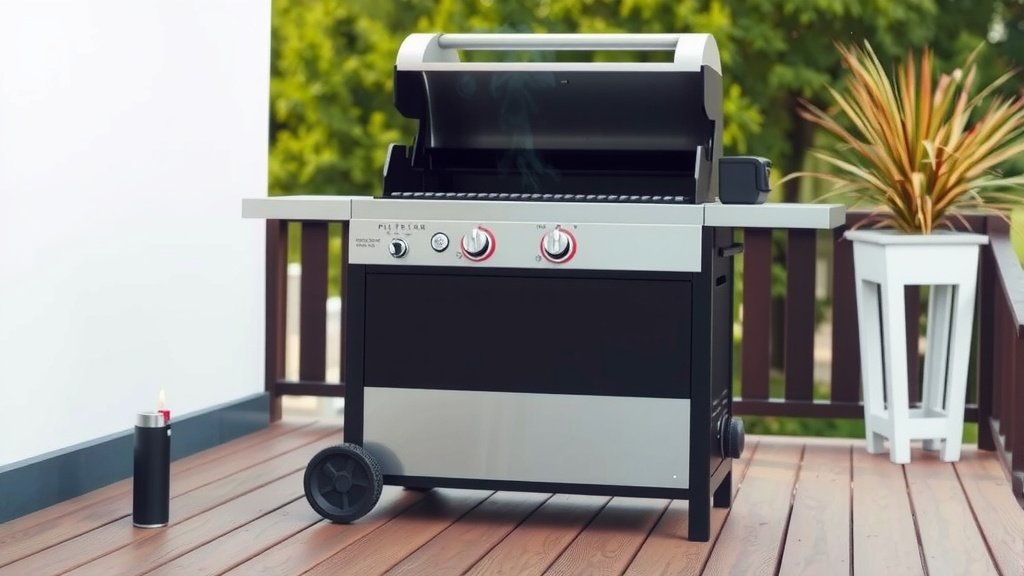
You can light a gas grill with a broken igniter safely by using a long match or a grill lighter, ensuring the lid is open, and the gas is turned on to a low setting before introducing the flame.
Always prioritize safety; never lean over the grill when lighting and keep a watchful eye for immediate ignition after applying the flame to the burner ports.
Here’s a quick guide to getting your grill fired up, even with a stubborn igniter:
- Safety First: Always keep the grill lid open when lighting.
- Gather Your Tools: A long grill lighter or a long match is essential.
- Turn on Gas (Low): Just one burner, to a low setting.
- Introduce Flame: Carefully apply the flame near the burner ports.
- Confirm Ignition: Watch for the flame to catch immediately.
How To Light A Gas Grill With Broken Igniter?
Lighting a gas grill when the igniter fails is a common hiccup for many grill enthusiasts, but it is actually quite simple and safe with the right approach and tools.
You simply need to use an external flame source, like a long match or a specialized grill lighter, to kickstart your grilling session.
Understanding Why Igniters Fail
Grill igniters can stop working for several reasons, often at the most inconvenient times.
We found that common culprits include worn-out batteries, disconnected wires, or even corrosion buildup on the igniter electrode (many experts say).
Sometimes, heavy grease and food debris can block the spark, preventing ignition.
What You’ll Need: Your Grill Lighting Toolkit
Before you begin, gathering your tools is the first step to a smooth and safe lighting process.
Think of it like preparing for a mini adventure; you wouldn’t go hiking without the right gear, right?
Here’s your essential checklist:
- A long grill lighter (the kind for candles or fireplaces works great)
- Or, long wooden matches
- Tongs (helpful if using matches, for extra reach)
- Oven mitts or heat-resistant gloves (always a good idea)
- A working fire extinguisher nearby (just in case, safety first!)
- Your favorite grilling ingredients, of course!
Step-by-Step: Lighting Your Grill Manually
You’re ready to light that grill. Don’t worry, it’s less daunting than it sounds.
Think of yourself as a grill master, overcoming a small technical challenge. Let’s do this together.
Safety First, Always!
This is not just a suggestion; it’s a golden rule. Safety is paramount when dealing with gas grills.
Many guidelines point to keeping your face and body away from the grill when lighting (Consumer Reports).
Ensure there are no flammable items close by.
Open the Grill Lid
Before you even think about turning on the gas, open your grill lid completely.
Why is this so important? It prevents gas from accumulating inside the grill, which could lead to a dangerous flare-up.
You don’t want a mini explosion, do you?
Turn on the Gas (Low and Slow)
Now, turn the knob for one of your main burners to the LOW setting.
Do not turn on all burners at once. Just one, for now.
You should hear the faint hiss of gas, indicating it’s flowing.
Introduce the Flame
This is where your long lighter or match comes in. Quickly and carefully, insert the lit flame through the cooking grates and close to the burner ports.
Aim for the side of the burner that’s closest to the gas knob you just turned on.
Hold it there for a moment until you see the flame catch.
Confirm Ignition
Once you see the burner ignite, remove your hand and the lighter immediately.
The burner should now be burning steadily. If it doesn’t light within a few seconds, turn off the gas, wait a minute for any gas to disperse, and then try again.
Never persist if it doesn’t light right away.
Common Pitfalls to Avoid
Even with clear instructions, sometimes small mistakes happen. Let’s make sure you avoid them.
We found that rushing the process or neglecting safety steps are common errors.
Always stay focused and present when lighting your grill.
Forgetting to open the lid is a big one. Also, never use a short match; that’s just asking for singed eyebrows.
Make sure you’re turning on only one burner to start, not all of them.
Patience is a virtue here.
Quick Troubleshooting Tips for a Finicky Grill
Sometimes, it’s not just the igniter. Your grill might have other minor issues.
Research often connects poor gas flow to other starting problems (NIH).
Here’s a handy table for quick checks:
| Problem | Possible Cause | Quick Fix |
|---|---|---|
| Weak flame or no flame | Low propane tank, clogged burner holes | Check tank level, clean burner ports |
| Gas smell but no ignition | Air in gas line, regulator issues | Turn off, wait, try again; reset regulator |
| Burners light unevenly | Dirty burner tubes | Clean with a wire brush |
| Grill won’t get hot | Bypass mode activated on regulator | Turn off everything, disconnect/reconnect tank slowly |
When to Call a Professional
While many grill issues are DIY-friendly, some situations call for a professional.
If you suspect a gas leak (a strong, persistent rotten egg smell), turn off the gas immediately and move away.
Never try to fix gas leaks yourself; this is a job for a certified technician (National Fire Protection Association).
Also, if parts like the regulator or hose appear damaged, it’s best to consult an expert.
Conclusion
Having a broken igniter on your gas grill doesn’t mean your grilling plans are ruined. With a little care and the right tools, you can manually light your grill safely and efficiently.
Always remember the golden rules: keep the lid open, use a long lighter, and prioritize safety above all else.
So go ahead, fire up that grill and enjoy your delicious creations. Happy grilling!
Can I use a regular cigarette lighter to light my gas grill?
No, you should avoid using a regular cigarette lighter. It puts your hand too close to the burner, risking burns. Always opt for a long grill lighter or a long wooden match for safety and proper reach.
What if my grill lights but then goes out immediately?
If your grill lights and then quickly extinguishes, it often indicates a gas flow issue, possibly due to a tripped regulator. Try resetting your gas regulator by turning off all burners and the tank, disconnecting the tank, waiting a few minutes, then reconnecting and opening the tank valve slowly.
How often should I clean my grill burners to prevent igniter issues?
Cleaning your grill burners regularly, typically after every 2-3 uses or at least once a month during grilling season, helps prevent grease and food debris from clogging the burner ports and interfering with ignition.
Is it safe to leave the gas tank connected when the igniter is broken?
Yes, it’s generally safe to leave the gas tank connected as long as all burner knobs are in the “off” position and there are no signs of a gas leak. However, always ensure the tank valve is fully closed when the grill is not in use, regardless of the igniter’s condition.
My gas grill smells like gas even when turned off. What should I do?
If you smell gas when your grill is off, it indicates a potential leak. Immediately turn off the gas tank valve, do not use the grill, and contact a qualified technician. Never attempt to locate or fix a gas leak yourself, as it can be extremely dangerous.
