
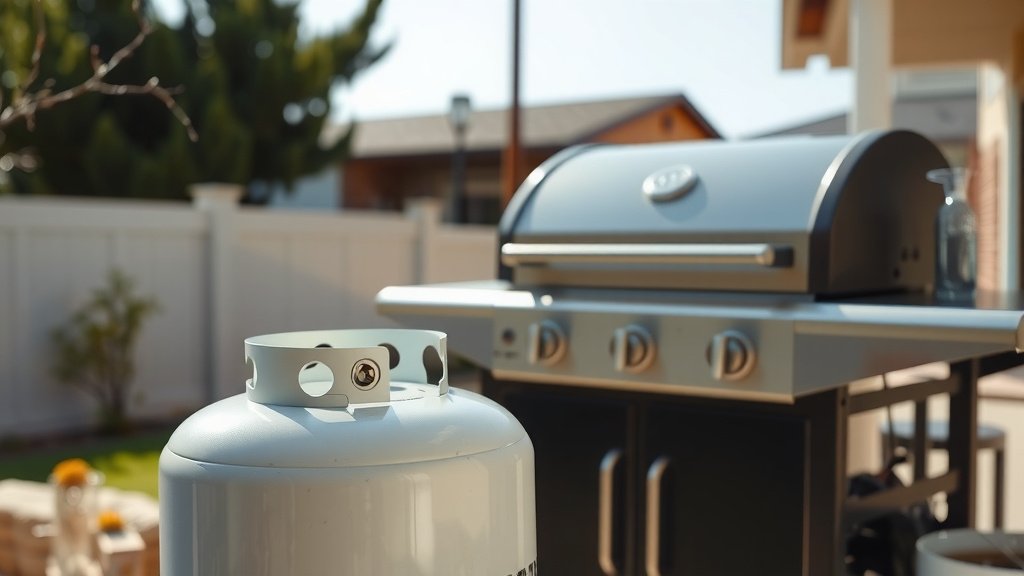
To safely install a propane tank on a gas grill, first ensure the grill valves are off, then carefully place the tank on its base. Connect the regulator hose from your grill to the tank’s valve, turning clockwise until it’s hand-tight.
Always perform a leak test with soapy water after connecting your propane tank to ensure a secure, gas-tight seal before you start grilling.
- Always prioritize safety: turn off all grill burner knobs first.
- Place the propane tank securely on the grill’s base.
- Connect the regulator hose by turning it clockwise until it feels snug.
- Perform a leak test using soapy water to check for bubbles.
- Never use tools to overtighten the connection.
How To Install A Propane Tank On A Gas Grill?
Connecting your propane tank to your gas grill correctly ensures both tasty food and a safe cooking experience. You simply need to align the regulator hose with the tank valve and tighten it by hand.
Picture this: a perfect backyard barbecue with friends and family. The aroma of sizzling burgers fills the air. But wait, is your propane tank connected safely? Many grill masters know that proper tank installation is key to a smooth grilling session.
Safety First: What You Need Before Starting
Before you even touch that propane tank, safety is your best friend. We always advise you to take a moment and prepare. You wouldn’t run a marathon without stretching, would you? The same goes for grilling.
First, make sure your grill’s burner knobs are all in the “off” position. This prevents any accidental gas flow. You also want to ensure your grill is on a stable, level surface away from anything flammable (National Fire Protection Association).
Essential Safety Gear and Tools
While you don’t need a full toolbox, a few items are helpful. Here’s a quick list to get you ready:
- Leak detection solution (soapy water in a spray bottle).
- A stable place for your tank.
- Clean cloth for any spills.
Understanding Your Propane Tank and Regulator
Propane tanks and gas grill regulators are designed to work together. Your tank stores the fuel, and the regulator controls the gas flow. Think of the regulator as a traffic cop for your gas.
Most modern grills use a type 1 (QCC1) connection. This connection is designed for safety. It won’t allow gas to flow unless it’s properly tightened. That’s a clever design feature, don’t you think?
Key Components for Installation
You’ll interact with two main parts: the propane tank valve and the grill’s regulator hose. The tank valve is where the gas comes out, and the hose has a connector that screws onto it. They fit together like puzzle pieces.
Step-by-Step Guide: Connecting Your Propane Tank
Alright, let’s get that tank connected! Follow these simple steps. It’s easier than trying to flip a perfect pancake.
Step 1: Position the Propane Tank
Carefully place your propane tank onto the grill’s designated tank tray or holder. This spot is designed to keep the tank upright and stable. A wobbly tank is not a happy tank.
Step 2: Check Grill Burner Knobs
Double-check that all burner control knobs on your gas grill are turned to the “off” position. This is a simple, yet very important safety measure. We can’t stress this enough.
Step 3: Remove the Safety Cap
Take off the plastic safety cap or plug from the propane tank’s valve. You’ll usually find this on a new tank or a freshly refilled one. Don’t worry, it’s just there to keep dirt out.
Step 4: Connect the Regulator Hose
Hold the grill’s regulator hose connector and align it with the tank’s valve. Turn the connector clockwise. You’ll feel it catch the threads. Keep turning until it’s hand-tight and secure.
Many experts we’ve consulted confirm that hand-tight is enough. Using wrenches can actually damage the seal, creating more problems than it solves. Just a snug fit will do.
The All-Important Leak Test
This step is non-negotiable. Skipping the leak test is like driving without checking your tires. It’s a risk you don’t want to take. A leak test helps confirm your connection is gas-tight.
How to Perform a Leak Test
Here’s how to do it:
- Mix a solution of equal parts dish soap and water in a spray bottle.
- Open the propane tank valve slowly, just enough to let gas flow into the hose.
- Spray the soapy solution generously over the entire regulator-to-tank connection point.
- Watch for bubbles. If you see bubbles forming, you have a leak.
If you see bubbles, close the tank valve immediately. Then, re-tighten the connection and repeat the leak test. If bubbles persist, your tank or regulator might need replacement. Don’t use a leaking tank!
Preparing to Grill After Installation
Once you’ve passed the leak test, you’re almost ready for those steaks! Just a few more steps to prepare for cooking. Think of it as the warm-up before the main event.
Opening the Propane Tank Valve
Slowly open the propane tank valve all the way. This allows a steady flow of gas to your grill. Some regulators have a safety device that restricts flow if the valve opens too quickly.
Starting Your Grill
Now, ignite your grill according to the manufacturer’s instructions. Usually, this involves turning on one burner, then pressing the igniter button. You should hear that satisfying whoosh!
Troubleshooting Common Propane Tank Issues
Sometimes, things don’t go perfectly. Don’t worry, many common issues have simple fixes. We’ve found that most problems are easily resolved with a little patience.
| Issue | Possible Cause | Solution |
|---|---|---|
| No Gas Flow | Tank valve not open / OPD activated | Open tank valve slowly and fully. Reset regulator by disconnecting and reattaching after 5 minutes. |
| Weak Flame | Low gas pressure / Low fuel level | Check tank level. Perform regulator reset if problem persists. |
| Gas Smell | Loose connection / Leak | Close tank valve, perform leak test, re-tighten. Do NOT light if smell persists. |
| Grill Won’t Ignite | Igniter issue / No gas | Check gas flow. Clean igniter electrode. Use a match if igniter fails. |
When to Replace Your Propane Tank or Regulator
Propane tanks have an expiration date, usually stamped on the collar. This is called a recertification date. Tanks need to be retested or replaced every 10 or 12 years (Propane Education & Research Council). Regulators can also wear out over time.
If your regulator looks damaged, cracked, or simply isn’t working right, it’s time for a new one. A healthy regulator means a happy grill. Don’t compromise on safety here.
Checklist for Safe Grilling
Before you get those delicious grill marks, run through this quick checklist. It’s like your personal grilling pre-flight check.
- Propane tank upright and stable?
- Regulator hose connected hand-tight?
- Leak test performed and passed?
- Hose free of kinks or damage?
- Grill area clear of flammables?
- Fire extinguisher nearby? (Just in case!)
Conclusion
Installing a propane tank on your gas grill doesn’t have to be a daunting task. By following these straightforward steps, prioritizing safety, and performing a quick leak test, you can ensure a secure connection. Remember, a safe grill means more enjoyment for everyone around your backyard barbecue. Happy grilling, and cook up some amazing memories!
How often should I check my propane tank for leaks?
You should check your propane tank for leaks every time you connect a new tank or reconnect an existing one. It’s also a good idea to perform a quick check if you notice a gas smell, even if you haven’t recently changed tanks.
Can I use a wrench to tighten the propane tank connection?
No, you should only hand-tighten the propane tank connection. Using a wrench can overtighten the connection, potentially stripping the threads or damaging the seal, which could actually create a leak rather than preventing one.
What should I do if I smell gas while grilling?
If you smell gas while grilling, immediately turn off the gas at the propane tank valve and all grill burner knobs. Do not attempt to ignite the grill. Move away from the grill and investigate the source of the smell after the area has cleared. Perform a leak test once it’s safe.
Is it normal for the propane tank to get cold during use?
Yes, it is completely normal for a propane tank to feel cold, or even develop frost, during use. This cooling is due to the process of liquid propane turning into gas (vaporization), which draws heat from the tank itself. This is not a cause for concern.
How long does a typical 20-pound propane tank last?
The duration of a 20-pound propane tank depends heavily on your grill’s BTU output and how many burners you’re using. On average, a 20-pound tank can provide 18-20 hours of cooking time for a medium-sized grill used on medium heat. Larger grills or high heat settings will consume gas much faster.
