
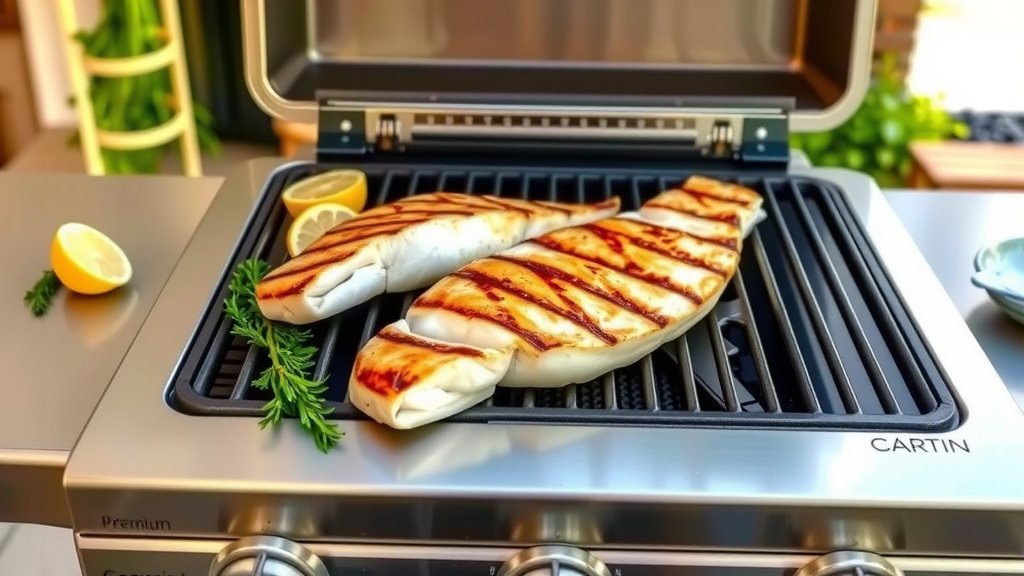
To grill trout fillets on a gas grill, preheat your grill to medium-high (around 400-450°F) and oil the grates well to prevent sticking. Place the seasoned fillets skin-side down first for about 3-4 minutes, then gently flip and cook for another 2-5 minutes until the fish flakes easily.
You can get perfectly cooked trout fillets from your gas grill by focusing on proper heat management, careful seasoning, and knowing exactly when your fish is done to avoid overcooking.
- Prepare your trout fillets by patting them dry and seasoning generously.
- Preheat your gas grill to a medium-high temperature, about 400-450°F.
- Clean and oil the grill grates thoroughly to prevent the delicate fish from sticking.
- Grill skin-side down first for a crispy skin, then flip and finish cooking until flaky.
- Always check for doneness using a fork or an internal thermometer (145°F recommended by USDA).
Ever wonder how to get that perfect, crispy skin and juicy, flaky meat when grilling trout fillets on your gas grill? It’s a common question, and honestly, many home cooks find grilling fish a bit intimidating. You’re not alone! But what if we told you it’s much simpler than you think?
Grilling trout can be a truly rewarding experience. This delicate fish, with its mild flavor, truly shines when cooked over an open flame. We’ll walk you through every step, ensuring your next trout grilling adventure is a huge success.
How To Grill Trout Fillets On Gas Grill?
To grill trout fillets on a gas grill, prepare your fish with a light oil and seasoning, preheat your clean, oiled grates to medium-high heat, and grill skin-side down for 3-4 minutes before flipping and finishing.
Choosing Your Trout Fillets Wisely
Starting with the right trout is your first step to success. Look for fillets that are bright and firm. Their color should be vibrant, and they shouldn’t have any strong “fishy” odor.
Many experts say fresh is best, but good quality frozen fillets work wonderfully too. Just ensure they are thawed correctly for the best texture.
Fresh vs. Frozen Trout
If you choose fresh trout, try to buy it on the day you plan to grill. If using frozen, always thaw it slowly in the refrigerator overnight. This gentle thawing helps maintain the fish’s delicate texture, preventing it from becoming mushy when cooked (USDA guidelines).
Prepping the Fillets for the Grill
Proper preparation before the grill makes all the difference. Think of it like getting ready for a big race; you wouldn’t just show up, would you?
Patting Dry is a Must
This might seem small, but it’s crucial. Gently pat your trout fillets dry with paper towels. Removing excess moisture helps the fish get a nice sear and crispy skin. It also prevents steaming, which can make your fish soggy.
Seasoning Your Trout Fillets
Trout has a beautiful, mild flavor that doesn’t need much. Keep it simple and let the fish shine. A little salt, black pepper, and maybe some lemon zest often does the trick.
Many chefs also suggest a light brush of olive oil before seasoning. This helps the seasonings stick and prevents the fish from sticking to the grill. Don’t go overboard; less is often more with trout.
- Sea salt
- Freshly ground black pepper
- Garlic powder
- Smoked paprika
- Lemon zest
- Fresh dill or parsley
Mastering the Grill Setup
Your grill is your cooking canvas, so make sure it’s ready. A well-prepared grill leads to a much better outcome, especially with fragile fish like trout.
Cleaning Your Gas Grill Grates
Always start with clean grates. Leftover food bits can cause your fish to stick and impart off-flavors. Use a stiff wire brush to thoroughly clean your grates after preheating.
Many grill masters agree that clean grates are the foundation of successful grilling. It’s like starting with a clean slate every time you cook.
Preheating for Success
Don’t rush this step! Preheat your gas grill to medium-high heat, aiming for about 400-450°F. A properly preheated grill ensures even cooking and helps create that desirable crispy skin.
Give your grill about 10-15 minutes to reach temperature. You want those grates to be good and hot before the fish touches them.
Setting Up Heat Zones
For fish, it can be helpful to set up two heat zones. Keep one side on medium-high for direct searing, and the other on medium-low for indirect cooking. This gives you flexibility if the fish is cooking too fast or if you have thicker fillets.
We found that having a cooler zone can save your fish from accidental burning. It’s your safety net during grilling.
Oiling the Grates (or the Fish)
Preventing stickage is perhaps the biggest fear when grilling fish. A well-oiled grate is your best defense. Once your grill is hot and clean, lightly oil the grates with a high smoke point oil.
You can also brush a little oil directly onto the fish fillets themselves. This dual approach gives you the best protection against sticking. Remember, a little oil goes a long way!
Placing Trout Fillets on the Grill
Carefully place your trout fillets on the preheated, oiled grates. Use tongs or a fish spatula. Lay them down gently, and whatever you do, resist the urge to move them immediately.
Let the fish cook undisturbed for a few minutes. This allows a crust to form, which makes the fillets easier to flip later on.
Skin-Side Down First?
Many grill enthusiasts recommend starting skin-side down. Why? The skin acts as a protective layer, helping to prevent the delicate flesh from drying out or sticking. It also gets wonderfully crispy, adding fantastic texture.
Research often connects starting with the skin down to a better overall outcome for grilled fish, especially for fillets.
Grilling Time and Temperature
Grilling time depends on the thickness of your fillets. Generally, trout fillets cook quickly. Overcooking is the enemy here; it leads to dry, tough fish.
Aim for about 3-5 minutes per side. For thicker fillets, this might extend slightly. Keep a close eye on them; trout can go from perfectly cooked to overdone in a flash.
| Fillet Thickness | Side 1 (Skin-Down) | Side 2 (Flesh-Down) | Total Time |
|---|---|---|---|
| 1/2 inch | 3 minutes | 2-3 minutes | 5-6 minutes |
| 1 inch | 4 minutes | 3-4 minutes | 7-8 minutes |
How Do You Know When Trout is Done?
This is the golden question! The best way to tell if your trout is done is by checking its internal temperature or using the flake test. You want it cooked through, but still moist.
The Flake Test and Internal Temperature
Gently insert a fork into the thickest part of the fillet. If the fish flakes easily, it’s ready. For precise results, use an instant-read thermometer. Food safety experts like the USDA recommend an internal temperature of 145°F (63°C) for cooked fish.
Avoiding Common Mistakes
Even seasoned grillers can make mistakes. Knowing what to watch out for can save your meal and your sanity.
Preventing Stickage
As mentioned, clean, well-oiled grates are paramount. Another tip? Don’t flip too early! Let that initial crust form. If it resists when you try to flip, it’s not ready. Give it another minute.
Overcooking: The Dry Fish Foe
This is arguably the most common mistake. Trout is lean and cooks quickly. Once it reaches 145°F, get it off the grill. Every extra minute makes it drier. Practice makes perfect, but your thermometer is your best friend here.
Handling Delicately
Trout fillets are delicate once cooked. Use a wide, thin fish spatula to transfer them from the grill to a platter. Support the entire fillet to prevent it from breaking apart.
Many experts say gentle handling prevents your beautiful fillets from turning into a pile of flakes. A careful touch really pays off.
Quick Checklist for Grilling Trout Success:
- Start with dry, seasoned fillets.
- Always preheat your grill to medium-high.
- Clean and oil your grill grates thoroughly.
- Resist flipping the fish too soon.
- Use a thermometer to confirm doneness (145°F).
- Handle cooked fillets with a wide spatula.
Conclusion
Grilling trout fillets on a gas grill doesn’t have to be a daunting task. By focusing on a few key steps—proper preparation, good grill management, and knowing exactly when to pull the fish off—you can achieve perfectly cooked, flavorful trout every time. You’ll impress yourself and anyone you’re cooking for with a dish that tastes like it came from a five-star restaurant. So, fire up that grill, grab some trout, and enjoy the delicious results of your grilling prowess!
How do I prevent trout fillets from sticking to the gas grill?
To prevent sticking, ensure your grill grates are thoroughly clean, then preheat your grill to medium-high, and oil the grates generously right before placing the fish. You can also lightly brush the fish fillets themselves with oil.
Should I grill trout with the skin on or off?
It’s generally recommended to grill trout fillets with the skin on. The skin protects the delicate flesh from drying out and sticking, and it becomes wonderfully crispy, adding flavor and texture to your meal.
What is the ideal internal temperature for grilled trout fillets?
The ideal internal temperature for grilled trout fillets is 145°F (63°C). Food safety guidelines from the USDA suggest checking the thickest part of the fish with an instant-read thermometer to ensure it’s fully cooked and safe to eat.
Can I add flavor to trout fillets without complicated marinades?
Absolutely! Trout’s mild flavor shines with simple additions. A squeeze of fresh lemon juice, a sprinkle of fresh dill or parsley, or a pat of herb butter added right after grilling can significantly enhance the taste without needing a marinade.
What kind of oil is best for oiling grill grates for fish?
For oiling grill grates when cooking fish, choose a cooking oil with a high smoke point. Canola oil, vegetable oil, or grapeseed oil are excellent choices as they can withstand high grill temperatures without burning quickly or imparting unwanted flavors.
