
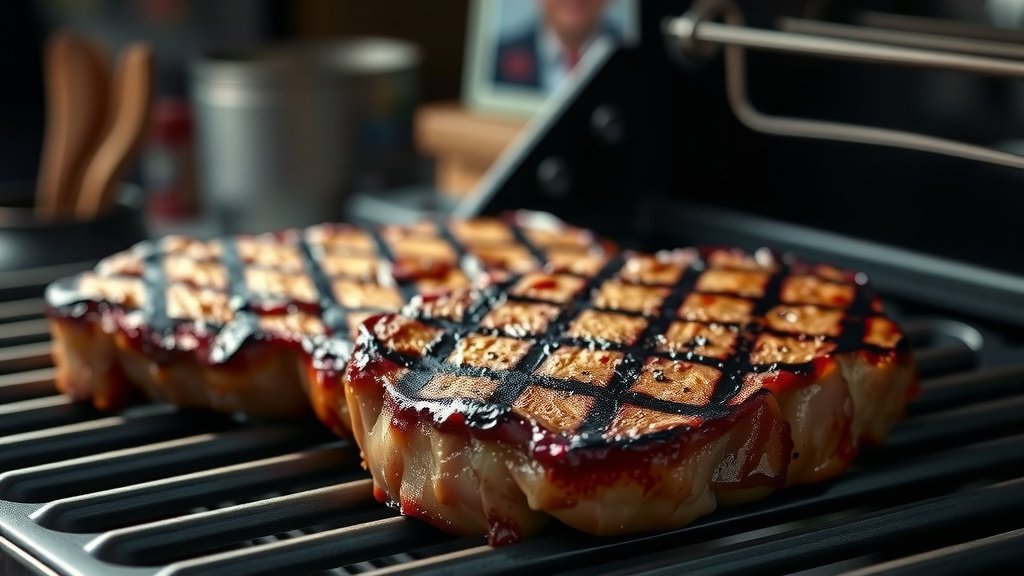
To grill a T-Bone steak on a gas grill, you should first sear it over high direct heat for a few minutes per side to develop a flavorful crust, then move it to a cooler, indirect heat zone to cook through to your preferred doneness.
Always use a reliable meat thermometer to ensure your T-Bone reaches the correct internal temperature for food safety and optimal taste, letting it rest afterward for juicy results.
Here’s a quick summary of what you’ll discover:
- Preheating your gas grill is crucial for even cooking.
- Seasoning your T-Bone simply makes a big difference.
- Searing creates a delicious, savory crust on your steak.
- Finishing on indirect heat helps prevent overcooking.
- Always check the internal temperature for perfect doneness.
How To Grill T Bone On Gas Grill?
Grilling a T-Bone on a gas grill might seem daunting, but it’s really about mastering two heat zones. You’ll use direct high heat for that perfect sear and indirect lower heat to cook your steak through gently.
Understanding Your Gas Grill’s Heat Zones
Your gas grill is more versatile than you think. You have direct heat, right over the burners, and indirect heat, where burners are off or on low, creating a convection oven effect.
Knowing these zones is your secret weapon for grilling success. We found that most gas grills allow for easy creation of these zones.
Choosing the Right T-Bone Steak
Start with a good foundation. Look for a T-Bone that is 1 to 1.5 inches thick with good marbling – those tiny streaks of fat throughout the meat.
Marbling melts during cooking, keeping your steak moist and flavorful. Thickness matters for a perfect cook.
Prepping Your Steak for the Grill
Before any heat hits your steak, let it come to room temperature for about 30-60 minutes. This helps it cook more evenly from edge to center.
Pat your T-Bone dry with paper towels; this step is critical for a great sear. Moisture steams, dryness sears.
The Power of Simple Seasoning
A T-Bone steak is delicious on its own, so you don’t need fancy marinades. Coarse salt and freshly ground black pepper are often all you need.
Apply liberally on both sides. Some experts say a simple seasoning lets the natural beef flavor shine (USDA).
Getting Your Gas Grill Ready
Preparation is key, just like any good recipe. Don’t skip these vital steps.
Cleaning Your Grill Grates
Always start with clean grates. Use a wire brush to remove any leftover bits from previous cooks. This prevents sticking and unwanted flavors.
A clean grill ensures a beautiful sear every time. Many experts suggest this as the first step.
Preheating Your Grill Properly
Turn all your burners to high, close the lid, and let it preheat for 10-15 minutes. You want those grates screaming hot.
Once hot, create your two zones: turn one or two burners to medium-high (for direct searing) and leave one or two off (for indirect finishing).
The Two-Zone Grilling Method in Action
This is where the magic happens. You’re going to create that crust and then cook it gently.
Searing Your T-Bone Steak
Place your seasoned T-Bone directly over the hot, direct heat burners. Close the lid for about 2-3 minutes to allow heat to build around the steak.
Flip it, close the lid again, and sear for another 2-3 minutes. You’re looking for a rich, brown crust. This is the Maillard reaction creating flavor.
Finishing with Indirect Heat
After searing both sides, move your T-Bone to the indirect heat zone. Close the lid and let it continue to cook. This is where you monitor the internal temperature.
This gentle cooking prevents the outside from burning while the inside reaches your desired doneness. It’s like a slow dance for your steak.
Achieving Perfect Doneness: Temperature is Key
Guessing is not a strategy. An instant-read meat thermometer is your best friend here.
Internal Temperature Guide for T-Bone Steak
Insert your thermometer into the thickest part of the steak, avoiding the bone. Cook to the temperatures listed below, knowing the temperature will rise a few degrees while resting.
| Doneness | Temperature (Remove from Grill) | Resting Temperature |
|---|---|---|
| Rare | 120-125°F (49-52°C) | 125-130°F (52-54°C) |
| Medium-Rare | 125-130°F (52-54°C) | 130-135°F (54-57°C) |
| Medium | 130-135°F (54-57°C) | 135-140°F (57-60°C) |
| Medium-Well | 135-140°F (57-60°C) | 140-145°F (60-63°C) |
| Well-Done | 145-150°F (63-66°C) | 150-155°F (66-68°C) |
The Importance of Resting Your Steak
Once your T-Bone hits the target temperature, remove it from the grill immediately. Place it on a cutting board, tent it loosely with foil, and let it rest for 5-10 minutes.
This resting period allows the juices, which have been pushed to the center by the heat, to redistribute throughout the steak. Skip this, and you’ll have a dry, less flavorful experience. It’s like letting the steak catch its breath.
Common Grilling Mistakes to Avoid
Even seasoned grillers can sometimes fall into these traps. Learn from others’ experiences!
Don’t Over-Flip Your Steak
Resist the urge to constantly flip your steak. Too much handling prevents a good crust from forming. Two flips – one for each side during searing – are usually all you need.
Flipping often also messes with the internal temperature build-up. Many grilling guides agree: less is more when flipping.
Avoiding Under-Seasoning
A thick T-Bone needs a good amount of seasoning. Don’t be shy with the salt and pepper. It might look like a lot, but much of it will fall off during grilling.
The seasoning on the surface helps form that beautiful crust too. Flavor starts on the outside.
Your T-Bone Grilling Checklist
Before you fire up the grill, make sure you’ve got everything covered:
- Choose a 1-1.5 inch thick T-Bone steak.
- Allow steak to come to room temperature.
- Pat steak dry thoroughly.
- Season generously with salt and pepper.
- Clean your grill grates.
- Preheat grill and establish two heat zones.
- Have an instant-read thermometer ready.
Conclusion
Grilling a T-Bone steak on a gas grill is a truly rewarding experience when you follow these steps. By understanding your grill’s heat, prepping your steak correctly, and using a thermometer, you’re set for success.
Remember the sear, the indirect finish, and that crucial resting period. You’ll be serving up perfectly cooked, juicy, and incredibly flavorful T-Bone steaks every time. Happy grilling!
How do I prevent my T-Bone from sticking to the gas grill?
Ensure your grill grates are clean and hot before placing the steak down. You can also lightly oil the grates right before cooking, using tongs and a paper towel dipped in high-smoke-point oil. This creates a non-stick surface.
Should I oil my T-Bone steak before seasoning and grilling?
While optional, applying a thin layer of high-smoke-point oil (like canola or grapeseed) to your T-Bone before seasoning can help the seasoning adhere and contribute to a better crust. Just pat the steak dry first.
How long should a 1-inch thick T-Bone steak take to grill for medium-rare?
For a 1-inch thick T-Bone cooked to medium-rare, you’ll typically sear each side for 2-3 minutes over direct high heat, then move it to indirect heat for another 4-7 minutes, aiming for an internal temperature of 125-130°F (52-54°C) before resting.
Can I use wood chips on a gas grill for a smokier flavor with my T-Bone?
Yes, you can! Place a foil packet of presoaked wood chips (apple or hickory work well) over one of your direct heat burners. Once it starts smoking, move the steak to the indirect side to absorb the smoky flavor while it finishes cooking. Ensure good ventilation.
What’s the best way to slice a T-Bone after grilling and resting?
After resting, carefully remove the bone. Then, slice both the tenderloin and strip portions against the grain into ½-inch thick pieces. This ensures maximum tenderness in every bite.
