
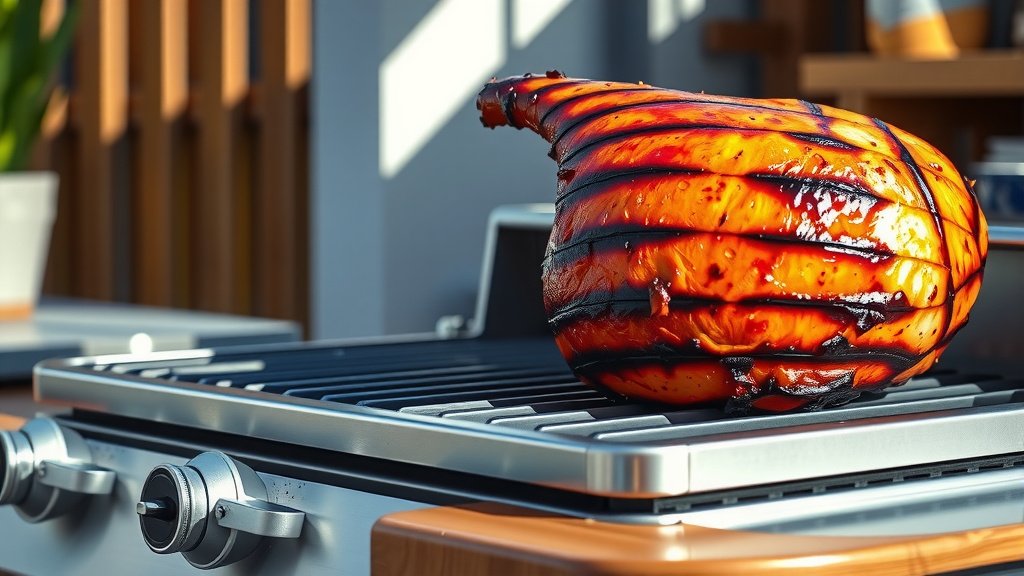
To grill a ham on a gas grill without needing fancy equipment, use a simple two-zone cooking method for gentle, even heating.
You can achieve a wonderfully moist, flavorful ham on your gas grill by focusing on indirect heat and monitoring the internal temperature.
TL;DR: Here’s what you need to know for grilling ham on a gas grill:
- Set up your gas grill for two-zone indirect cooking.
- Heat the ham slowly to 140°F (for pre-cooked ham).
- Apply a delicious glaze during the last 30-45 minutes.
- Use a meat thermometer for accurate temperature checks.
- Rest the ham for 10-15 minutes before slicing for the best juiciness.
How To Grill A Ham On A Gas Grill Without?
Grilling a ham on a gas grill without specialized gadgets is simpler than you might think. Your goal is to heat the ham slowly and evenly using indirect heat.
This method prevents drying out and creates a delicious, slightly smoky flavor that a conventional oven just can’t match.
Why Grill Your Ham on a Gas Grill?
Many people find grilling ham adds a unique taste profile. It gives a gentle smoky touch and frees up oven space for other dishes.
The consistent heat of a gas grill, when managed correctly, creates a beautifully caramelized crust while keeping the inside tender.
Picking the Perfect Ham for Your Grill
You’ll want a fully cooked ham for grilling. This means you are simply reheating it, not cooking it from raw.
Spiral-cut hams work well because the cuts allow glaze to penetrate easily. Bone-in hams often offer more flavor and moisture.
Preparing Your Ham
Before grilling, remove the ham from its packaging and let it sit at room temperature for about an hour. This helps it cook more evenly.
If your ham isn’t spiral-cut, you can score the surface. Make shallow diamond patterns about a quarter-inch deep. This helps your glaze stick.
Setting Up Your Gas Grill for Success
The key to successful ham grilling is indirect heat. This means one side of your grill is hot, and the other is off.
For a two-burner grill, light one burner. For a three or more burner grill, light the outer burners, leaving the middle one off.
Achieving the Right Temperature
Aim for a grill temperature around 275°F to 325°F. This lower temperature ensures the ham heats through without burning the outside.
Close the lid to let the internal temperature stabilize. Use your grill’s thermometer or an independent grill thermometer for accuracy.
Essential Tools for Ham Grilling
Even without complex gear, some tools are must-haves. A reliable meat thermometer is at the top of the list (USDA).
You’ll also need long-handled tongs, a basting brush for glaze, and heavy-duty aluminum foil.
The Grilling Process: Step-by-Step Guidance
Once your grill is at temperature, place the ham directly over the unlit side of the grill. This is your indirect cooking zone.
Close the lid and let the ham warm slowly. You’re looking for an internal temperature of 140°F for a pre-cooked ham.
When to Start Glazing
Hold off on applying your glaze until the last 30-45 minutes of cooking. Adding it too early can cause it to burn.
Brush the glaze generously over the ham every 10-15 minutes during this final phase. This builds a beautiful, sticky crust.
How Long Does It Take?
Grilling time varies by ham size and type. Expect about 10-15 minutes per pound for a fully cooked ham.
Always go by internal temperature, not just time. A meat thermometer takes the guesswork out of it.
Keeping Your Ham Moist
Dry ham is a common concern. To combat this, you can tent the ham loosely with foil during the first part of grilling.
The glaze also helps create a protective barrier, locking in moisture as it caramelizes.
Crafting a Simple Glaze
A good ham glaze elevates the flavor. Here’s a basic recipe you can adjust:
- 1 cup brown sugar
- 1/2 cup honey or maple syrup
- 1/4 cup Dijon mustard
- 1/4 cup orange juice or pineapple juice
- 1 teaspoon ground cloves or cinnamon (optional)
Whisk these ingredients together in a saucepan over medium heat until bubbly. Let it cool slightly before brushing on your ham.
Troubleshooting Common Issues
Is your glaze burning? This usually means the grill temperature is too high, or you applied the glaze too soon.
Is your ham drying out? Ensure it’s not directly over the heat for too long, and consider tenting it with foil.
Resting Your Ham After Grilling
Once your ham reaches 140°F, remove it from the grill. Tent it loosely with foil and let it rest for 10-15 minutes.
This resting period allows the juices to redistribute throughout the ham, making every slice incredibly tender and moist.
Your Ham Grilling Success Checklist
Follow these steps for a perfectly grilled ham:
- Pre-heat grill to 275-325°F (indirect heat).
- Place ham over unlit burners.
- Monitor internal temperature with a thermometer.
- Glaze during the last 30-45 minutes.
- Rest the ham before slicing.
Approximate Grilling Times for Ham
Use this table as a general guide, but always rely on your meat thermometer for accuracy.
| Ham Type | Weight | Approx. Grill Time (275-325°F Indirect) |
|---|---|---|
| Bone-in Whole Ham | 10-14 lbs | 2 – 2.5 hours |
| Bone-in Half Ham | 5-7 lbs | 1.5 – 2 hours |
| Spiral-Cut Ham | 7-10 lbs | 1.5 – 2 hours |
| Boneless Ham | 3-5 lbs | 1 – 1.5 hours |
Conclusion
Grilling a ham on a gas grill without specialized equipment is entirely doable and incredibly rewarding. By focusing on indirect heat, monitoring internal temperature, and applying a tasty glaze, you can create a centerpiece dish.
Remember that the best tools are often your patience and a reliable meat thermometer. Enjoy the delicious flavors and impressive results.
Frequently Asked Questions
Can you really grill a ham without a rotisserie?
Yes, absolutely. A rotisserie is a nice addition but not necessary. Using indirect heat and turning the ham occasionally achieves great results without one.
What kind of ham is best for gas grilling?
A fully cooked, bone-in ham often provides the best flavor and moisture. Spiral-cut hams are also excellent for absorbing glaze. Boneless hams work too, but watch them carefully to avoid drying out.
How do I prevent my ham from drying out on the grill?
The main ways to prevent dry ham are using indirect heat, cooking to the correct internal temperature (140°F for pre-cooked), tenting with foil during initial cooking, and applying a glaze towards the end.
Can I use any grill for ham, even a small one?
You can use most gas grills, even smaller models, as long as you can establish a two-zone cooking area. Ensure you have enough space to place the ham over the unlit side without it touching the hot burners.
What are some quick glaze alternatives if I don’t want to make one from scratch?
For a quick glaze, you can use apricot preserves, apple jelly, or even a store-bought BBQ sauce. Just remember to apply these during the final cooking stage to prevent burning due to their high sugar content.
