
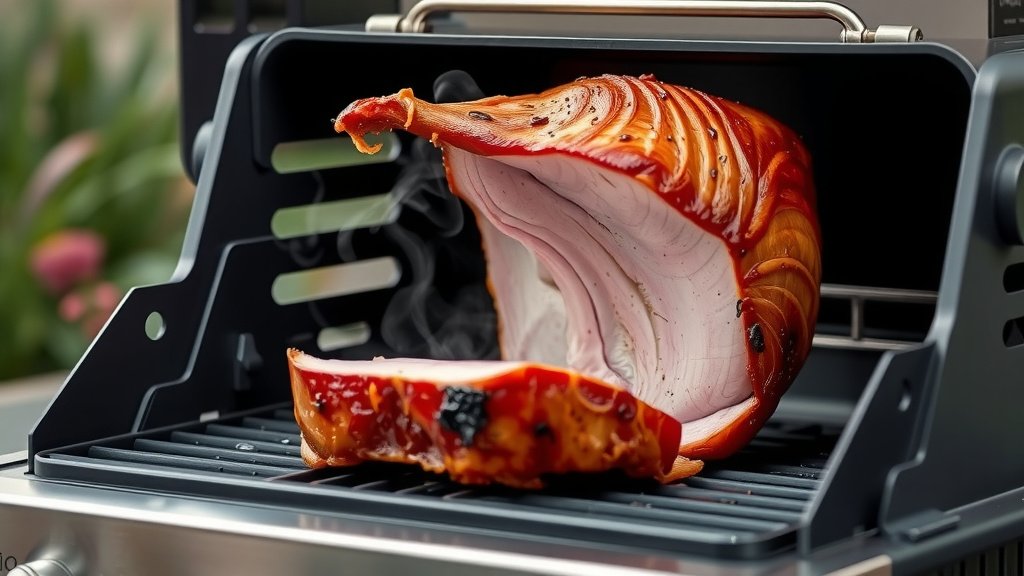
To grill a ham on a gas grill, preheat your grill to medium-low heat, aiming for an indirect cooking zone.
You will warm the ham gently, maintaining an internal temperature of 140°F (60°C) for a fully cooked ham, adding glazes near the end.
Here’s a quick overview of what you’ll learn for a perfect grilled ham:
- Preheat your gas grill for indirect, medium-low heat.
- Choose a fully cooked ham; spiral-cut works great for flavor absorption.
- Keep the ham moist with foil or a pan, adding liquid if needed.
- Glaze the ham in the last 15-20 minutes of grilling time.
- Always use a meat thermometer to ensure a safe internal temperature of 140°F.
How To Grill A Ham On A Gas Grill?
You grill a ham on a gas grill by using indirect heat to gently warm the pre-cooked meat, ensuring it stays moist and develops a smoky flavor.
This method prevents drying out and allows for a delicious, caramelized glaze.
Why Grill a Ham on Your Gas Grill?
Grilling a ham adds a fantastic smoky depth that an oven simply can’t replicate. It frees up oven space too, which is a big win for holiday meals.
Plus, standing outside by the grill often feels much more relaxing than being stuck in a hot kitchen. Doesn’t that sound good?
The Benefits of Gas Grilling
Gas grills offer precise temperature control, which is a big plus for ham. You can easily set up indirect heat zones, making the cooking process predictable.
This means less guesswork for you and a consistently delicious ham every time. We found that gas grills offer consistent results (USDA).
Choosing the Right Ham for the Grill
Not all hams are created equal for grilling. You want a fully cooked ham, which is most common at grocery stores.
A spiral-cut ham is often an excellent choice because the cuts allow smoky flavor and glaze to seep into every slice.
Bone-in vs. Boneless Ham
A bone-in ham usually offers more flavor and moisture. Many experts say the bone contributes to a richer taste.
Boneless hams are easier to carve, making them a practical choice if carving time is a concern for you.
Gather Your Grilling Essentials
Before you even light the grill, make sure you have everything ready. This prevents last-minute scrambling.
Having your tools organized helps the whole process run smoothly for you.
- A reliable meat thermometer.
- Aluminum foil or a disposable pan.
- Long-handled tongs.
- Basting brush for glaze.
- Your chosen ham and glaze ingredients.
Setting Up Your Gas Grill for Success
Proper grill setup is key to a perfectly grilled ham. You want gentle, even heat, not direct flames scorching your ham.
Think of it like a convection oven, but with that fantastic outdoor aroma.
Creating Indirect Heat Zones
On a two-burner grill, light one burner to medium-low. Place your ham on the unlit side. For three or more burners, light the outer burners and leave the middle one off.
Your goal is an ambient grill temperature of about 250-275°F (120-135°C) in the indirect zone.
Prepping Your Ham for the Grill
A little prep goes a long way to ensure your ham stays moist and absorbs flavor beautifully. Don’t skip these simple steps.
These actions help create a barrier against drying out, which is a common grilling challenge.
Scoring and Adding Moisture
If your ham isn’t spiral-cut, score the surface in a diamond pattern about a quarter-inch deep. This helps the glaze stick.
Place the ham in an aluminum foil pan or wrap it tightly in heavy-duty foil. Add a cup of water, apple juice, or ginger ale to the pan to create steam and keep it moist.
The Grilling Process: Low and Slow
Patience is a virtue when grilling ham. You are warming it, not cooking it from scratch. Low and slow is the mantra here.
Rushing the process can lead to a dry ham, and nobody wants that.
| Ham Type | Internal Temp Goal | Approx. Grill Time (per pound) | Grill Temp (Indirect) |
|---|---|---|---|
| Fully Cooked Bone-in | 140°F (60°C) | 15-20 minutes | 250-275°F (120-135°C) |
| Fully Cooked Boneless | 140°F (60°C) | 12-15 minutes | 250-275°F (120-135°C) |
| Spiral-Cut | 140°F (60°C) | 10-12 minutes | 250-275°F (120-135°C) |
Monitoring Temperature and Time
Insert your meat thermometer into the thickest part of the ham, avoiding the bone. Check it periodically.
You want to reach 140°F (60°C) for a pre-cooked ham, which is a safe and delicious serving temperature (USDA).
Glazing Your Ham: The Sweet Finish
The glaze is where you add that beautiful, shiny, sweet, and savory crust. Apply it towards the end of the grilling time.
This prevents the sugars from burning too quickly and creating a bitter taste.
When and How to Apply Glaze
Start glazing about 15-20 minutes before your ham reaches its target temperature. Apply a generous layer with a basting brush.
Close the grill lid after each application to let the glaze set and caramelize slightly. You can apply 2-3 layers for a richer crust.
The All-Important Resting Period
Once your ham hits 140°F, take it off the grill. Do not cut into it immediately. This resting period is a game-changer.
It allows the juices to redistribute throughout the meat, making every slice moist and flavorful.
How Long to Rest Your Ham
Tent the ham loosely with foil and let it rest for at least 15-20 minutes. For larger hams, 30 minutes is even better.
This simple step helps ensure a tender and juicy result that you’ll be proud to serve.
Quick Checklist for Grilling Ham
- Preheat grill to 250-275°F (indirect heat).
- Place ham in foil pan with liquid or tightly foil-wrapped.
- Insert meat thermometer into thickest part.
- Grill until internal temperature reaches 140°F.
- Apply glaze during the last 15-20 minutes.
- Rest ham for 15-30 minutes before carving.
Conclusion
Grilling a ham on a gas grill is a straightforward process that rewards you with a wonderfully flavorful, juicy centerpiece. By mastering indirect heat and patience, you can achieve fantastic results every time.
So, fire up that grill, follow these steps, and get ready to enjoy a memorable meal that truly stands out. Happy grilling!
How long does it take to grill a ham on a gas grill?
Grilling a fully cooked ham on a gas grill typically takes about 15-20 minutes per pound using indirect heat at 250-275°F (120-135°C). Always go by the internal temperature, aiming for 140°F (60°C).
Do you put water in the pan when grilling ham?
Yes, many experts recommend adding about a cup of water, apple juice, or ginger ale to the pan with your ham. This creates steam, helping to keep the ham moist and preventing it from drying out on the grill.
What temperature should a ham be on a gas grill?
For a fully cooked ham, you want to grill it indirectly until its internal temperature reaches 140°F (60°C). The ambient grill temperature should be maintained between 250-275°F (120-135°C).
Should I cover ham on the grill?
Yes, it’s a good idea to cover your ham. You can place it in a disposable aluminum pan and cover the pan tightly with foil, or wrap the ham directly in heavy-duty aluminum foil. This helps to retain moisture and ensures even heating.
Can you grill a raw ham on a gas grill?
While technically possible, grilling a raw ham (fresh ham) is much different from reheating a pre-cooked one. It requires significantly longer cooking times and a higher internal temperature of 145°F (63°C) with a three-minute rest (USDA), making it less ideal for a standard grill setup.
