
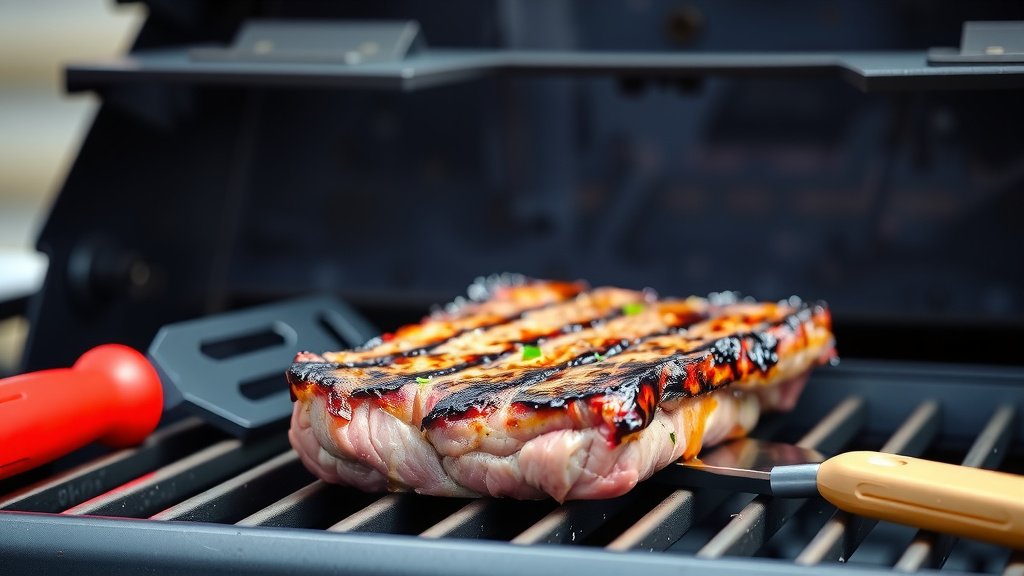
To grill a filet on a gas grill, preheat your grill to high, sear the steak over direct heat for 2-3 minutes per side to create a beautiful crust, then move it to indirect heat until it reaches your desired internal temperature.
Always use a meat thermometer for accuracy, aim for 125-130°F for medium-rare, and let your filet rest for 5-10 minutes before slicing to ensure a juicy, tender result.
Here’s a quick rundown of what you’ll discover:
- Setting up your gas grill for the perfect two-zone cooking method.
- The simple steps to prep your filet, from seasoning to bringing it to room temperature.
- How to sear for that incredible, restaurant-quality crust.
- Mastering internal temperatures for your desired doneness.
- The crucial step of resting your steak for maximum juiciness.
How To Grill A Filet On A Gas Grill?
To grill a filet on a gas grill, you need a two-zone setup: one side hot for searing and the other cooler for finishing. This method gives you a delicious crust and a perfectly cooked interior.
Why Choose a Gas Grill for Filet Mignon?
Many home cooks find gas grills incredibly convenient for filet mignon. You get precise temperature control, quick preheating, and consistent heat. This consistency helps you achieve that perfect steak every time, without the fuss of charcoal.
Choosing Your Perfect Filet Mignon
When picking your filet, look for a thick cut, about 1.5 to 2 inches. A thicker steak is easier to cook to a perfect medium-rare without overcooking the edges. You want good marbling but not excessive fat, as filet is naturally lean.
Prepping Your Steak for Grilling Success
Before it even touches the grates, your filet needs some love. Pat your steaks completely dry with paper towels; this is a tiny but mighty step for searing. Then, generously season both sides with salt and freshly ground black pepper. Some experts say bringing your steak to room temperature for 30-60 minutes before grilling helps it cook more evenly (Food Network Kitchen).
The Secret to Two-Zone Grilling
The two-zone setup is key for grilling a thick filet. You’ll create a direct high-heat zone and an indirect lower-heat zone. This allows you to sear for crust and then gently finish cooking to the desired doneness, preventing a burnt exterior and raw interior.
Getting Your Gas Grill Ready
Turn one or two burners on high, leaving the others off or on low. Close the lid and let your grill preheat for 10-15 minutes until it’s very hot, around 450-500°F over the direct heat zone. Clean your grates thoroughly with a wire brush before adding the steak.
Searing for That Amazing Crust
Place your seasoned filets directly over the high heat. You’re looking for a beautiful, dark-brown crust. Sear each side for 2-3 minutes. Don’t touch them too much; let the heat work its magic. This initial blast of heat is what creates that irresistible caramelized exterior.
Moving to Indirect Heat
After searing both sides, move the filets to the indirect heat zone. Close the lid and let them continue to cook gently. This is where the magic of consistent doneness happens. You are essentially using your grill like an oven here.
Monitoring Internal Temperature
This is where your instant-read meat thermometer becomes your best friend. Insert it into the thickest part of the steak, avoiding any bone. We found that pulling the steak off the grill a few degrees before your target temperature is important because it will continue to cook as it rests (carryover cooking). Many guidelines point to 125-130°F for medium-rare (USDA).
What About Medium-Rare?
For a perfect medium-rare filet, aim for an internal temperature of 125-130°F when you remove it from the grill. For medium, target 130-135°F. Remember, these are removal temperatures; the steak will rise 5-10 degrees while resting. Some people say a medium-rare steak has the best balance of tenderness and flavor.
The Importance of Resting Your Filet
Once your filet reaches its target temperature, remove it from the grill immediately. Place it on a cutting board, tent it loosely with foil, and let it rest for 5-10 minutes. This step is non-negotiable for juicy steak. Resting allows the juices to redistribute throughout the meat, making every bite tender and flavorful.
Adding Flavor with Finishing Touches
While your filet rests, you can add a pat of compound butter, a drizzle of good olive oil, or a sprinkle of flaky sea salt. These small additions can elevate the flavor dramatically. A simple pan sauce made with the drippings also works wonders.
Common Filet Grilling Mistakes
We found a few common pitfalls to avoid. Don’t skip drying the steak, or you won’t get a good sear. Avoid flipping the steak too often; let it develop a crust. Overcooking is also a common issue, so always use your thermometer. Finally, skipping the rest period means your delicious juices will end up on the cutting board, not in your mouth.
Grilling Times for Different Doneness (Approximate)
These times are a guide. Always rely on an internal thermometer for accuracy.
| Doneness | Approximate Total Grill Time (1.5-inch thick) | Final Internal Temperature |
|---|---|---|
| Rare | 8-10 minutes | 120-125°F |
| Medium-Rare | 10-12 minutes | 130-135°F |
| Medium | 12-14 minutes | 135-140°F |
| Medium-Well | 14-16 minutes | 145-150°F |
Your Filet Grilling Checklist
To make sure your grilling session goes smoothly, here’s a quick checklist:
- Have a good quality, 1.5-2 inch thick filet.
- Pat the steak dry and season generously.
- Set up your gas grill for two-zone cooking.
- Preheat your grill to high heat (450-500°F).
- Have an instant-read meat thermometer ready.
- Allow the steak to rest properly after grilling.
Conclusion
Grilling a perfect filet mignon on a gas grill might seem daunting, but it’s totally achievable with the right steps. By understanding how to set up your grill for two-zone cooking, properly prepping your steak, and monitoring internal temperatures, you’re well on your way to a delicious meal. Remember, practice makes perfect, and every steak is a chance to refine your technique. So go ahead, fire up that grill, and enjoy your perfectly cooked, juicy filet!
How do I prevent my filet from drying out on the gas grill?
To prevent your filet from drying out, avoid overcooking it by using an instant-read thermometer and removing it a few degrees before your target doneness. Also, always let your steak rest for 5-10 minutes after grilling to retain its juices.
Should I oil the filet or the grill grates?
It’s generally better to oil the filet itself rather than the grill grates. A light coat of high smoke point oil (like avocado or grapeseed) on the steak helps prevent sticking and promotes a good sear without causing flare-ups on the grates.
Can I grill a frozen filet on a gas grill?
While technically possible, it’s not recommended for the best results. Grilling a frozen filet can lead to uneven cooking, with a burnt exterior and a raw interior. For optimal tenderness and even doneness, always thaw your filet completely before grilling.
What’s the best way to get crosshatch grill marks on my filet?
To achieve those attractive crosshatch grill marks, place your filet at a 10 o’clock angle on the hot grates for about 2 minutes. Then, without flipping, rotate it to a 2 o’clock angle for another 2 minutes before flipping the steak to cook the other side.
How do I know when my gas grill is hot enough for searing?
Your gas grill is hot enough for searing when you’ve preheated it on high for 10-15 minutes and the internal temperature reaches between 450-500°F. You should hear a distinct sizzle when you place the steak on the grates, indicating a good hot surface.
