
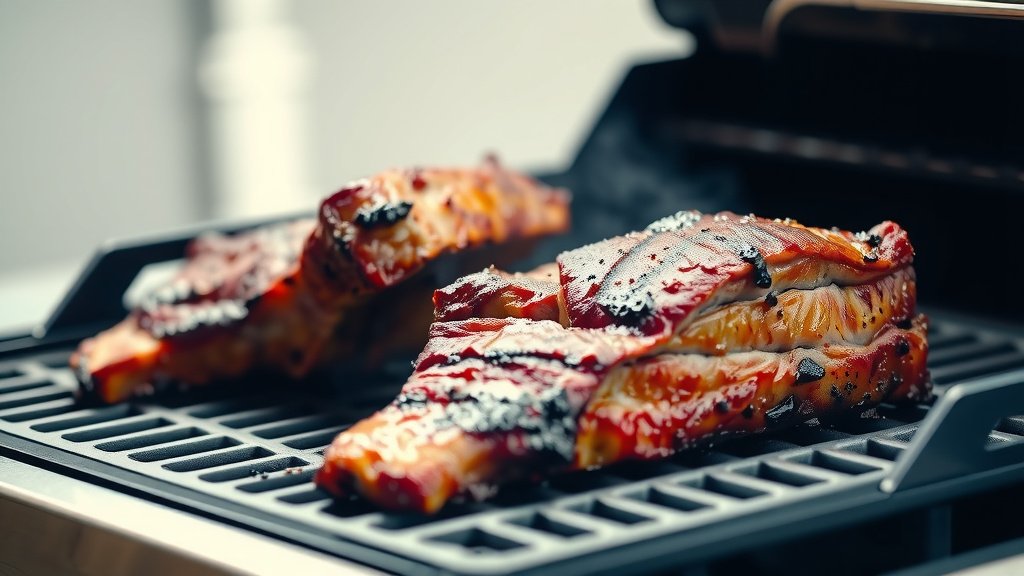
To cook a beef brisket on a gas grill, you’ll primarily use an indirect heat method, keeping your grill temperature stable around 250-275°F (120-135°C) for many hours until the meat reaches probe tender perfection.
This low and slow approach ensures the tough connective tissues in the brisket break down, resulting in a tender, juicy, and flavorful smoked experience, even without a traditional smoker.
Here’s a quick overview of cooking brisket on a gas grill:
- Prepare your gas grill for indirect heat, aiming for 250-275°F.
- Trim your brisket, apply a flavorful rub, and consider adding wood chips for smoke.
- Cook low and slow, monitoring the internal temperature with a reliable thermometer.
- Wrap the brisket in butcher paper or foil once it hits the 150-165°F range to push through the stall.
- Rest the cooked brisket for at least an hour to redistribute juices before slicing against the grain.
How To Cook A Beef Brisket On A Gas Grill?
Cooking a beef brisket on a gas grill involves setting up your grill for indirect heat and maintaining a consistent low temperature between 250-275°F, allowing the meat to slowly tenderize over 10-14 hours.
You’ll need to manage your heat, monitor the internal temperature, and wrap the brisket to achieve that desired melt-in-your-mouth texture.
Why Choose a Gas Grill for Brisket?
Many people associate brisket with traditional smokers, but your gas grill is perfectly capable. It offers precise temperature control, which is a big advantage for long cooks.
You can achieve fantastic results, making a gas grill a versatile tool for barbecue enthusiasts. Don’t let anyone tell you it can’t be done!
Choosing the Right Brisket
When you head to the butcher, look for a “full packer” brisket. This cut includes both the flat and the point, offering a better fat distribution for a moist cook.
We found that a brisket weighing 12-16 pounds is a good size for beginners. Look for even fat marbling throughout the meat.
Flat vs. Point: What’s the Difference?
The flat is the leaner, flatter section, great for slicing. The point is fattier and often used for “burnt ends.” Cooking them together helps keep the flat moist.
Essential Tools You’ll Need
Before you begin, gather your gear. A reliable meat thermometer, like a dual-probe wireless model, is non-negotiable for monitoring both grill and meat temps.
You’ll also need a sharp trimming knife, a large cutting board, and your preferred wood chips or chunks for smoke. Don’t forget foil or butcher paper for wrapping.
Preparing Your Brisket for the Grill
Preparation is key to a succulent brisket. Take your time with these initial steps; they truly make a difference in the final product.
Trimming for Success
You want to remove excessive hard fat, leaving about 1/4 inch of soft fat on the surface. This fat melts slowly, basting the meat and adding flavor during the long cook.
Trim any silver skin too, as it won’t break down and can be tough. Don’t be afraid to be a bit aggressive; bad trim means a bad cook.
The Perfect Rub
A good rub adds a fantastic bark and flavor. You can buy a commercial beef rub or make your own with salt, black pepper, garlic powder, and a touch of paprika.
Apply the rub liberally all over the brisket, pressing it gently to adhere. Some experts say to do this hours or even a day before cooking for maximum flavor penetration.
Setting Up Your Gas Grill for Brisket
The success of your gas grill brisket hinges on maintaining a stable, low temperature. This requires a specific grill setup to create indirect heat.
Two-Zone Setup
For indirect heat, light one or two burners on one side of your grill to a medium-low setting. You’ll place your brisket on the unlit side.
This creates a two-zone cooking environment, where the heat circulates around the meat rather than directly underneath it.
Maintaining Low Temperatures
Aim for a grill temperature of 250-275°F (120-135°C). Use your grill’s lid thermometer, but a separate, accurate grill thermometer is better for consistent readings.
Adjust the lit burners as needed to keep the temperature steady. It might take some practice to get it just right, but you’ll get the hang of it.
Adding Smoke to Your Gas Grill
Brisket needs smoke for that authentic barbecue flavor. On a gas grill, you can use a smoker box filled with wood chips or make a foil pouch.
Soak wood chips (hickory, oak, or pecan are popular choices) for 30 minutes, then place them over the lit burners. Replace them every hour or so for continuous smoke.
The Cooking Process: Low and Slow
This is where patience pays off. Your brisket will cook for a long time, so kick back and trust the process. Insert your probe thermometer into the thickest part of the flat, avoiding large pockets of fat.
Initial Smoke Phase
Place your seasoned brisket, fat-side up (many experts agree this helps keep it moist), on the unlit side of the grill. Close the lid and let the magic happen.
Maintain that 250-275°F range. This phase is crucial for developing the bark and absorbing smoke flavor.
The Stall and the Wrap
Around 150-165°F internal temperature, your brisket might hit “the stall.” This is when moisture evaporating from the surface cools the meat, making the temperature plateau.
To power through, wrap your brisket tightly in butcher paper or aluminum foil. This holds in moisture and heat. Many pitmasters say wrapping is key to a tender, juicy outcome.
Monitoring Internal Temperature
Keep that probe in! The internal temperature is your best guide. You’re not looking for a specific number as much as a “feel,” but the temperature gives you a good range.
| Brisket Internal Temperature | What to Do / What It Means |
|---|---|
| 150-165°F (65-74°C) | The “Stall” often occurs here. Time to wrap your brisket to push through it. |
| 195-205°F (90-96°C) | Begin checking for “probe tender.” The brisket is getting close to being done. |
| 203°F (95°C) Avg. | Often the ideal finished temperature, but always go by probe tenderness, not just temp. |
When Is Your Brisket Done?
Forget the clock; forget the exact temperature. Your brisket is done when it’s “probe tender.”
This means a skewer or your thermometer probe slides into the meat with very little resistance, like sliding into warm butter. This usually happens between 195-208°F (90-98°C) in the thickest part of the flat.
The All-Important Rest
Do not skip this step! Once the brisket is probe tender, remove it from the grill, still wrapped. Place it in a cooler, wrapped in towels, and let it rest for at least 1-4 hours.
We found that resting meat allows juices to redistribute, leading to a more tender product (Texas A&M AgriLife Extension). This helps keep your brisket incredibly juicy.
Slicing Your Brisket Like a Pro
Slicing correctly is crucial for tenderness. You must slice against the grain. The grain of the flat and point typically run in different directions, so separate them before slicing.
Slice the flat into pencil-thick pieces, and cube the point for burnt ends if you wish. Enjoy your hard work!
Common Mistakes to Avoid
To help you avoid common pitfalls, here’s a quick checklist for a smooth brisket cook:
- Trim hard fat down to about 1/4 inch.
- Use a good leave-in thermometer for monitoring.
- Have extra propane tanks or fuel ready.
- Don’t forget to rest the brisket after cooking.
- Slice against the grain for tenderness.
Troubleshooting Tips
Is your brisket dry? It might have been overcooked or rested for too short a time. Is it tough? Probably undercooked, needing more time for collagen to break down.
Learning from each cook is part of the fun. Every brisket is a new adventure!
Conclusion
Cooking a beef brisket on a gas grill might seem daunting, but it’s a rewarding process. By mastering indirect heat, patient temperature management, and the crucial wrap and rest stages, you can achieve amazing results.
Remember, the goal is “probe tender” perfection, not just a specific temperature. So grab your tools, get your grill fired up, and prepare to impress everyone with your gas grill brisket expertise!
How long does it take to cook a brisket on a gas grill?
A full packer brisket on a gas grill typically takes 10-14 hours, depending on its size and how consistently you maintain your grill temperature. Patience is your best ingredient.
Do I need a water pan when cooking brisket on a gas grill?
While not strictly necessary for a gas grill setup, a water pan placed on the lit side can help stabilize grill temperatures and add moisture to the cooking environment, which some find beneficial.
What kind of wood chips are best for gas grill brisket?
Hickory and oak are classic choices for beef, offering a strong, smoky flavor. Pecan provides a milder, nutty smoke. Experiment to find your favorite, but avoid mesquite as it can be too strong for long cooks.
Should I flip the brisket during cooking on a gas grill?
Generally, you do not need to flip the brisket. Once placed fat-side up on the indirect heat zone, it should cook evenly without intervention. Too much opening of the lid means losing heat and smoke.
What’s the ideal internal temperature for gas grill brisket?
While often finishing around 203°F (95°C), the “ideal” is when it feels “probe tender”—meaning a thermometer probe slides into the meat with very little resistance, much like pushing into warm butter.
