
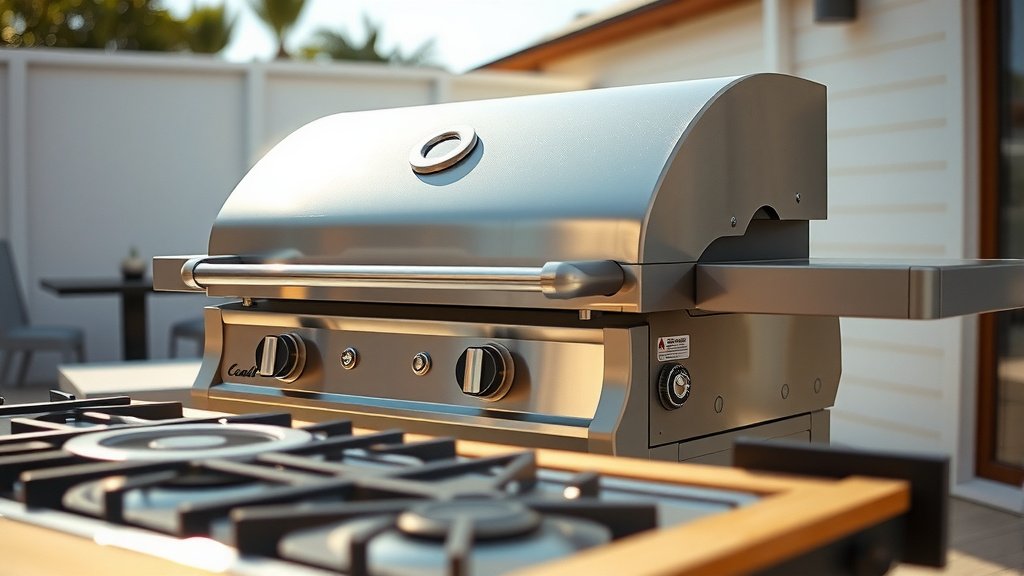
To turn on a gas grill, you first open the propane tank valve, then slowly turn on one burner to high, and finally press the ignition button until the burner lights.
Always perform a quick safety check before you turn on a gas grill to prevent any leaks and ensure safe operation.
Here’s a quick guide to getting your gas grill ready:
- Check Gas Tank: Confirm it’s connected and has fuel.
- Open Tank Valve: Turn the tank valve fully counter-clockwise.
- Light One Burner: Turn a single burner knob to high, then ignite.
- Verify Flame: Ensure the burner is lit and working properly.
- Preheat Grill: Close the lid and let it warm up.
How Do You Turn On A Gas Grill?
Turning on a gas grill involves a few simple steps: connect your propane tank, open the gas supply, and then ignite your chosen burners.
It’s all about ensuring safety and getting that perfect cooking temperature for your food.
Safety First: A Quick Check-Up
Before you even think about lighting up, pause for a moment. You want to make sure everything is in tip-top shape. This brief check prevents many headaches and keeps you safe (National Fire Protection Association).
Look for any visible damage to the gas lines or the grill itself. Are the grates clean? Is your propane tank properly seated?
Checking for Leaks: The Soapy Water Test
A gas leak is something you really want to avoid. We found that a simple soapy water test is a great way to check for them. Just mix some dish soap with water in a spray bottle.
Spray the connections between your tank and the grill. If you see bubbles forming, that means gas is escaping. If you find a leak, turn off the gas immediately and do not light the grill.
Connecting Your Propane Tank
Most gas grills run on propane, which comes in those familiar cylindrical tanks. If your tank isn’t connected, this is your first step. Make sure the tank is placed securely on the grill’s designated spot.
Then, attach the regulator hose from the grill to the tank valve. Tighten it hand-tight, but don’t overtighten it. Many experts say a snug fit is sufficient.
Opening the Gas Valve
Once your tank is connected, it’s time to let the gas flow. Turn the propane tank valve counter-clockwise, all the way open. You might hear a slight hiss; this is normal as the gas moves through the line.
Opening it fully ensures a steady flow and prevents pressure issues. A fully open valve is key for consistent heat.
Igniting the Burners
This is where the magic happens! Go to your grill’s control panel. Start by turning one burner knob to the “High” position. Usually, you only need to light one burner to get things going.
Next, press the ignition button. You should hear a clicking sound and see a flame appear. If it doesn’t light on the first try, give it a few more clicks. If it still doesn’t light, turn off the burner and wait a few minutes before trying again.
Manual Lighting: When the Igniter Fails
Sometimes, the automatic igniter decides to take a break. Don’t worry, you can still light your grill safely. Many grills come with a specific opening for manual lighting. We found it’s usually on the side.
Using a long barbecue lighter or an extra-long match, reach into the opening towards the burner. Turn the burner knob to “High” and then ignite the gas. Always use caution and keep your face away from the grates. This method requires a bit more care but is perfectly fine. Keep a fire extinguisher close by, just in case (NFPA).
Preheating Your Grill: Getting to Temperature
Once your first burner is lit, you can turn on the other burners to your desired heat setting. Close the grill lid and let it preheat for about 10-15 minutes.
Preheating is vital for even cooking and creating those beautiful sear marks. A properly preheated grill means your food won’t stick and will cook more uniformly.
Turning Off Your Gas Grill Safely
When the grilling is done and the food is delicious, it’s time to shut down. First, turn off all the burner control knobs to the “Off” position. Then, and this is important, turn off the propane tank valve by rotating it clockwise until it’s completely closed.
This ensures no gas continues to flow and prevents any potential hazards. Leaving the tank valve open can sometimes lead to issues with gas pressure the next time you try to grill.
Common Grill Ignition Problems and Solutions
What if your grill just won’t light? It can be frustrating, right? But most issues have simple fixes.
| Problem | Likely Cause | Quick Fix |
|---|---|---|
| Burner Won’t Light | No gas flow or clogged burner | Check tank valve, clean burner ports |
| Weak or Uneven Flame | Low gas pressure, dirty burner | Open tank fully, clean burner ports |
| Igniter Not Clicking | Dead battery, loose wire | Replace battery, check wire connections |
| Gas Smell, No Flame | Leak, blocked burner | Perform leak test, clear burner |
Pre-Grill Checklist: Your Go-To Steps
To make sure every grilling session starts smoothly, consider this simple checklist:
- Is the Propane Tank Full? A quick shake can tell you a lot.
- Are All Connections Tight? Double-check the regulator hose.
- Are the Burners Clean? Clear any food debris or spiderwebs.
- Is the Igniter Working? Test it with the gas off first.
- Do You Have Your Tools Ready? Tongs, spatulas, and heat-resistant gloves.
Maintaining Your Grill for Easy Start-Ups
A well-maintained grill is a happy grill, and it’s much easier to turn on. Regularly clean your burner tubes to prevent clogs. Many experts suggest doing this at least once a year.
Also, check your igniter battery periodically if your model uses one. Keeping your grill clean and in good repair will ensure it’s always ready for your next cookout. Regular upkeep means fewer surprises later.
Conclusion
Turning on a gas grill is straightforward once you understand the steps. Remember to always prioritize safety, from checking for leaks to properly connecting your propane tank. Getting your grill started efficiently means you spend less time fussing and more time enjoying delicious food with friends and family.
With these guidelines, you’re well on your way to becoming a grilling pro. So go ahead, fire up that grill and create some amazing meals!
How do I know if my propane tank is empty?
You can often tell if your propane tank is low or empty by its weight. A full 20-pound tank weighs about 37-40 pounds, while an empty one is around 17-20 pounds. You can also pour warm water down the side of the tank; the tank will feel cool to the touch at the liquid gas level.
What should I do if my grill smells like gas but won’t light?
If you smell gas but the grill isn’t lighting, immediately turn off the propane tank valve and all burner knobs. Step away from the grill for a few minutes to let any accumulated gas dissipate. Then, perform a leak test with soapy water. If you find a leak, do not use the grill until it’s repaired or replaced.
Can I use lighter fluid to start a gas grill?
No, absolutely not. Lighter fluid is designed for charcoal grills and is extremely dangerous to use on a gas grill. Gas grills use propane or natural gas as fuel and have built-in ignition systems. Using lighter fluid on a gas grill can cause a dangerous flare-up or explosion.
How long does it take for a gas grill to preheat?
Most gas grills take about 10 to 15 minutes to preheat to their desired cooking temperature. Factors like ambient air temperature, the grill’s BTU output, and the material of the grates can affect this time. Always preheat with the lid closed for the best results.
Why is only one burner lighting on my gas grill?
If only one burner is lighting, it often indicates a low gas flow issue. This can happen if the propane tank valve wasn’t opened slowly, triggering the tank’s overfill protection device. Try turning off all burners and the tank, waiting a minute, then slowly opening the tank valve fully before trying to light again.
