
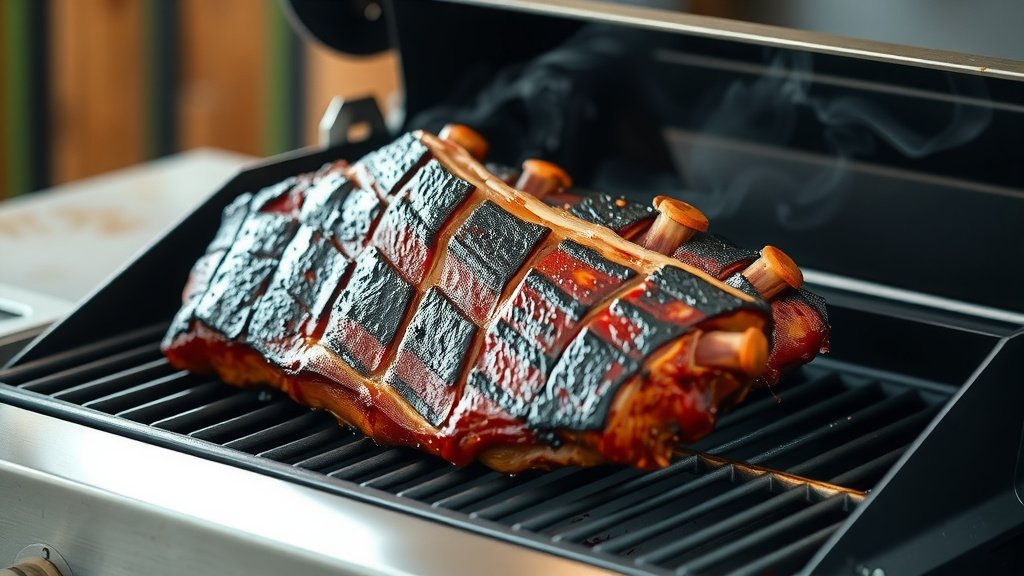
Cooking a brisket on a gas grill involves setting up your grill for indirect heat and maintaining a consistent low temperature, usually around 225-275°F (107-135°C), for many hours until the meat is tender.
You’ll use smoke wood to impart flavor, monitor internal temperature carefully, and allow for a long rest to achieve that juicy, melt-in-your-mouth result, even when cooking a brisket on a gas grill.
- Trim your brisket to about 1/4 inch of fat.
- Apply a generous dry rub for flavor.
- Set up your gas grill for indirect, low-and-slow cooking.
- Add wood chips or chunks for smoke.
- Cook at 225-275°F until a probe slides in easily (around 200-205°F).
- Wrap the brisket during the “stall” to push through.
- Rest the cooked brisket for at least 1-2 hours before slicing.
How Do You Cook A Brisket On A Gas Grill?
Cooking a brisket on a gas grill is entirely possible, offering delicious results with the right approach and patience.
The secret lies in mimicking a smoker’s low, consistent temperature and creating flavorful smoke.
Choosing Your Brisket Cut
Before you even fire up the grill, selecting the right brisket is your first important step.
Look for a “full packer” brisket if you can find one, as it contains both the flat and the point muscles.
Flat vs. Point
The flat is leaner and more consistent in shape, great for slicing.
The point is fattier and more marbled, perfect for shredding or burnt ends.
A full packer lets you enjoy both textures, but either can work if you adjust your expectations (USDA).
Essential Tools for Gas Grill Brisket
You’ll want a few key items to make your brisket cook a success.
A reliable meat thermometer is non-negotiable for monitoring internal temperature.
You’ll also need tongs, a good cutting board, and aluminum foil or butcher paper.
Trimming Your Brisket for Success
Trimming is where many beginners get nervous, but it’s really about confidence.
You want to remove hard chunks of fat and thin areas that might burn.
Why Trim?
Aim for about 1/4 inch of fat across the surface of the brisket.
This renders down beautifully, keeping the meat moist while creating a flavorful bark.
Don’t be afraid to take off excess fat; it will improve the final product.
The Perfect Rub
A good rub is crucial for building that incredible flavor and bark.
Most classic brisket rubs are simple: salt, black pepper, and sometimes garlic powder or paprika.
Apply it generously all over the trimmed brisket, letting it sit for at least an hour, or even overnight in the fridge.
Setting Up Your Gas Grill for Low and Slow
This is arguably the most critical part of cooking brisket on a gas grill.
You need to create a low, stable temperature, much like a dedicated smoker.
Two-Zone Cooking
For a two-zone setup, you’ll light burners on one side of your grill and leave the other burners off.
The brisket will sit over the unlit burners, cooking with indirect heat.
Aim for a grill temperature of 225-275°F (107-135°C).
Adding Smoke Flavor on a Gas Grill
Since a gas grill doesn’t naturally produce much smoke, you need to add it yourself.
This is easier than you might think, and it makes a huge difference.
Wood Chips or Pellets?
Place wood chips (soaked or unsoaked) in a foil packet with holes or a dedicated smoker box.
Put this directly over a lit burner to generate smoke, replacing it every hour or so.
Hickory, oak, or pecan wood chips are excellent choices for brisket (Cook’s Illustrated).
The Cooking Process: Time and Temperature
Brisket is a patient cook. Expect anywhere from 8 to 16 hours, depending on its size.
The general rule is about 1 to 1.5 hours per pound, but always cook to tenderness, not just time.
Monitoring Internal Temperature
Insert your meat thermometer into the thickest part of the flat, avoiding major fat pockets.
Keep a close eye on your grill’s ambient temperature to ensure it stays in the target range.
The Brisket Stall
Around 150-170°F (65-77°C), your brisket’s internal temperature will likely plateau.
This “stall” is caused by evaporative cooling on the meat’s surface, and it’s perfectly normal.
The Texas Crutch
Many pitmasters use the “Texas Crutch” to power through the stall.
Wrap the brisket tightly in butcher paper or heavy-duty foil once it hits the stall temperature.
This retains moisture and heat, helping it cook faster (Serious Eats).
Knowing When It’s Done
Brisket is done when it’s fork-tender, not just by hitting a specific temperature.
While the target internal temperature is often around 200-205°F (93-96°C), probe for tenderness.
A probe should slide into the meat with little resistance, like pushing it into warm butter.
Resting Your Brisket
This step is non-negotiable. Seriously, do not skip it.
Resting allows the juices to redistribute throughout the meat, making it incredibly moist.
Wrap your finished brisket in foil, then towels, and place it in a cooler for at least 1-2 hours, or even longer (National Cattlemen’s Beef Association).
Slicing Your Brisket Against the Grain
Once rested, it’s time to slice and enjoy your masterpiece.
Always slice against the grain to ensure each piece is as tender as possible.
Find the grain by looking at the muscle fibers and cut perpendicular to them.
| Brisket Stage | Target Internal Temperature | Action |
|---|---|---|
| Start Cook | Ambient 225-275°F (107-135°C) | Setup indirect heat, add smoke. |
| The Stall | 150-170°F (65-77°C) | Consider wrapping in foil or butcher paper. |
| Probe Tender | 195-205°F (90-96°C) | Check for butter-like tenderness with a probe. |
| Final Rest | No Temp (Held in Cooler) | Rest for 1-2+ hours to redistribute juices. |
Here’s a quick checklist to ensure your brisket success:
- Choose a good quality full packer brisket.
- Trim fat evenly to 1/4 inch thickness.
- Apply a simple, flavorful rub.
- Set up your gas grill for consistent indirect heat (225-275°F).
- Use a smoker box or foil pouch for wood chips.
- Monitor meat temperature with a reliable thermometer.
- Wrap the brisket if you hit the dreaded stall.
- Probe for tenderness, not just a set temperature.
- Rest the brisket for a long time before slicing.
Conclusion
Cooking a brisket on a gas grill is a rewarding project that truly brings out your inner pitmaster.
With careful preparation, precise temperature control, and a good amount of patience, you can achieve a tender, smoky brisket that rivals those cooked in traditional smokers.
Don’t be intimidated by the process; embrace the journey and enjoy the delicious results of your efforts.
How long does it take to cook a 10lb brisket on a gas grill?
A 10lb brisket typically takes about 10-15 hours to cook on a gas grill at a consistent temperature of 225-275°F (107-135°C). Always cook to tenderness, not strictly by time, using an internal meat thermometer.
Do I need a water pan when cooking brisket on a gas grill?
While not strictly necessary, adding a water pan to your gas grill setup can help maintain a more stable, moist cooking environment. It can also assist in catching drippings, which makes cleanup easier.
Can I use liquid smoke for brisket on a gas grill?
You can use liquid smoke, but it’s generally recommended to use real wood chips or chunks for an authentic smoke flavor. Liquid smoke offers a different profile and might not provide the depth of flavor you’d get from natural smoke.
What kind of wood chips are best for gas grill brisket?
For brisket, popular wood chip choices include hickory, oak, or pecan. These woods provide a robust, classic smoke flavor that pairs wonderfully with beef. Apple or cherry can also be good for a milder, sweeter smoke.
How do I prevent my brisket from drying out on a gas grill?
To prevent drying, maintain a low, consistent temperature, avoid opening the lid too often, and consider wrapping the brisket in butcher paper or foil once it hits the “stall” (around 150-170°F). A long rest after cooking is also crucial for retaining moisture.
