
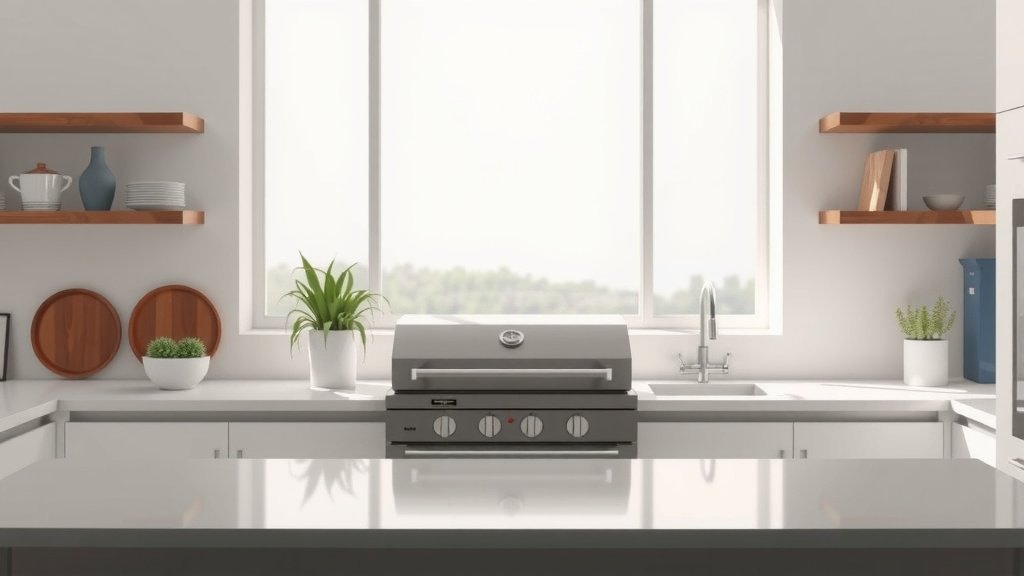
No, you absolutely cannot use a gas grill indoors. Using a gas grill indoors is incredibly dangerous due to the lethal carbon monoxide gas and severe fire risks it poses.
Here’s a quick rundown of why you should never bring your gas grill inside:
- Gas grills produce carbon monoxide (CO), a colorless, odorless gas that can be fatal.
- The high heat and open flames create extreme fire hazards in enclosed spaces.
- Even with open windows or fans, ventilation is insufficient to prevent dangerous CO buildup.
- There are many safer, alternative ways to get that grilled flavor indoors.
Can You Use Gas Grill Indoors?
You should never use a gas grill inside your home, garage, or any enclosed space. The risks of carbon monoxide poisoning and fire are far too high.
Picture this: you’re craving that delicious char-grilled taste, but a sudden rainstorm hits. Your first thought might be to pull the grill into the garage or porch. Resist that urge! It’s a common mistake many people consider, but it carries grave dangers. This isn’t just a suggestion; it’s a critical safety warning from fire departments and health organizations worldwide.
The Silent Killer: Carbon Monoxide
Every time you light your gas grill, it produces carbon monoxide. This gas is a silent killer because you cannot see it, smell it, or taste it. When you use a grill outdoors, CO disperses safely into the open air. Inside, it builds up rapidly.
We found that carbon monoxide displaces oxygen in your blood, starving your organs. Symptoms can start subtly, like a headache or dizziness, and quickly worsen to unconsciousness and death (CDC).
Think of your car engine running in a closed garage. The gas grill presents the same, if not worse, danger. No amount of “cracked windows” will make it safe.
Fire Hazards Are Real
Beyond CO, a gas grill is a significant fire risk when brought indoors. Flames can flare up unexpectedly. Grease drippings can ignite. The intense heat generated can damage nearby walls, ceilings, and furniture, leading to structural fires.
Many experts say that grills are built for outdoor use, where their heat and flames have room to dissipate safely. Bringing them inside concentrates all that heat and potential ignition in a confined space. This creates an environment ripe for accidents (NFPA).
Ventilation Myths Exploded
Perhaps you’re thinking, “What if I open a window and run a fan?” That’s a reasonable thought, but it simply isn’t enough. Household ventilation systems, open windows, or even powerful exhaust fans are not designed to handle the sheer volume of dangerous combustion byproducts from a gas grill.
Research confirms that adequate ventilation for a gas grill requires continuous, active air exchange with a vast outdoor area. Your kitchen exhaust fan, even the strongest one, cannot compete with the requirements of a grill designed for open air.
Why The Temptation? Weather Woes and Convenience
We get it. You planned a BBQ, and Mother Nature had other ideas. Or maybe you just want to grill without leaving your comfy kitchen. The convenience of “just pulling it inside” can seem appealing for a moment. But that moment of convenience is not worth putting your life or the lives of your loved ones at risk.
Your safety and health are far more important than any grilled steak or burger cooked on a gas grill indoors. Trust us, there are better, safer ways to satisfy that craving.
Safer Indoor Grilling Alternatives
Don’t despair! You can still enjoy grilled flavors without the danger. Many safe appliances mimic the char and taste of outdoor grilling. Here are a few fantastic options:
- Electric Indoor Grills: These are specifically designed for indoor use. They offer ridged plates to create grill marks and often have drip trays for easy cleaning. They don’t produce carbon monoxide and are a great safe choice.
- Grill Pans: A cast iron or heavy-duty stovetop grill pan can give you impressive sear marks and flavors. Just make sure your kitchen has good ventilation for any smoke produced.
- Broilers: Your oven’s broiler setting can get intensely hot, giving meats and vegetables a beautiful char and crisp texture, similar to a grill.
- Air Fryers with Grill Settings: Some newer air fryers come with grill plate inserts and specific “grill” functions, offering convenience and a grilled texture.
Understanding The Real Difference
Let’s look at why dedicated indoor appliances are safe and gas grills are not:
| Feature | Gas Grill (Outdoor) | Electric Indoor Grill |
|---|---|---|
| Fuel Source | Propane or Natural Gas | Electricity |
| Combustion | Yes, produces CO and smoke | No, uses heating elements |
| CO Production | High, lethal indoors | None |
| Fire Risk Indoors | Extreme (flames, grease) | Minimal (controlled elements) |
| Ventilation Needed | Outdoor air dispersal | Standard kitchen ventilation |
Essential Indoor Cooking Safety Tips
Even with safe indoor appliances, smart cooking habits make a big difference. Think about these common-sense steps to keep your home safe:
- Always use a carbon monoxide detector in your home, especially if you have gas appliances.
- Ensure your smoke detectors are working and test them monthly.
- Keep a fire extinguisher handy in the kitchen, and know how to use it.
- Never leave cooking food unattended on the stovetop or under the broiler.
- Clean up grease spills immediately to prevent flare-ups.
- When using a grill pan or broiler, turn on your kitchen exhaust fan to manage smoke.
These simple steps will help protect you and your family from common kitchen mishaps, giving you peace of mind while you cook up those tasty meals.
Conclusion
When the craving for grilled food strikes, especially during bad weather, it’s understandable to consider bringing your gas grill indoors. Yet, this decision carries extreme and unacceptable risks from carbon monoxide poisoning and fire. These are not minor concerns; they are life-threatening dangers that every reputable safety organization warns against.
Thankfully, you don’t have to sacrifice that smoky flavor. Modern electric grills, stovetop grill pans, and even your oven’s broiler offer fantastic, safe alternatives that allow you to achieve delicious grilled results without putting anyone in danger. Prioritizing safety means making smart choices about your cooking equipment and where you use it.
FAQs About Grilling Safety
Can a garage be considered a safe indoor space for a gas grill?
Absolutely not. A garage is an enclosed space and carries the same severe risks as grilling inside your home. Carbon monoxide will build up quickly, and fire hazards remain extremely high. Always keep gas grills outdoors in open air.
Is it okay to use a charcoal grill indoors, similar to a gas grill?
No, a charcoal grill is even more dangerous to use indoors than a gas grill. Charcoal combustion produces even higher levels of carbon monoxide, along with significant smoke and ash. It poses an even greater risk for CO poisoning and fire in any enclosed space.
What if I only use my gas grill indoors for a short time? Is it still dangerous?
Yes, even a short period of indoor use for a gas grill is incredibly dangerous. Carbon monoxide can accumulate to lethal levels very rapidly, often before you even notice symptoms. There is no safe amount of time to operate a gas grill inside.
Are there any portable gas appliances that are safe for indoor cooking?
Some very specific, small, portable indoor cooking appliances use a small gas canister, but these are generally for very short-term use, have low BTU output, and require very specific ventilation. They are not “grills” in the traditional sense and are designed with different safety features. A standard outdoor gas grill should never be considered for indoor use.
How can I tell if there’s carbon monoxide in my home?
Carbon monoxide is colorless and odorless, making it impossible to detect without a device. The only way to know if CO is present is by having working carbon monoxide detectors installed on every level of your home, especially near sleeping areas (Mayo Clinic). Symptoms of CO poisoning can include headache, dizziness, nausea, and confusion.
