
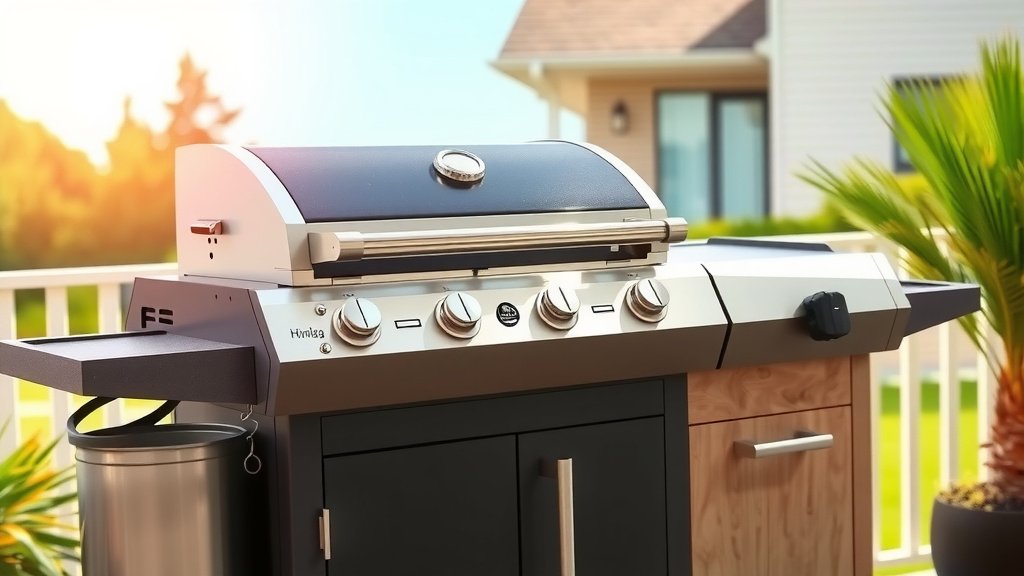
Using a gas barbecue grill is straightforward, allowing you to cook delicious meals outdoors with ease. You just need to connect the gas, light the burners safely, and preheat your grill before placing any food.
To master your gas barbecue grill, always check for gas leaks, manage your heat zones effectively, and clean the grates after each use for the best cooking results and grill longevity.
Here’s a quick overview of what you’ll learn about gas grilling:
- Getting your grill ready for its first use.
- The simple steps to light it up safely every time.
- How to control temperatures like a pro.
- Tips for keeping your grill clean and in great shape.
- Troubleshooting common issues for a smooth grilling experience.
How To Use Gas Barbecue Grill?
Using a gas barbecue grill starts with understanding its parts and following a few safety steps. It’s really about bringing your kitchen outside, but with a fun, fiery twist. Think of it as controlling a small, powerful outdoor oven.
You can enjoy grilling quickly with gas, heating up in minutes. This makes impromptu cookouts easy, whether it’s for dinner or a weekend gathering.
Why Choose a Gas Grill?
Gas grills offer fantastic convenience and control, which is why many people love them. Do you want to go from zero to sizzling in a snap? A gas grill makes that possible.
We found that gas grills are excellent for beginners and seasoned grill masters alike. They simplify the grilling process, letting you focus more on the food and less on managing charcoal.
Quick Heating and Control
Gas grills heat up fast, often reaching cooking temperature in 10-15 minutes. This quick warm-up saves you time, especially on busy weeknights. Plus, you get precise temperature control, just like your kitchen stovetop.
Imagine turning a dial to adjust the heat, perfect for delicate fish or searing steaks. This responsiveness means fewer burnt mishaps and more perfectly cooked dishes.
Cleaning Up is Simpler
One of the best perks? Cleanup is generally easier than with charcoal. You won’t deal with ash, just some grease and food residue on the grates. Many experts say a quick brush after cooking is usually enough (Food Safety.gov).
A simpler cleanup means more time relaxing after your meal. Who wouldn’t want that?
Your Gas Grill Checklist
Before you even think about lighting your grill, let’s make sure you have everything ready. This prevents frustrating mid-grill runs to the store. A little preparation goes a long way!
Having your tools and ingredients prepared makes grilling more enjoyable. Here’s a short list to get you started on your next cookout:
- Full propane tank or natural gas line connected
- Long-handled grill tongs and spatula
- Grill brush for cleaning grates
- Meat thermometer to check doneness
- Your favorite marinades and seasonings
- Heat-resistant grilling gloves
Setting Up Your Grill Safely
Safety is not an afterthought when it comes to gas grilling; it’s the first step. You’re working with gas, after all. Taking a moment to set up correctly keeps everyone safe and your grill running well.
Always consult your grill’s owner manual for specific instructions. Every grill can be a little different. We found that a few simple checks can prevent most issues.
Propane Tank Connection Tips
Connect your propane tank carefully. Make sure the tank valve is off before screwing the regulator onto the tank. Turn the fitting clockwise until it’s hand-tight. Don’t use tools, as you might over-tighten it.
Once connected, slowly open the tank valve all the way. This prevents the safety mechanism from limiting gas flow. A slow open is key for proper gas delivery.
Checking for Leaks is Key
After connecting, always check for leaks. This is a non-negotiable safety step. Many experts say to mix some dish soap with water to create a soapy solution (CSA International).
Brush this solution over the hose and connections. If you see bubbles forming, you have a leak. Turn off the gas immediately and tighten connections or replace parts as needed. Never light a leaking grill!
Lighting Your Gas Grill
Okay, the moment you’ve been waiting for! Lighting a gas grill is usually a breeze. Most modern grills have an igniter button that makes it super simple.
Always open your grill lid before lighting. This prevents gas from building up inside, which can be dangerous. Safety first, right?
First, turn on the gas from your propane tank or natural gas line. Then, open one burner valve to “high.” Press the igniter button a few times until you see the burner flame. Once lit, you can turn on the other burners.
Manual Ignition: What If?
What if the igniter doesn’t work? Don’t panic! Most grills have a manual lighting option. You’ll need a long-stem lighter or match and a steady hand.
With the lid open and one burner valve on “high,” carefully place the lit lighter near the burner port. Once that burner lights, you can turn on the others. Always be cautious when manually lighting.
Preheating: Don’t Skip This Step!
Preheating is crucial for good grilling. Think of it like preheating your oven indoors. It ensures your grates are hot enough to sear food and prevent sticking. You wouldn’t bake a cake in a cold oven, would you?
Close the lid after lighting all burners and let the grill preheat for 10-15 minutes. Aim for about 450-500°F (230-260°C). A hot grill creates those beautiful sear marks everyone loves.
Grilling Techniques for Success
Once your grill is hot, it’s time to cook! Understanding direct and indirect heat zones will open up a world of grilling possibilities. This knowledge transforms you from a casual cook to a true grill master.
Direct heat is like cooking right over the flame, great for searing. Indirect heat is like baking, perfect for larger cuts that need more time.
| Technique | Description | Best For |
|---|---|---|
| Direct Heat | Food cooked directly over lit burners. High, intense heat. | Steaks, burgers, hot dogs, thin vegetables, quick-cooking items. |
| Indirect Heat | Food cooked over unlit burners, with lit burners on the sides. Gentle, even heat. | Whole chickens, roasts, ribs, thicker cuts of meat, delicate fish. |
Temperature Control: Your Secret Weapon
Your gas grill gives you amazing control over heat. You can create different temperature zones across your cooking surface. This means you can sear a steak on one side and gently cook corn on the cob on the other.
Start with all burners on high for preheating. Then, adjust individual burner knobs to achieve your desired cooking temperatures. This flexibility is what makes gas grilling so versatile.
Cleaning Your Grill After Use
A clean grill is a happy grill, and it’s safer too. Cleaning prolongs your grill’s life and prevents old food bits from tainting new flavors. Nobody wants last week’s burnt burger flavor on tonight’s chicken!
Make cleaning a part of your routine. It takes just a few minutes after each use and a deeper clean periodically. Your future self will thank you.
Quick Clean for Next Time
Immediately after removing food, turn the burners to high and close the lid for a few minutes. This burns off residual food. Then, open the lid and use a sturdy grill brush to scrape the grates clean.
Once cooled, a simple wipe down of the exterior can keep your grill looking fresh. This quick clean makes your next grilling session even better.
Deep Cleaning Routines
Every few months, give your grill a more thorough clean. This involves removing the grates and flavorizer bars. Wash them in soapy water, or according to your grill’s manual.
Scrape out any debris from the bottom of the firebox. Many experts recommend checking the burner tubes for blockages. A clean grill performs better and lasts longer.
Troubleshooting Common Gas Grill Issues
Sometimes, your grill might not light or heat properly. Don’t worry, many common issues have simple fixes. Knowing what to check can save you from frustration and call-outs.
Most problems relate to gas flow or ignition. A little detective work usually solves the mystery.
If your grill won’t light: Check your propane tank level. Is the tank valve fully open? Are your burner ports clean? Sometimes, spiders or debris can block gas flow (Consumer Reports).
If it’s not heating evenly: This could be uneven gas flow or dirty burner tubes. Cleaning them out often helps. Also, ensure your lid is sealing properly during preheating.
Conclusion
Using a gas barbecue grill doesn’t have to be complicated. With a focus on safety, proper setup, and regular maintenance, you’ll be grilling delicious meals in no time. Remember, the journey from novice to grill master is a tasty one.
Practice makes perfect, so don’t be afraid to experiment with different foods and techniques. Your gas grill is a versatile tool, ready to help you create memorable outdoor dining experiences. Enjoy the process!
Is it better to grill with the lid open or closed?
It’s generally better to grill with the lid closed, especially for larger cuts of meat, to maintain even heat and cook food thoroughly. Keeping the lid closed also helps trap smoke, adding flavor to your food. You would only keep it open for very quick searing or to prevent overcooking delicate items, like thin vegetables.
How do I know when my gas grill is hot enough?
You can tell your gas grill is hot enough by using its built-in thermometer, which should read around 450-500°F (230-260°C) for most grilling. Another way is to hold your hand about 5 inches above the grates; if you can only keep it there for 2-4 seconds, it’s ready for high-heat cooking.
Can you cook on a gas grill without propane?
No, you cannot cook on a gas grill designed for propane without a propane tank. These grills require propane as their fuel source to create the flame for cooking. If you have a natural gas grill, it needs to be connected to your home’s natural gas line, which is a different fuel type.
How often should I clean my gas grill grates?
You should clean your gas grill grates after every use. A quick brush while the grates are still hot helps remove most food residue. This prevents food from sticking next time and keeps your grill performing its best. A deeper clean, including flavorizer bars and the firebox, is good practice a few times a season.
What should I do if my gas grill smells like gas but won’t light?
If your gas grill smells like gas but won’t light, immediately turn off the gas at the tank or source, and open the grill lid. Step away from the grill and let any accumulated gas dissipate. Do not attempt to light it again until the smell is gone and you’ve identified and fixed the issue, such as a blocked gas line or igniter problem. Never force ignition if you smell gas.
