
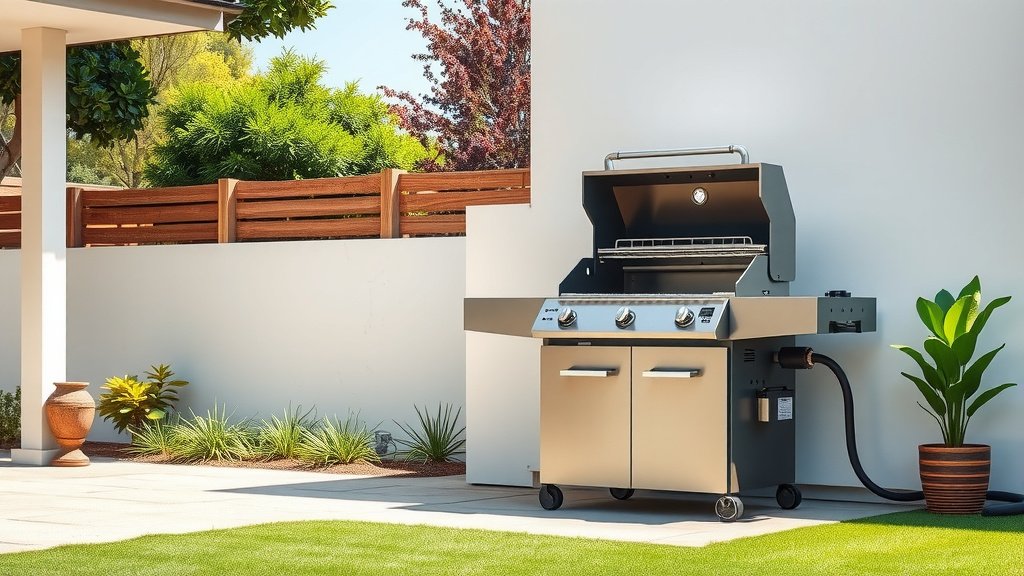
To hook up a grill to a natural gas line, you will typically need a natural gas conversion kit if your grill is not already set up for it, along with a flexible natural gas hose and appropriate quick-disconnect fittings.
Always ensure your grill is compatible with natural gas, and consider professional installation to guarantee safety and compliance with local codes.
TL;DR: Here’s a quick look at connecting your grill to natural gas:
- Always check your grill’s compatibility first.
- Safety is paramount; turn off the gas before starting any work.
- You might need a conversion kit for a propane grill.
- Use the correct flexible hose and quick-disconnect fittings.
- Test for leaks with a soapy water solution before lighting the grill.
Understanding Natural Gas for Your Grill
Are you tired of constantly refilling propane tanks? Converting your grill to natural gas offers a convenient and cost-effective solution. Imagine never running out of fuel halfway through cooking! It’s a game-changer for many grill enthusiasts.
Natural gas grills connect directly to your home’s gas line. This means an endless supply of fuel, always ready when you are. We found that many homeowners find this setup incredibly appealing for regular outdoor cooking.
Why Choose Natural Gas?
Natural gas brings a lot to the table. First, it is generally cheaper than propane over time. Also, you get a continuous fuel supply, meaning no more gas tank runs during dinner prep. It also means you are not dealing with heavy, bulky tanks.
Many experts say natural gas burns cleaner than propane. This can lead to less soot and a more consistent flame. It’s a nice perk for those who value both convenience and environmental considerations.
How To Hook Up Grill To Natural Gas Line?
Connecting your grill to a natural gas line involves several steps, starting with safety and ending with a thorough leak test. You’ll need the right tools and a clear understanding of your grill’s requirements. This process often begins by ensuring your grill is designed for natural gas or has a proper conversion kit.
You’ll also need to identify the natural gas source near your grilling area. Most homes have an existing gas stub-out ready for an appliance. If not, a plumber may need to install one, which is a job for professionals (National Plumbing Code guidelines).
Safety First: Your Top Priority
Before touching any gas line, your absolute first step is to turn off the main gas supply to your house. This prevents gas leaks and ensures your safety. You can usually find the main shut-off valve near your gas meter.
Gas is flammable, and mistakes can be dangerous. Always work in a well-ventilated area. Have a fire extinguisher handy, just in case. We found that taking these precautions can save you a lot of trouble.
Essential Tools and Materials
Having the right gear makes this job much smoother. Here’s a quick list of what you will likely need:
- Adjustable wrenches or pipe wrenches
- Pipe thread sealant (gas-rated)
- Flexible natural gas hose (length appropriate for your grill’s placement)
- Quick-disconnect fitting (for easy grill detachment)
- Soapy water solution (for leak testing)
- Grill natural gas conversion kit (if applicable)
- Gloves and safety glasses
Sometimes, people forget the pipe thread sealant. This is really important for creating airtight connections. Do not skimp on quality gas-rated sealant for peace of mind.
Is Your Grill Ready for Natural Gas?
Not all grills are created equal. Some grills come ready for natural gas, while others are designed for propane. You need to check your grill’s manual or its label to confirm its fuel type. Trying to use the wrong fuel can be inefficient and potentially hazardous.
If your grill is propane-only, you will need a natural gas conversion kit. This kit typically includes new orifices, which are small brass nozzles that control gas flow. Natural gas requires larger orifices than propane because it has lower energy density.
Propane vs. Natural Gas Orifices
Understanding the difference between propane and natural gas orifices is key. Propane runs at a higher pressure and has more BTUs per cubic foot. Natural gas needs a larger opening to deliver enough fuel for the same heat output. Incorrect orifices will lead to a weak flame or too much gas.
| Feature | Propane Grill | Natural Gas Grill |
|---|---|---|
| Gas Pressure | Higher (around 11 inches water column) | Lower (around 7 inches water column) |
| Orifice Size | Smaller (to restrict flow) | Larger (to allow more flow) |
| Fuel Source | Portable tanks | Direct home line |
| Conversion Need | Often requires a kit for NG | Often requires a kit for LP |
Many guidelines point to matching the correct orifices for optimal performance (AGA standards). Always use the ones provided with your manufacturer’s conversion kit.
Step-by-Step Connection Guide
Once you have gathered your tools and confirmed your grill’s compatibility, you are ready to connect everything. Remember, double-check that your home’s main gas supply is off before starting. This is the part where patience and attention to detail really pay off.
1. Locate and Prepare the Gas Stub-Out
Find the existing natural gas stub-out on your property. This is usually a capped pipe coming out of the ground or wall. Make sure it’s clean and free of debris. You might need to remove a temporary cap from the end of the pipe. Always use proper tools and avoid damaging the threading on the pipe. It’s important to have a clean connection point.
2. Install the Quick-Disconnect Fitting
Apply gas-rated pipe thread sealant to the male threads of the quick-disconnect fitting. Thread this fitting onto your gas stub-out. Tighten it securely with your wrenches. Make sure it faces the direction your grill will be positioned. You want a snug, leak-free connection here.
3. Connect the Flexible Gas Hose
Now, attach one end of your flexible natural gas hose to the quick-disconnect fitting. Most quick-disconnects simply snap into place. Connect the other end of the hose to your grill’s natural gas inlet. Again, use thread sealant on any threaded connections and tighten them well. We found that people often forget the sealant on these small connections, leading to potential leaks. Always be thorough.
4. Convert Your Grill (If Needed)
If you are converting a propane grill, this is when you would swap out the orifices. Follow your grill manufacturer’s instructions carefully. This usually involves removing burner tubes and replacing the small brass fittings. This step is critical for safe operation on natural gas.
5. Test for Gas Leaks
This is arguably the most important step. Once all connections are made, turn your home’s main gas supply back on. Do not light the grill yet! Spray your soapy water solution over all newly made connections. Look for bubbles forming. Bubbles indicate a leak, and you must tighten that connection immediately. If you see any bubbles, turn off the gas and re-tighten. Research often connects thorough leak testing with home safety (National Fire Protection Association).
Final Checks and First Light
After confirming there are no leaks, you can light your grill. Start with the lowest setting. Observe the flame. It should be blue with yellow tips, indicating proper combustion. If the flame is weak, erratic, or overly yellow, turn off the gas and re-check your connections and orifices. Sometimes, a tiny bit of air in the line needs to burn off. This is a normal part of the process.
When to Call a Professional
Feeling overwhelmed? Or maybe you just prefer expert hands? There is no shame in calling a qualified plumber or gas technician. Installing gas lines can be tricky. They ensure everything is up to code and perfectly safe. Many experts say that gas line work is best left to licensed professionals, especially if you are running a new line or unsure about any step. This is a job where safety cannot be compromised.
Maintenance for Your Natural Gas Grill
Once your grill is happily burning natural gas, a little maintenance goes a long way. Regularly check your flexible hose for cracks or wear. Ensure all connections remain tight over time. A quick soapy water test once a year is a great habit to adopt. This routine upkeep keeps your grilling safe and ready for years of enjoyment. It is an easy way to protect your grilling investment.
Conclusion
Hooking up your grill to a natural gas line is a project that offers great rewards in terms of convenience and consistent grilling. While it requires careful attention to detail and a commitment to safety, it is a very achievable DIY task for many. Remember to always turn off the gas, use the right tools, and thoroughly test for leaks. If you ever feel uncertain, calling a professional is always the smartest move. Enjoy your endless grilling!
Can any grill be converted to natural gas?
No, not every grill can be converted. You need a grill specifically designed for conversion or one that offers a manufacturer-approved natural gas conversion kit. Attempting to convert a grill not designed for it can be unsafe and may not work properly.
How far can my natural gas grill be from the gas line?
The distance depends on the length of your approved flexible natural gas hose. These hoses come in various lengths, typically up to 20 feet. Always ensure the hose is rated for outdoor natural gas use and follow local code requirements regarding hose length and routing.
Do I need a regulator for a natural gas grill?
Yes, natural gas grills come with a regulator or require one as part of a conversion kit. This regulator reduces the home’s gas line pressure to the lower, safer pressure required by the grill, usually around 7 inches of water column.
What should I do if I smell gas after hooking up my grill?
If you smell gas, immediately turn off the main gas supply to your home. Do not light the grill or use any ignition sources. Open windows and doors for ventilation. Then, re-check all connections with soapy water to locate the leak. If you cannot find or fix the leak, evacuate the area and call your gas company or a licensed professional immediately.
Is it worth converting a propane grill to natural gas?
For many grill users, converting to natural gas is definitely worth it. You get unlimited fuel, lower operating costs over time, and the convenience of never swapping tanks. The initial cost of conversion can be offset by these long-term benefits, especially if you grill frequently.
