
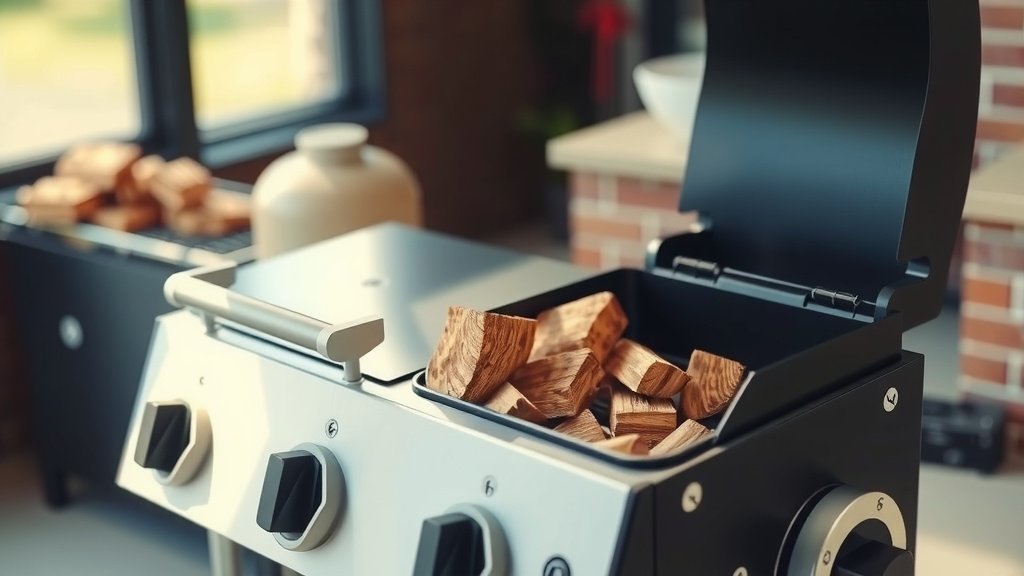
You can absolutely smoke on a propane grill by creating indirect heat and using wood chips for smoke. Simply turn on one or two burners on low, place a smoker box or foil pouch of wood chips over a lit burner, and position your food on the unlit side of the grill.
This method allows you to enjoy that authentic smoky flavor without needing a dedicated smoker, making it a versatile option for any backyard cook.
- To smoke on your propane grill, you’ll need a few key items: wood chips, a smoker box or heavy-duty foil, and a reliable thermometer.
- The core idea is to generate smoke from wood chips placed over a low flame, while your food cooks slowly using indirect heat.
- Maintaining a consistent low temperature, typically between 225°F and 275°F, is essential for tender, smoky results.
- Using a water pan helps keep your meat moist and stabilizes the grill’s temperature, preventing dryness.
- Patience is vital; resist the urge to constantly open the lid, as this releases precious smoke and heat.
How To Smoke On Propane Grill?
Smoking on a propane grill involves using a controlled heat source to slowly cook food while infusing it with flavor from wood smoke. You are essentially turning your grill into a smoker with some clever adjustments.
Why Bother Smoking on a Propane Grill?
Perhaps you don’t have space for a large offset smoker, or maybe you just want to experiment. Smoking on a gas grill offers a convenient entry point into the world of low-and-slow cooking. It’s perfect for those lazy weekend afternoons.
We found that many people appreciate the ease of temperature control with propane, which can sometimes be trickier with charcoal. Plus, cleanup is generally simpler, which is always a bonus after a great meal.
Gather Your Smoking Essentials
Before you begin, make sure you have everything ready. This preparation saves time and ensures a smooth smoking experience. Think of it like gathering your ingredients for a baking project, you wouldn’t start without flour, right?
- Wood Chips: These are the heart of your smoke flavor. You can find them in various flavors.
- Smoker Box or Heavy-Duty Aluminum Foil: This holds your wood chips. A dedicated box is handy, but foil works perfectly.
- Water Pan (Disposable Aluminum Pan): Keeps moisture in the grill and helps stabilize temperature.
- Meat Thermometer: A good probe thermometer is non-negotiable for safety and perfect doneness.
- Tongs and Heat-Resistant Gloves: For safely handling hot components and food.
Preparing Your Propane Grill
First things first, give your grill grates a good clean. Any old food debris can affect the flavor of your smoked masterpiece. A clean grill means pure, unadulterated smoke flavor for your food.
Ensure your propane tank has plenty of fuel. There’s nothing worse than running out mid-smoke; it’s like a car running out of gas in the middle of nowhere. Check your connections for any leaks too, safety first!
Choosing the Right Wood Chips
Wood chips are your flavor palette. Different woods impart different tastes, so choose wisely based on your food. Oak and hickory are strong, while apple and cherry are milder and fruitier.
For example, apple wood pairs beautifully with pork and poultry. Hickory is a classic choice for beef and ribs. We found that a mix of mild and strong woods can also create a unique flavor profile (Cook’s Illustrated).
To Soak or Not To Soak? The Wood Chip Debate
Many experts recommend soaking wood chips in water for 30 minutes to an hour. This helps them smolder slowly, producing smoke for a longer period. However, some prefer dry chips for a quicker, more intense smoke burst.
We found that soaking wood chips can delay their ignition, which gives you more control over when the smoke starts. It’s a matter of preference, so feel free to experiment and see what you like best.
Creating Your Smoke Generator
If you have a smoker box, simply fill it with your prepared wood chips. Close the lid tightly. This box will sit directly on your grill grates, over a lit burner.
No smoker box? No problem! Take a large sheet of heavy-duty aluminum foil. Pile your wood chips in the center, then fold the foil into a neat packet. Poke several holes in the top to allow the smoke to escape. This foil pouch acts just like a smoker box.
Setting Up Your Grill for Indirect Smoking
This is where the magic happens. You want to create zones of heat, much like an oven. The goal is to cook your food with gentle, indirect heat, not direct flame. Think of it as slow and steady wins the race.
Turn one or two burners on your grill to low. These will be your heat source and where your smoker box sits. Leave the other burners completely off. This unlit section is your indirect cooking zone.
Mastering Temperature Control
For most smoking projects, you’re aiming for a grill temperature between 225°F and 275°F. Adjust your lit burners very slowly to achieve this. It might take a little patience to get it just right.
A good external thermometer helps you monitor the grill’s ambient temperature accurately. Opening the lid frequently will cause temperature fluctuations, so trust your thermometer and be patient (USDA Food Safety).
The Role of the Water Pan
Place a disposable aluminum pan filled with hot water directly under your cooking grates in the unlit zone. This pan does wonders for your smoked food. It creates a moist environment, preventing your meat from drying out.
Additionally, the water pan helps stabilize the grill’s internal temperature. It acts as a heat sink, absorbing excess heat and releasing moisture, which is key for tender results. Remember to refill it if it gets low during a long smoke.
Adding Your Food and Letting it Smoke
Once your grill is at temperature and producing steady smoke, place your food directly on the grates in the unlit, indirect heat zone. Avoid placing it over the lit burners, as that will char it.
Close the lid and resist the urge to peek! Every time you open the lid, heat and smoke escape, lengthening your cooking time. Patience is a virtue in the smoking world.
Monitoring Smoke and Temperature
You want a “thin blue smoke,” not thick white billowing clouds. Thin blue smoke indicates clean combustion and good flavor. If the smoke is thick and white, it might be bitter; adjust your wood or airflow.
Keep an eye on your grill thermometer to ensure the temperature stays consistent. If it drops too low, slightly increase the lit burner. If too high, lower it. Gentle adjustments are best.
When to Refill Wood Chips
Your wood chips will eventually stop producing smoke. For longer smokes, you’ll need to refill your smoker box or foil pouch every 1-2 hours. Have extra chips ready to go.
Carefully open the grill, remove the spent chips, and replace them with fresh ones. Be quick to minimize heat loss. Remember to close the lid again promptly to let the grill recover its temperature.
Knowing When Your Food is Done
The only truly reliable way to know if your smoked meat is ready is by using a good meat thermometer. Cook to internal temperature, not by time alone. Different cuts require different finishing temperatures (FoodSafety.gov).
For instance, chicken needs to reach 165°F, while pork shoulder is often cooked to 195-205°F for shreddability. Always check in the thickest part of the meat, avoiding bones.
| Smoking on Propane | Traditional Smoker |
|---|---|
| More accessible and affordable to start. | Often requires a larger initial investment. |
| Easier temperature control with gas burners. | Can be more hands-on for temperature management. |
| Less fuel consumption for smaller cooks. | Typically uses more fuel (charcoal, wood chunks). |
| Can be converted back to a grill easily. | Dedicated to smoking, less versatile for grilling. |
Your Smoking Checklist
Before you dive in, here’s a quick rundown to keep you organized:
- Clean grill grates are ready.
- Propane tank is full and connected.
- Wood chips chosen and soaking (if desired).
- Smoker box or foil pouch prepared.
- Water pan filled with hot water.
- Meat thermometer is calibrated and ready.
Troubleshooting Common Smoking Issues
Sometimes things don’t go exactly as planned. Don’t worry, it’s part of the learning curve! If you’re not getting enough smoke, ensure your wood chips are directly over a lit burner and the heat is sufficient for them to smolder.
If your grill temperature is too high, try turning the lit burner down even further, or opening the grill for a few seconds to release some heat. Remember that outside temperature and wind can also affect your grill’s performance.
Different Foods, Different Approaches
What you smoke will influence your technique slightly. Thicker cuts like briskets or pork shoulders require much longer smoke times than chicken breasts or fish. Adjust your wood choice and cooking time accordingly.
For delicate items, use milder woods and lower temperatures to prevent overpowering the flavor. Experimentation is key to finding your personal smoking style and discovering new favorites.
Conclusion
Smoking on a propane grill is a fantastic way to enjoy delicious, smoky flavors without needing specialized equipment. By understanding indirect heat, temperature control, and the magic of wood chips, you can transform your everyday grill into a versatile smoker. It takes a little practice, but the payoff in flavor is absolutely worth it. So, grab your wood chips and get ready to impress your family and friends with your newly acquired smoking skills!
How long do wood chips smoke on a propane grill?
Typically, wood chips in a smoker box or foil pouch will produce smoke for about 45 minutes to 1.5 hours on a propane grill, depending on the heat intensity and whether they were soaked. For longer smokes, you’ll need to replenish them.
Can I use wood chunks instead of chips on a gas grill?
While wood chips are more common for gas grills, you can use small wood chunks. Place them in a smoker box or a very heavy-duty foil pouch directly over a lit burner. Chunks will generally smoke longer than chips.
What kind of propane grill is best for smoking?
A propane grill with multiple burners offers the most flexibility for creating indirect heat zones, which is ideal for smoking. Grills with a heavier lid and good seals will also help retain heat and smoke more efficiently.
How do I prevent my meat from drying out when smoking on a gas grill?
Using a water pan directly under your food in the indirect heat zone is the most effective way to maintain moisture. Additionally, avoid opening the lid too often, as this releases both heat and humidity, which can dry out your meat.
Is it safe to leave a propane grill on for hours for smoking?
Yes, it is generally safe to leave a propane grill on for extended periods for smoking, provided you are monitoring it and ensuring connections are secure. Always keep an eye on your grill and never leave it unattended for very long stretches, especially if winds are high or conditions are otherwise unfavorable.
