
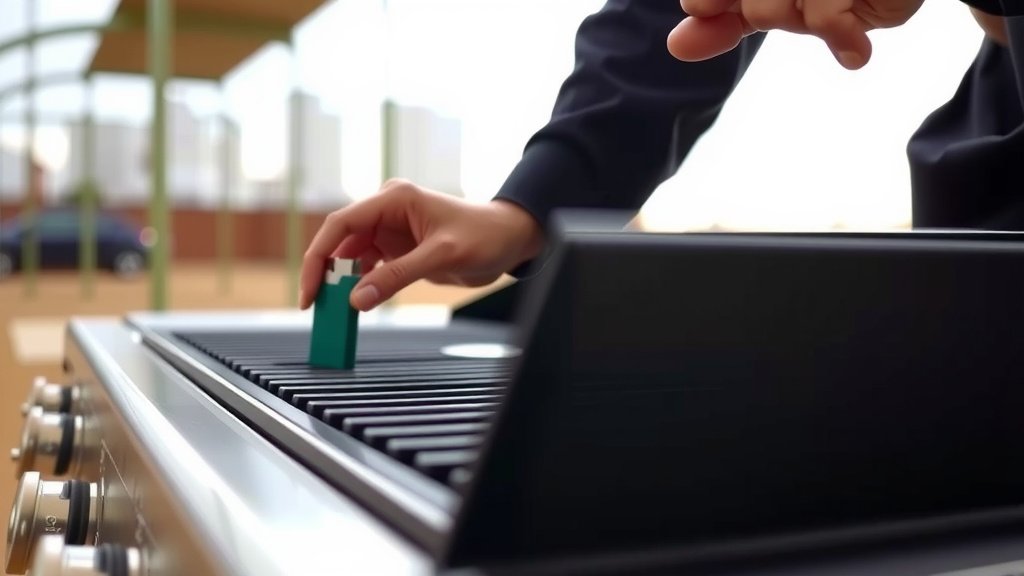
To start a propane grill with a lighter, first open the grill lid and make sure all burner knobs are off. Then, slowly open the propane tank valve fully before holding a long-stem lighter near the burner port you intend to ignite.
Once your lighter flame is steady, turn the corresponding burner knob to a low setting, allowing the gas to flow and ignite safely.
TL;DR: How to Light Your Propane Grill with a Lighter
- Always begin by opening the grill lid for safety.
- Ensure all burner knobs are completely off before starting.
- Slowly open the main propane tank valve all the way.
- Use a long-stem lighter to approach the burner port.
- Turn on the desired burner knob to “low” and watch for ignition.
How To Start Propane Grill With Lighter?
You can start a propane grill with a lighter by first opening the lid, confirming knobs are off, opening the tank valve, then bringing a lit long-stem lighter to a burner port as you turn that burner to low.
Safety First: Your Number One Priority
Before you even think about lighting your grill, remember that safety is paramount. Propane is a powerful fuel. Treating it with respect prevents accidents and ensures a great grilling experience. Many experts say a quick safety check saves trouble (National Fire Protection Association).
Getting Ready for a Safe Start
What do you need before trying to light your grill manually? Always make sure your grill is on a stable, flat surface. Keep a fire extinguisher or a bucket of sand nearby. This sounds serious, but it is a smart precaution.
Pre-Ignition Checklist: Are You Ready?
A quick mental run-through or a physical check prevents common issues. Think of it like checking your car’s tires before a long trip. You want to be sure everything is in its place and working correctly. This simple habit keeps grilling fun.
- Open the grill lid completely.
- Confirm all burner control knobs are off.
- Check propane tank connection for snug fit.
- Ensure the propane tank valve is closed.
- Have a long-stem lighter or match wand ready.
Checking Your Propane Tank Connection
Is your propane tank connected securely? We found that a loose connection can cause gas leaks. Always twist the connector tightly by hand. You should not need tools for this step. Listen for any hissing sounds once the tank is open.
The Sniff Test: Detecting Gas Leaks
If you suspect a leak, a simple sniff test helps. Propane has an additive that smells like rotten eggs. If you detect this odor, immediately close the tank valve. Then, do not attempt to light the grill. Check connections or call a professional (U.S. Consumer Product Safety Commission).
Opening the Propane Tank Valve
This might seem straightforward, but how you open the tank valve matters. Slowly turn the valve counter-clockwise until it is fully open. A slow turn helps regulate gas flow. Opening it too fast can sometimes trigger the overfill prevention device (OPD), limiting gas flow.
Understanding the OPD Feature
The OPD is a safety mechanism. It stops gas from flowing too quickly if there’s a problem. If your grill seems to have low flame, even when the tank is full, the OPD might be activated. We found that simply closing the tank, waiting a minute, then reopening it slowly can reset it.
The Manual Lighting Process: Step-by-Step
Now, let’s get to the main event. You have your grill lid open, propane connected, and tank valve open. Your long-stem lighter is ready. Which burner do you light first? Always start with a burner closest to you or one designed for manual lighting.
Here is a step-by-step guide:
- Make sure the grill lid is open. This step vents any accumulated gas.
- Hold your lit long-stem lighter near the burner port. Place the flame right at the gas output holes.
- Turn the corresponding burner control knob to the “low” setting. Gas should flow and ignite almost instantly.
- Once the first burner lights, you can then turn on other burners normally.
- Close the grill lid only after all desired burners are lit and stable.
What If It Doesn’t Light Immediately?
Don’t panic if it doesn’t light right away. Sometimes, it takes a moment for the gas to reach the burner. If it doesn’t light within a few seconds, turn the burner knob off. Wait five minutes for any gas to dissipate. Then, repeat the process. Patience is a virtue here.
Troubleshooting Common Lighting Issues
| Problem | Possible Cause | Solution |
|---|---|---|
| No flame after ignition attempt | Empty propane tank or OPD activated | Check tank level; reset OPD by closing/reopening tank valve slowly. |
| Weak flame or inconsistent heat | Low gas pressure, dirty burner ports | Ensure tank valve is fully open; clean burner ports; check gas lines. |
| Smell of gas without ignition | Gas leak or too much unburnt gas | Close tank valve, wait 5 min, recheck connections; retry lighting carefully. |
Maintaining Your Grill for Easier Starts
Regular maintenance makes lighting your grill much easier. Think of it like a well-oiled machine. A clean grill is a happy grill. Many grill experts advise cleaning burner ports regularly. This prevents blockages that hinder gas flow.
Keep Burner Ports Clear
Over time, food debris and grease can clog burner holes. This means less gas gets to your lighter, making ignition harder. Use a grill brush or a paperclip to gently clear any obstructions. Make sure the grill is cool before doing this.
Always Turn Off Gas at the Tank
Once you are finished grilling, always turn off the propane tank valve first. Let the flames die out. Then, turn off the burner control knobs. This prevents gas from sitting in the lines and keeps everything ready for your next cookout. It’s a simple habit with big safety benefits.
Conclusion
Starting your propane grill with a lighter is a simple, safe process when you follow a few clear steps. Always prioritize safety by checking for leaks, ensuring the lid is open, and having a long-stem lighter ready. By understanding your grill’s mechanics and performing basic maintenance, you ensure enjoyable, hassle-free grilling sessions. Remember, a little preparation goes a long way in making your outdoor cooking experience a success.
Frequently Asked Questions
Is it safe to light a propane grill with a match?
Yes, it is safe to light a propane grill with a long-stem match or a match wand. Always follow the same precautions as with a lighter: open the lid, ensure knobs are off, open the tank, then ignite a match and hold it near the burner as you turn the gas on.
Why won’t my propane grill ignite even with a lighter?
If your propane grill won’t ignite, even with a lighter, the most common reasons include an empty propane tank, an activated overfill prevention device (OPD), or clogged burner ports. Check your tank level, try resetting the OPD by slowly turning the tank valve off then on again, and inspect burner holes for blockages.
Should I keep the grill lid open or closed when manually lighting?
Always keep the grill lid completely open when manually lighting. This allows any unburnt gas to escape safely into the air. Trying to light a grill with a closed lid can cause a dangerous flare-up if gas has accumulated inside.
How long should I wait between lighting attempts if it doesn’t catch?
If your grill doesn’t light on the first attempt, turn off the burner knob and wait at least five minutes before trying again. This waiting period allows any unburnt gas that has accumulated in the firebox to dissipate, preventing a sudden flash or small explosion.
What kind of lighter is best for starting a propane grill?
A long-stem lighter, often called a utility lighter or barbecue lighter, is best. Its extended neck keeps your hand a safe distance from the burner ports. Avoid using standard short lighters or matches that put your hand too close to the flame and gas.
