
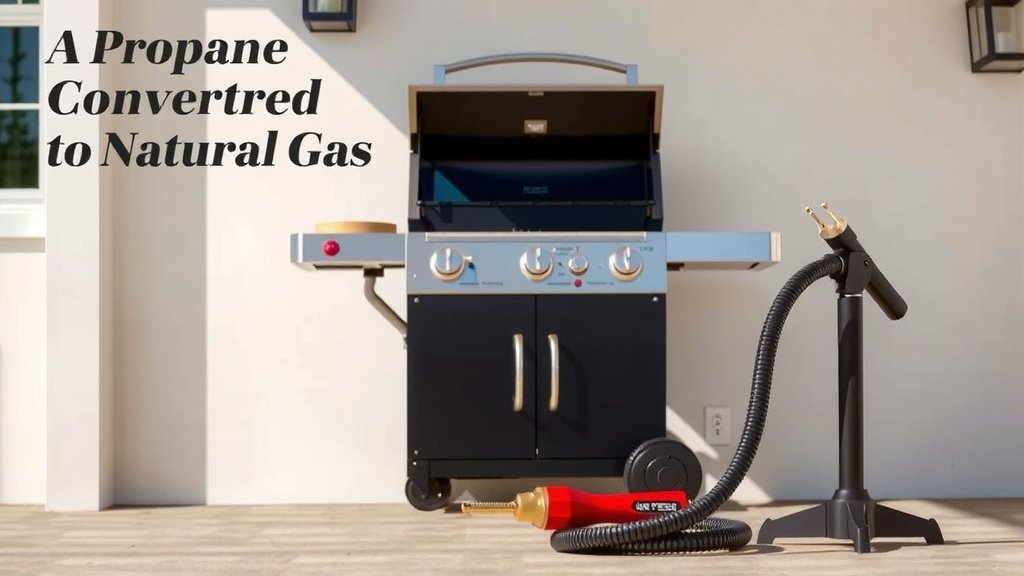
Converting a propane grill to natural gas typically involves replacing key components like the gas regulator, the burner orifices, and the supply hose with a compatible natural gas conversion kit.
You must ensure your grill model is specifically designed to be convertible, as not all propane grills can safely or effectively make the switch to natural gas.
- You can convert your propane grill to natural gas, but it requires careful steps and the right parts.
- Always check your grill’s compatibility and purchase a specific, manufacturer-approved conversion kit.
- The process involves swapping out propane parts for natural gas components, like orifices and the regulator.
- Safety is paramount; a thorough leak test after conversion is absolutely essential.
- If you feel unsure, hiring a certified professional is a smart and safe choice.
How To Convert Propane Grill To Natural Gas?
Transforming your propane grill to run on natural gas is a practical project for many homeowners. This change lets you tap into a continuous fuel supply from your home. It’s a rewarding task if you follow the right steps carefully. We will guide you through each stage to make sure your conversion is successful.
Why Consider Natural Gas for Your Grill?
Thinking about changing your grill’s fuel source? Natural gas offers some compelling advantages. Imagine never running out of fuel during a backyard barbecue. That’s a huge plus for many grill masters. Let’s look at why this switch might be a great idea for you.
Endless Fuel Supply
One of the biggest benefits of natural gas is its constant availability. You connect directly to your home’s gas line. This means no more trips to refill propane tanks. You can grill whenever you want, for as long as you want. Many experts say this convenience alone makes the conversion worthwhile.
Cost Savings Over Time
While the initial conversion might have a cost, natural gas is often cheaper than propane. This is true when comparing the energy costs per BTU. Over years of grilling, these savings can really add up. Research often shows a lower average utility cost for natural gas (Department of Energy).
Is Your Grill Ready for Conversion?
Before you grab any tools, you need to check a few things. Not every propane grill can become a natural gas grill. This step is perhaps the most important. Skipping it could cause problems, or worse, create a safety risk. Let’s make sure your grill is a good candidate.
Check Your Grill’s Compatibility
First, look at your grill’s manual or manufacturer’s website. Most grills designed for conversion will state this clearly. They will often list an approved natural gas conversion kit. If your manual says “not convertible,” listen to that advice. Forcing a conversion can be quite dangerous. We found that manufacturers design grills differently for each fuel type.
The Right Conversion Kit Matters
If your grill is convertible, you’ll need the correct kit. Do not try to piece together parts from different brands. Always buy a kit specifically made for your grill model and brand. These kits contain calibrated orifices and a compatible regulator. Many guidelines point to using only OEM (Original Equipment Manufacturer) kits (NFPA).
Essential Tools and Parts You’ll Need
Once you confirm your grill is convertible and you have the right kit, it’s time to prepare. Having the correct tools makes the job smoother. It also ensures a safer and more effective conversion. Let’s gather what you need before you start.
Gathering Your Toolkit
You’ll need some basic tools for this project. A wrench set, screwdrivers, and possibly pliers are common. A pipe thread sealant, rated for gas, is also crucial. Having soap and water or a leak detection spray on hand is a must. These help you check for gas leaks later.
Key Components of a Conversion Kit
Your conversion kit will include specific parts. These usually consist of new burner orifices. These small brass fittings regulate gas flow. You will also get a natural gas regulator. This crucial part reduces the gas pressure. Finally, a natural gas hose with a quick-disconnect fitting is often included. This connects to your home’s gas line.
| Component | Propane Grill (Original) | Natural Gas Grill (Converted) |
|---|---|---|
| Gas Source | Propane Tank | Home Natural Gas Line |
| Gas Pressure | High Pressure (Tank) | Low Pressure (House Line) |
| Regulator | Propane Regulator | Natural Gas Regulator |
| Orifices | Smaller Diameter | Larger Diameter |
| Hose | Propane Hose & Adapter | Natural Gas Hose & QD |
Step-by-Step Guide: The Conversion Process
Now that you’re prepared, let’s walk through the conversion. Take your time with each step. Rushing can lead to mistakes. Remember, you’re working with gas lines, so precision is key. We found that focusing on one task at a time really helps.
Safety First: Before You Start
Always turn off the gas supply before starting any work. If you’re working with a propane tank, disconnect it fully. Make sure your work area is well-ventilated. Have a fire extinguisher nearby, just in case. These precautions keep you safe throughout the process.
Disconnecting Propane Components
Carefully remove the existing propane hose and regulator from your grill. You will also need to access the burner orifices. These are usually located where the gas tube meets the burner. Each grill model is different, so consult your manual for exact locations. Take photos as you go to remember how things looked.
Replacing Orifices and Regulator
Unscrew the small propane orifices from each burner. Replace them with the new, larger natural gas orifices from your kit. These larger openings are vital for natural gas. Then, install the new natural gas regulator onto the grill’s manifold. Apply gas-rated thread sealant to all connections. Make sure everything is snug, but do not overtighten.
Connecting the Natural Gas Line
Attach the new natural gas hose to the regulator on your grill. Connect the other end of the hose to your home’s natural gas quick-disconnect valve. Always use a proper quick-disconnect fitting. Double-check all connections at this stage. You want them to be secure and leak-free.
The Crucial Leak Test
This step is non-negotiable. Mix dish soap with water to create a soapy solution. Turn on your home’s natural gas supply slowly. Apply the soapy solution to all new connections you made. Look for bubbles forming. Bubbles mean you have a gas leak. If you see bubbles, turn off the gas immediately and tighten the connection. Repeat the test until no bubbles appear. Many local gas companies provide guidelines on leak testing (Southern Company).
Pre-Conversion Checklist
- Confirm grill is convertible in manual.
- Purchase the correct manufacturer-approved conversion kit.
- Gather all necessary tools: wrenches, screwdrivers, sealant.
- Ensure natural gas line is professionally installed to your patio.
- Have leak detection solution ready.
When to Call a Professional
While DIY conversion is possible, it’s not for everyone. Gas work carries risks if done improperly. There’s no shame in seeking expert help. Sometimes, it’s the smartest choice you can make. Knowing your limits is part of being a responsible homeowner.
Dealing with Complex Models
Some high-end grills have complex gas systems. If your grill’s design seems too involved, consider a professional. They have the experience and specific tools needed for tricky jobs. We often find that complex conversions are best left to licensed gas technicians.
Prioritizing Your Safety
If you feel uncomfortable at any point, stop. If you’re unsure about the leak test or any connection, call a licensed gas plumber or HVAC technician. Your safety and the safety of your home are most important. A professional ensures the job is done correctly and safely. Research often connects improper gas work with safety hazards (National Safety Council).
Conclusion
Converting your propane grill to natural gas is a significant upgrade for many. It offers constant fuel and potential long-term savings. The process involves careful steps, from checking compatibility to performing a vital leak test. Always use the correct conversion kit for your specific grill model. Remember, if any part of the process feels overwhelming, reaching out to a certified professional is a wise decision. Enjoy endless grilling with your newly converted natural gas setup!
Can I convert any propane grill to natural gas?
No, not all propane grills can be converted to natural gas. You must check your grill’s owner’s manual or the manufacturer’s website to confirm it is designed for conversion and to find the specific conversion kit required for your model.
What is the main difference in parts for a propane versus natural gas grill?
The main differences are the gas regulator, which controls pressure, and the burner orifices. Natural gas regulators deliver lower pressure, and natural gas orifices have larger openings to allow for the greater volume of gas needed compared to propane.
Do I need a professional to install the natural gas line to my patio?
Yes, installing a new natural gas line from your home to your patio or grilling area should always be done by a licensed and qualified gas plumber or technician. This ensures safety and compliance with local building codes.
How do I know if my natural gas conversion was successful and safe?
After conversion, you must perform a thorough leak test using a soapy water solution on all connections. If no bubbles appear, it indicates a leak-free connection. Additionally, your grill should light easily and burn with a steady, blue flame, indicating proper gas flow.
What should I do if I detect a gas leak after converting my grill?
If you detect a gas leak (by smell or bubbling during the soap test), immediately turn off the gas supply at the source. Do not light the grill. Tighten the loose connection and repeat the leak test. If the leak persists, turn off the gas completely and call a qualified gas professional for assistance.
